Saturday, January 4, 2014

The "Honda is back" title and the "She-male picture" effect.

Be careful... explicit language ahead!
When I was a teenager and the internet was sloooow as an 18-wheeler truck, being the brat I've always been, I experienced the wonderful world of internet porn in the soooo very sllllooooow picture loading anxiety way. One day, while waiting for a picture of  naked girl, I was taking my time to appreciate things (no other way as the link was sllloooooow), the girl (so I though) in the picture was covering her face with "her" hair, then the silicone breats came up.. and right when I was so very interested in the remaining part of the picture... well you know what happened just by the "she-male picture effect" in the article title. It was discussing (not because I have anything against she-males) because I was really expecting something else.

Why oh why would I share this traumatic teenager experience (particularly in a car blog)? Well it happened again.
I was browsing magazines today and this came to my hand:

I was immediately excited (just like a teenager waiting for a naked women porn picture). I'm an former Honda lover, but lately Honda managed to do nothing but crap. I mean there is not a single car out of Honda since they stopped the JDM Civic Type-R production.
Every other manufacturer is trying their absolute best to build better cars and Honda managed to go the opposite way.
This Magazine was GREAT NEWS! FINALLY, one of the best brands in the world decided to wake-up from the prolonged coma. NSX was back, rumor of the S2000 replacement and a new Civic Type-R. Groooovy.

Immediately I skipped all the junk pages into the article, searched for the specs and found a chart of the new vs the old Civic Type-r specs. That was wonderful... a chart.
First line: new type-r - 300bhp, old type-r 200bhp    (BRRRRIIILLLIANT!)
Second line : new type-r - 2000cc, old type-r 2000cc    (yeeeahhhhhhh finally some racing specs for the road.)
Third line: new type-r - i-Vtec , old type-r i-Vtec    (obviously... no need to mention this)
Than disaster on the Fourth line: new type-r - TURBO, old type-r N.A.   (WTF?!)
I immediately dropped the magazine to the floor and almost cried in pain... and there you go-> The She-male effect.

This is the second time Honda kills the Type-r!!!
Mk1 was brilliant.
Mk2 was the best ever.
Than, for some reason, while producing Mk3, they decided that the JDM version should be better and the European version should have a cheaper (and worse) suspension and more weight!!! Weird at least.
Now with the Mk4... it's turbo.. I mean -cheap engineering instead of refinement, N.A. response...purity.. naaa just another 2.0 turbo to go after the RCZ, Sirocco and MeganeRS cheap trend.

If at least they had made it 4WD I would understand it... but no! Still FF. I can even say with no reserves that this car has been made to shut Renault up with their "Megan RS Trophy is the fastest FF in The Ring". According to some people from the R&D at Honda, they've done-it... but just like I hated the Megane for not being a pure driving machine... I'll also hate this one. Yes it's a record breaker...yes it's a bullet in the ring (where it was destined to perform)...but forget the refinement and driving experience...no room for those here.
Type-r is now the meaning for: just another engineer's wet dream.

So... Apparently the Megane RS has it's kingdom threatened (no surprise as an engine that revs to 6000 and produces little over 260bhp from 2 liters and a turbo is not a marvel of engineering)... and of course, just like Renault has F1 heritage to help build brilliant chassis, so does Honda...and they also have Indy, and BTCC and so on ... a brilliant FF chassis would come up eventually.
So this new Honda revs 2k beyond the Renault's limits, with better linearity and power delivery... and produces more power... give it a good chassis and you have a winner just on the 2k extra revs in the corners and the almost 40bhp in the straights!

But do I like it? No. It's FF instead of FR, It's turbo without being 4WD... and it was conceived following the EasyWay instead of the Hard-Engineering-and-true-Efficiency-seeking way.
Deception... pure deception. Hope that they remember the original S2000 and NSX on their new versions... or things will really get weird from now on.

Friday, May 24, 2013

Buying a used S2000? Learn about the car first (Updated version)

This post comes as a repetitive request from some of my youtube followers.
A lot of people ask-me for advice while buying an S2000...and they should. You see, I've checked around 10 cars on sale before I brought mine. The reason is simple: A lot of them are involved into really big accidents. You see, the car is pure and almost perfect in it's behavior...it's very race oriented.

One of the reasons for that perfect behavior is 50/50 weight distribution...being front engined and rear drive, the engine is back in the engine bay (hence the front-mid-ship design), this will cause the front wheels to have little space in it's wheel bays, and as a result the car has a small steering angle.
Add a small steering angle, to a LSD (trosen type... means LSD only IF all the drive wheels are on the ground...and that is a VERY important feature/flaw) rear wheel drive that jumps from non Vtec to full Vtec at around 6000rpm (5900 precise), and handles like a race car.. and you have, either the recipe for disaster, or the car of your life.

The choice is made from the skill the driver has. I've never ever driven a car this honest and balanced this side of a lotus elise, I've also never de-recommended a car so much to inexperienced drivers...and by experienced I mean race-track experienced. That is why its so hard to find an S2000 that has never had a crash because not all S2000 owners are race-car driver material.

The checkup list is divided into exclusion points, so it helps you decide.

Having said that I'll start by the "DO NOT BUY" list:
Twisted Xframe:
The S2000, just like the Type-r Engines and the NSX car, was almost entirely hand built by the "takumi" at Honda. These where highly skilled builders with over 10 years experience on building fine-engineering parts or cars at Honda factories. They where the best of the best at Honda.
One of the most important parts of the S2000 is the X-frame chassis. It's built so that the car has the same rigidity topless as a normal car would have with top.
To put things into perspective, the S2000 is hand built by the "Takumi", except for the XFrame that was put together in a special HOT template machine by robots. It was done that way because it was extremely difficult to weld-it together without letting it warp and twist. When twisted it would be extremely difficult to put it up to spec again and even so, it would not have the same torsional resistance without heat-treatment...to conclude: it was done that way due to technical difficulty in doing it by hand and removing twists from the welding process. So you can imagine the huge problem it is, it the car you are buying had a major crash... yup if the Xframe twisted, the car is gone! you will never ever be able to traction it to place... the X Frame is either immaculate or need replacement. No possible fix here.
It's easy to know the most important parts when you look at a strip-down of the car... these ones are prepared to race, and had some weight reduction at the non VITAL parts:
Any big impact on any of the shown (white and gray) areas is a problem!

Some impacts are simple to solve and carry no MAJOR problem to the cars chassis:

On the other hand, simple looking accidents are a doom ticket for the car:

Wanna know why? ok... look at the cross section on this part of the chassis of the car (the blue car impact, managed to crumple vital external longitudinal sections, together with the transverse bulkhead section!... bad luck x2) :


And if the damage is to the FRONT... then look at this section:

So pulling ALL the panels to place is... near impossible (those are high tensile steel extrusions)... and separating them to re-weld... well think about the "takumis" and the robot on a HOT template to build this part of the car... that's right! Once twisted ot badly damaged, leave it be.

How to spot problematic cars?
Poorly repaired cars will show immediate signs of trouble on the panel gaps. Uneven panel gaps (5mm on the left and 2mm on the right). Bonnet and boot may be deceiving as they are adjustable, so please center your search on the front panels and doors. If a door, after closed is gaping out and the other one in, you probably are looking at a side impacted and laterally twisted chassis.
Shift knobs that don't show themselves centered in the console panel mean trouble on a side impact too.

You see, after the repair at the workshop, it may "look" ok... but than take it for a good ride where the chassis suffers punishment and it will be out of alignment in minutes (and feel odd).

Good repairs will only show trouble under a deep mechanic analysis. In this case, the best option is to check it against Honda manual and check the measurements on all checkpoints and underpinnings.
Disguised repairs often come with a perfectly aligned suspension setup, new tires and brake pads. If this is the case, then someone is disguising a twisted chassis by masking uneven tire-wear and brake-pad wear. The best solution (besides having it inspected by a mechanic against SPEC underpinnings and assuming the car really is well aligned), is to make a test drive. On a empty road with enough space to recover from any unexpected behavior, leave the car running at idle in 2 or 3rd gear and floor it, then after gaining speed and still accelerating (with the rear suspension compressed) step on the brakes. The car should not trend left on acceleration and right on braking, or right under acceleration then left under braking. If it does, it's twisted.

Soft-top test : Unlock the soft top. The release should move the top slightly but with the same length on both sides (that's the rubber seal forcing out). Re-lock and check the pressure against your efforts...they should be the same.

Another test: Open the soft top, then park the car with one of the front wheels on top of the sidewalk and the remaining 3 on the ground...then close the hardtop and notice the slack. There should be a even or very close to even slack. REPEAT this test with the other 4 wheels, one on the sidewalk, 3 on the ground.

Hardtop test: a standard factory hardtop MUST fit perfectly and even on all sides.

The last problem to look for is rust. It in not very common, but it will become one if existent on the chassis...the same problem you have with a twisted chassis is close to the one you'll have when having to cut and weld parts of the chassis... remember the "takumi" and the robot on the hot template.

Now on to the "buy only IF covered by sales warranty" list:
Engine makes flapping noise - Check if this is form the valve train. If so, try to manage a slack check and adjustment...every Honda has some valve train noise. Most of them are related to slack and can be fine-tuned... on this case however, excessive valve slack will manage to hit the piston and bend the valve. Most problems on F20C engines are valve train related as it is also the most fragile part of the engine.
Engine makes tacking noise after heat-up - IF the tacking noise comes from the left side of the engine, than that's a faulty timing chain tensioner. The part costs from 100 to 250€ (depending on the country) and can be installed at home. If this is not the case, you can have a ticking engine and that's 1500 to 6000€ for a used or new one... or even more for a full blueprint and spec-up.
The low-end part of the engine is really tough and handles WAY more power output than standard... if you are going to spoil the car by way of Force Induction, the internals are good to close to 350BHP... and if using HIGH rpm turbo-boost ONLY you can go safely to 400/450 bhp.
Bare in mind that beyond 400BHP and the amount of torque involved in that (by ways of Forced Induction), the rear diff will go... a common replacement is the Nissan 300ZX diff.

Leave the Engine warming up and let it idle (you should hear a whistle noise form the front of the car for the first 20 seconds... and then a pufff as it stops pumping... that is the air pump to kick the catalytic converter into temperature to reach the efficiency level ASAP)  - After it reached normal operating temperature (the gauge should be light to 40% its way) listen carefully and see if it misfires  If it does it could be spark plugs ...so to track it out, rev it to 3000, step-of the gas and back-on again. If the car misfires under 2000/2500 turn off the engine, and ask to remove the spark-pugs. If one of them comes moisten then either a valve guide is letting oil in ([possibly due to being already bent), or the piston rings are history. This normally happens in cylinder nr 3 (that's the third one counting from the front of the car).

Finally to the "buy and reduce the price as you will have to spend money on fixing this" list:
Rear wheel bearings - Up till 2004 the rear wheel nuts where under bolted from factory. Honda issued a tech recall to service and tight the nut. Failing to do so will increase the tilt on the rear wheel bearings (more noticeable if the wheel offset is increased). My bearings failed at around 80.000km. Read about it here and here.
Lowered car - Lowered cars should not go over 2 to 3cm of lowering without camber correction. So if the car you are buying is lowered beyond 3cms (too much for road use anyway) check for a camber correction kit installed, otherwise consider changing all wheel bearings, suspension bushings and eventually a couple of slightly bent suspension parts.
Aftermarket wheels - Check the aftermarket wheels offset. Excessive offset main mean early replace to wheel bearings.... BUT if the offset is on the rims and not on the "spacers" near the HUB... then that car will corner a lot better without suffering fro vibrations at speed (common to low spec spacers). I have my car setup like that and I know I'll have to change bearing earlier... but it goes around bends like nothing else... and I find it a fair price to pay.
Suspension bushings - Check for worn bushings...consider a polyurethane replacement kit... rubber will go eventually and you should not expect it to live beyond 120k km (under factory setups).
Vibration on acceleration that stops on lift off - CV joints are worn. You can shift them (change sides) but if you are buying new, ask for a replacement or price drop.
SoftTop tears - You may have no tears yet, however, they tend to tear. Check the inner side of the soft-top for abrasion marks.

That's about it. Always bare in mind that if the chassis is bent, don't even fall in love with the car... it's doomed. If the salesman tell you the engine is the heart of the car, remember that you CAN swap the engine and repair it too... you can't do that with the chassis. So the good chassis is the car to look for.. the rest is negotiation around the warranty and price tag.

Saturday, April 6, 2013

Understanding Engines - Turbo vs NA... power vs response?! How does it all work.

This article has been spawn due to a comment on one of my youtube videos.
The video in question features a mighty modified Nissan Skyline GTR R34 VSpecII tuned to perfection by Mines. It's a true beast...probably the main reason why I don't like today's RenaultNissan GTR.
You seen the Nissan Nissan GTR...and called Skyline, was beautiful in all of its essence. That is why it managed the nickname GodZilla. Today GTR is no more than an vulgar Engineer wetdream built to impress Renault and trying to avoid Renault turning Nissan into "the factory that builds cheat wannabe suvs".
But this article is not about the GTR but rather the comment it self. After watching the video, the user added a comment in which he stated that a turbo car can be responsive. However he probably got so overwhelmed by the immense power of the car and it's extremely fast revving engine that he concluded that it was responsive.
So after a couple of minutes thinking about that I decided to explain the physics behind the induction system of an engine and the resulting consequences to power or response.
So why did the viewer got confused? You see, the car in question produces over 600bhp from 2600cc. One may say soooo, Place a big turbo in an ordinary engine and you have that same result... true..ish. The engine in question is the RB26DETT. And that stands for Racing Bred 2.6cc Dual over head camshaft Electronically manages fuel injection TwinTurbo....in plain English - The racing engine Nissan developed for the GT class cars, de-tuned for road use.
As a result, the engine is very high revving (because it is supra-square 86mm of bore against a short 73.7mm stroke). Now add 600bhp and extreme profile cams and electronics to such an engine, and you'll get huge power levels delivering in an explosive way from engine midrange up. In the video it's clear that the analogue needle in the car revmeter can't cope with such a fast revving engine.  
This however is not RESPONSE...it is power and torque(loads of it on a beautifully engineered, light engine). Torque is the work ability of an engine... for instance an engine with 1000nm of torque will pull a 3 ton car as easy as it pulls a 1 ton car. Power is the torque at high engine speed.
A diesel engine, is very good on Torque and very bad on Power so a VW PD130 1.9 will deliver 310nm of torque against 130bhp. A gasoline engine with VTEC would be very good on Power nd very bad on Torque... the F20C from the honda s2000 will produce almost 200nm of torque for 240bhp.

Analogy time:
Take for example 3 man. One with small muscles, one with normally developed muscles and one big guy with big muscles but also some fat. The muscle size will allow each to pick-up a certain amount of load (and this will vary in weight as bigger muscle pulls more weight), but bigger muscle will also consume more energy and have bigger movement inertia so the bigger they are, the slower they will move and more energy they will burn.
If you try a weight lifting contest, the bigger guy will win as the smaller guys will not even be able to pick up the weight. However, by breaking same the weight into 1kg packages and making the contest to move the entire volume from place 1 to place 2 10 meters apart, things will enter perspective.
In this second scenario, the less muscular guy will run fast back and forth without getting tired and will do this quickly, however lack of muscle will only allow for 1 kg package at a time.
The Big guy will probably pick up 4 packages at once, but will take longer to travel and will get tired in time.
The normal guy will be able to transport 2 packages at once, will move at an average speed and will experience some stress but will not get as tired as the bigger muscled one.

What I've just shown here in analogy is:
1 - A bike engine with very low torque and big horsepower, as the little guy with small muscles. Like a bike engine, it can't cope with big weight for lack of torque, but it will work very fast and transport the loads faster with ease (high RPM and as a consequence high horsepower).
2 - A normal gasoline engine with decent torque and horsepower figures, as the normal guy.
3 - A diesel engine with high torque but no horsepower, as the big guy without agility. It can pull a lot of weight with the same ease as a small weight, but the slow movement means it will take longer to work (lower RPM and as a consequence lower horsepower)

You might ask... ok, what about an analogy of a normal engine with a turbo. I would say that in that case, the normal guy injects quality steroids and testosterone, partially getting his muscles bigger, without growing bone structure and fat.

So how does this work? 
A normal engine is, in very basic terms, conceived by multiplying a simple assembly: a cylinder with a piston on it and some valves, the valves open and close allowing air through or not, the piston moves up and down changing the compression or reacting to change in compression inside the cylinder. This assembly creates a translation movement.
This assembly is connected to another one called the crankshaft. The connection is made from the moving part of the first assembly (the piston that travels up and down) to the periferic rotating end of the crankshaft, by something called "the connecting rod".
From this point onward, it's just a matter of how many of these are placed next to each other... a 4 cylinder engine will have 4 of these, etc etc etc.

In this first assembly (the cylinder and piston), the valves will open to allow air with gasoline in, while the piston travels down (this piston travel is called the stroke). Then the valves will close and the piston will travel up, compressing the air/fuel mixture (just how much of the volume of the cylinder gets compressed into the final result is what determines the compression ratio...11:1 means that the volume of air in the cylinder will be compressed into 1/11th of the original space), A sparkplug will create a high voltage spark, igniting the fuel and air under pressure. This result into a burst of energy liberation in the form of an explosion and its expanding gases...and that's what will force the piston down and produce power. After that, the exhaust valves will open, the piston will travel back up forcing the exhaust gases out...and the cycle starts all over again.

So if you think of it, the faster an engine can renew this cycle, the better it will work. So a good line of thought would be: ok... if the pistons and connecting rods, and the crankshaft are lighter, and the amount of length of movement the piston has to travel is minimal, that it will perform this cycle faster...and would be right. Bike engines, F1 engines, the F20C engine, the RB26DETT engine, and a lot of supra-square engines out there will rev very high because they have low stroke values and as a result of revving faster more air will be coming in or out of it. However, the shorter the stroke is, the less mechanical leverage exists to produce torque.
This is due to something called Linear Piston Speed. In basic terms, there are 2 things against the speed an engine works:
 1- The constant change of piston movement direction, creating huge internal structural stress in the piston itself. If not well engineered, it would develop cracks and disintegrate.
 2- Friction. The fact that a piston must generate compression and keep compression, means it will have to stress against the cylinder walls generating heat.
The best engines in the world, using special coatings and the best materials, are able to run at around 25m/s stable Linear Piston Speed and normally they can't top 28m/s, and even 28m/s is sustainable for some seconds only.
This Linear Piston Speed is created by the fast movement of the piston inside the cylinder...so every engine rotation, the piston will move 4x it's stroke distance.

So, for better understanding, if you increase stroke, you also increase the leverage on the crankshaft and generate more torque, BUT you will also be running higher LPS and, as a consequence, lower rotations.
This is the basic math about engines. Big torque means less rotation...less rotation means less high-end power (as power is a consequence of torque with rotation). Torque is the measure of rotating force, while horsepower is a measure of work per time unit...and since time unit, on something that keeps cycling is converted to rotations per time unit, we get RotationsPerMinute, or RPM into the figure of horsepower.

Check my next article about diesel engines vs gas engines for a better insight on the TorqueVsFuelVsLPS

Turbos compressors and stuff:
It should be clear by now, how an engine produces power and how it's volumetric capacity influences it.
Since an engine intakes air and fuel and then blows it into power, the more air and gas it burns, the more power it produces.
There are 2 ways you can increase fuel/air burn:
 1 - engine speed or rotation
 2 - engine size
This second one is the easiest one, but bigger engine means bigger everything and that includes weight and moving parts, that in turn add to inertia and frictions...not what you want in a moving parts machine, or a car. So the old comment "there is no replacement for displacement" is just as refined as pining nails to a wall with a sledge-hammer.

This is where forced induction comes to light. If a 2 liter engine displaces 2 liters of air on a rotation at normal atmospheric pressure, if you increase atmospheric pressure, than you force more air into the same 2 liters...for instance a 2 liter engine at 1 bar atmospheric pressure, will squeeze the same amount of air into it, as a 1 liter engine at 2 bar .
With different techniques, forced induction actually raises the atmospheric pressure on the intake, and by doing so it multiplies the engine capacity (it doesn't do so is a linear way, as air being compressed will heat and make the hole thing loose part of the volumetric gains obtained with compression).

Turbos, will use exhaust gas against a turbine that is connected to a compressor, that will compress air.
Compressors are chained to the engine crankshaft and use the engine mechanical force to compress air.
The centrifugal compressor is the compressor part of a turbo, linked to either an electric engine or the crankshaft, making it a kind of hybrid turbo....and some manufacturers are working on the electric turbo (a good idea that would eliminate the turbo lag problem).

So what is response? 
Well, response has to do with the time you engine takes to respond to your right foot solicitation and if it responds in the right amount of solicitation within a short time period. That has to do with a lot of stuff (including the engine design and lightness), but above all with fluid dynamics.
So what are the physics behind the response part?
The intake of an engine is controlled by a throttle assembly. It basic terms it is a tube with a choker that can be controlled from fully closed to fully opened. When you open the throttle, air rushes into the engine cylinders, when you close it it doesn't...simple.
The shorter and more open the path of air into the engine is, the better the response (the lighter the engine is, the better it will be to respond too). That is why the independent throttle body engines have great response. The entire throttle assembly is near the cylinders and since they each control one cylinder, the air flow is stable and  less turbulent.

On turbo engines however things get much more complicated. You see the air is being forced in by a rotating turbine that has inertia... if you just lift off and close the throttle, the entire intake will suffer a pressure spike that will force back on the compressor, trying to stall it, and this will degrade the compressor blades in time. That is why turbos normally use dump valves...its purpose is to remove this pressure and allow the turbine to maintain rotation (and health, for that matter)... turbos also have something called a Waste-gate that partially serves this purpose. The waste gate is used to control the rotation of the turbine (and so controlling the boost produced on the other end of the shaft), by opening or closing and controlling the amount of exhaust allowed to escape directly to the exhaust pipe and bypass the turbo... this does mean that in case of HELPING the turbine to slow down the waste-gate can fully open and facilitate the process.

On turbo engines, since there is no mechanical control of turbine rotation, your engine needs to produce exhaust gas to allow the turbine to spin (depending on the turbo type, size and construction it might have more or less inertia)...this produces a delay between your foot request and the power to become available... it will also come in an elastic way because the turbine inertia means a delayed spin-to-requested speed. Dump valves to minimize this effect by allowing the turbine to continue to spin, however this will not change the fact that on lift off, you produce less exhaust gas and as a result, there will always be a delay when you step back on the gas.
It's pure physics... Even in a PERFECT turbo that spins instantly to boost... the simple fact that the engine will also need to spin up to drive the turbo the even more boost means that the response from a 2.0 turbo running 1bar and full efficiency (acting as a 4.0 engine), will never have the same response as an Naturally Aspirate 4.0 engine...and this is VERY perceptible at low engine speeds, as the 4.0 has ALL the capacity there and the 2.0 turbo has no air to drive the turbo into 1bar of boost and so acts as a 2.0 with a bad exhaust as the turbo is actually working against the flow by obstructing on purpose.
And all this is, obviously, looking at things under a LAB perspective... because in real life, you have to consider that the important thing inside the engine is oxygen molecules... and that means that HOT air will have less oxygen molecules. And since air compressing warms air due to the force of compression and the fact that the turbo is very hot (due to the exhaust driving it), 1 bar of pressure is really NOT EQUAL to + 2 liters of engine.... sure you can add an inter-cooler, but this means MORE piping to fill with air until you have the right pressure, and no inter-cooler will be 100% efficient and cool the air down to the same temperature air as the outside temperature.

So turbo lovers that try to argument against this... just use the physics books you've ignored so far and admit the truth.

Can it be cured?
Sure! Are you rich?
Let me explain why: Most drivers don't have enough skill to steer the car using the accelerator...however the ones that have, prefer NA supra-square engines to turbo engines because of immediate response and correct proportion of response (no elastic effect) to drivers foot.
But what if you drive professionally is a championship where engines size and power are strictly controlled and capped? Like Rally for instance... the driver will steer the car with just about everything, including the throttle, but engines are small and compact, so they are turbo charged.
Well, they simply keep the turbine spinning independently of the throttle being opened or closed. They do this using an anti-turbo-lag system also called "Miss-firing system".
In simple terms, the system injects gas into the exhaust manifold and this will produce and explosion into the manifold.... past the already closed valves, making the turbine continue to spin..or spin even faster...that way, when you open the throttle back-on, no lag will occur as the pipes are already filled with air at the best possible boost pressure (controlled by a dump valve).
You can see this happening when you watch a rally car passing by and approaching a curve, on lift-off a series of "pooping" sound, together with some exhaust fireballs.
Why the "are you rich?" part? well, imagine the stress on the turbo by having explosions happen constantly all over your thing, light and gentle blades. Normally a turbo will not survive a season, being changed and serviced regularly...and unless you run on a racing budget, it will cost allot.

OK, so let's hybrid the turbo
humm not there yet.
A Hybrid turbo is a turbo that has a compressor or/and a turbine of different sizes. This is actually like balancing something for a specific usage.
You see, a turbo is not ONLY about pressure... it is also about flow. A 4 cylinder, 2.0 liter engine will consume 1liter of air every time it rotates (one cylinder pushes air and then compresses, one cylinder powers and exhausts, while other exhaust and pulls air, while other compresses and powers)... but at 6000RPM, the engine is actually consuming 6000 Liters per minute... and if that is supposed to be at 1 bar, than the turbo is actually having to pull 12000liters per minute of air.

If you make the compressor big enough, it will do that without problems, but this implies a bigger inertia to spin, and this will mean that the turbo will require a lot of air pulling the turbine... so this make the engine spiky, as the turbo will not produce boost until high revs and the, all the sudden will boost into it's operating speed.

To counter this, some people reduce the turbine, making it spin faster with less need of air... but this also means that the turbine will over-spin earlier and trigger the waste-gate to open to bypass the high volume... rendering the turbo unable to produce any more boost and while the rotation of the engine climbs, the pressure will drop.

So a hybrid turbo is actually a mild balance between when do you want the turbo to respond and up till what rotation vs engine volume do you want the turbo to "properly" feed the engine... they do allow you to tune the turbo to the engine to the usage, but they will not "solve the issue".

Wouldn't an electric turbo to the job? 
Well sort of!
See, the volumetrics that make a turbo produce big pressure, are worked around the size of the turbo and the speed it can turn VS the size of the engine it is feeding air to. A big engine at Big rpms consume a LOT of air and the turbo may not be able to feed the air at the desired pressure without "overspining"... that is the turbine spinning to a speed that causes a lot of cavitation on the air it is pulling and by so not being able to produce more flow at a specific pressure.
So an electric turbo would have to actually either drive a very big turbine, or spin very fast... ultimately melting the bearings.
There are however some works from VW that imply the next generation of cars will have an electric turbo always spinning to produce the low-end response and then a standard mechanical turbo will kick into gear when the engine is already producing enough exhaust!
That turbo engine I would love... let's see.

So sum up:
So turbo engines produce loads of power from a small package, however by having a turbo, response is sacrificed... that doesn't mean that, when producing power, it doesn't surge in huge numbers and make the revs climb fast...the thing is, this is not response, just power... and since the high rpms of a usable racing engine would drain the turbo out of his response range fast, turbos are more suited for torque figures than RPM.
Except of course the applications of bi-sequential-turbos like the Rx7, or the biturbos on inline 6 as te supra and the skyline... as an attempt to have the "best of both worlds".

Sunday, March 3, 2013

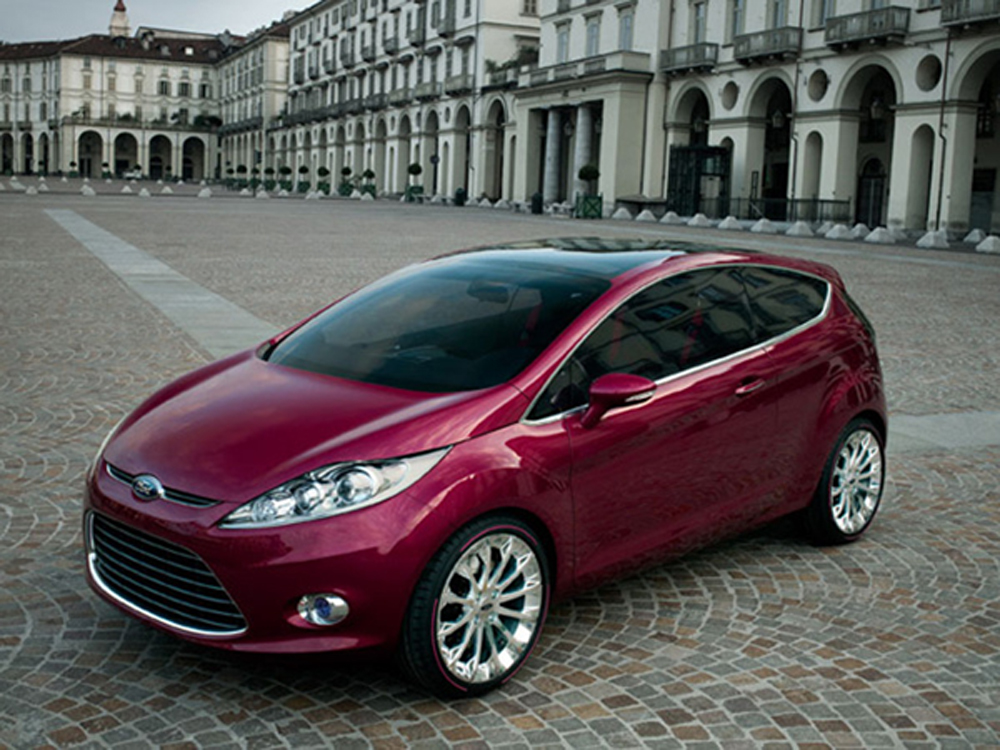
The new Ford KA... Boy I miss the URGLY brilliant old Ka

As with most cars on sale today, the new ford Ka is a beautiful looking thing.
However unlike most cars today, this evolution means a leap back in quality.
When I drove the car, I was immediately disappointed with it. At the time I really didn't understood why, but it just fell un-involving, disconnected....plain cheap.

You see, I've driven the old Ka a couple of times, but more important, I drove it's big brother the Fiesta MK4 for years...and they were practically the same.

Let's make a big X ray. of the projects supporting the Ka, first:
Back in 1989, Ford unveiled the BE-13 chassis on the 3rd generation ford fiesta.
The BE-13 was an important step in terms of chassis engineering. Most people forget the simple fact that during MK2 fiesta was comparable to a facelift of the MK1 Fiesta. In both Mk1/2, Ford had to undergo some heavy reinforcement engineering when they decided to launch the XR versions for the boy-racers. That was taken into consideration while developing the Mk3 chassis. 
Not perfect, the BE-13 was competent and involving. 

1995 came and the BE91 chassis with it. This is an important mark in Fords history. The BE91 was used first in the Mk4 fiesta and was essentially the Mk3 (BE-13 chassis) with revised suspension. It quickly became the best in its class, but more important, it just added to the Ford brand a distinctive signature of driving pleasure that just wasn't there as an experience to the entire brand (it used to be just a couple of model property). It just felt like Ford had unleashed their engineering team from the rally world and allowed them input into every other project...it was just wonderful.

The most important thing about this chassis, was the fact that, due to its brilliance, it was widely used. The BE91 was the basis of:
The MK4 Fiesta and The MK5 Fiesta

The Mk1 Ka 

 
The Mk1 Ford Fusion

 
 The Mk1 Ford Puma

The Mk1 and Mk2 Ford Courier

 and the Mazda 121!!!

This spawning of projects bases on this chassis is not only a proof of versatility. The Puma was a small-sports concept, the Fiesta Techno has a sporty appeal to it, the Mk5 Fiesta had spiced-up ST versions and they all fell involving and responsive.
I drove the Mk4 Fiesta from 1997 to 2004. The car was probably the best driving experience for money I've had so far. I even took it to the track and establish a point of matter against 2 tuned Mk4 Golf TDi, a tuned Peugeot 307 Gti and an alfa that was trying very hard not to self disassemble while not rusting from bend to bend...and of course that left no room to maintain braking ability. All the cars (tuned or non tuned) gave up and parked after 2 laps (most after some scary handling issues) mostly without brakes. This is arguably due to being badly equipped, or simply badly balanced chassis, forcing them to use the brakes more often...the mk4 Fiesta equipped with nothing more that tarox front discs and kevlar front brake pads, recorded over 12 laps and 3 of them were even video-taped and are available on youtube.
So regarding the BE91 chassis, I can say that I know it like the back of my hands.

So that was the great big disappointment on the first meters I drove the MK2 Ka... I felt No BE91... or none of it's evolutions... I felt lack of what has been branding Ford since 1995.

You see, The Mk4 fiesta was Ugly. The Mk1 Ka was even worse... I mean if the fiesta looked like a soap, the Ka would only make sense in Tokyo, and even there, it would not live to be cool for more than a week.
I was very critic about the Ka design... and the new one is just as beautiful as a Fiesta, with in turn is just as beautiful as a Focus.

 These are the Mk6...

...and Mk7 Fiestas

And the Mk2 Ka:
  
 Is just beautiful.

I mean compare the Mk1 with the Mk2 (on the design side alone):
 
 There is no other way to say this... the old is UGLY and the new one is BEAUTIFUL. 

The problem is that the looks, are nice when you show off, or when you approach the car. But when you drive it, they have no part in the rewarding experience...and regarding the rewarding experience the Mk2 is just BAD! Cheap! Plastic! Un-involving! It's one of the worse ford's I've driven and that included old transits!

The one to blame? Meet the Barbie Car:
 
Yup.. That's it! A brand known for creating robust and involving cars, took one of the best chassis it has ever created and replaced with the barbie car, from the brand known for creating...cheap un-involving, everything but robust cars.

The minute I knew this, it all made sense. I know why I would never ever buy a Mk2 ford Ka...its because of the lack of Ford in it!

Friday, June 22, 2012

Excessive automation and excessively low speed on motorways...kills people

Is  not news....not rocket science...the more your car drives for you, the less you'll be driving.

It's a simple fact; sure it's nice to have a car that ESP's you out of a potential spin...and let's the most hand-fisted driver endure a long life, and eventually procreate. Some might say that it's manipulating the 'natural selection'; some say it's just wonderful. I'm going for a good mid term: either you know how to drive and handle your car, or you go and get some driving skills...but that does not mean you should crash and die a horrible death at the very first try.


So yes, thought I hate having the car decide for me in 99% of situations; I.do reckon that there is the remaining 1% (snow or ice for instance) where ESP is good. And thought my cars never have ESP, I find it a life saving feature for 90% of drivers, saving them constantly from their lack of skill and knowledge.
But my tolerance towards vehicle automation stops there. Cruise control for instance kills people.
I loved to read this article as someone is actually starting to give some thought into this.

Mercedes has been doing it for some time now; as the king of excessive automation and excessive comfort, they soon realized that a car that maintains it's speed alone, brakes before hitting the next car and re-accelerates back to cruising speed after passing it, handles it self out of a hazard manoeuvre and still maintains the level of comfort that most living room sofas can't reach....will make it's driver sleepy, distracted or even wonder what should he do with the all that extra time.
As a result, they figured out ways to sense if the steering is too wobbly or the drivers corneas are not in a road oriented angle...and they did go beyond that assisting the driver in tasks towards others comfort, like lowering your high beams to oncoming cars.

This does however point out something very important:
Ever tried to drive 300km at a constant motorway speed of 120km/h with cruise control? I did the test. Unlike the usual 1 to none stops along the way, this time I've done 3... I had to eat 3 apples and had 3 espressos, trying to wake my self up. But still I missed my exits twice...and I'm used to this path. I've known it for the last 20 years or so and apart from the first time,I've never ever got it wrong...but then again I'm usually driving (not the cruise control) and well over the 120km/h 'parking lot' speed.


Excessive driver assistance is the dangerous mid-field of automation evolution.
It's not full driving automation, so the car can't actually drive for you 100% of the trip time.
So the distraction created from the partial assistance will generate hundreds or thousands of 2ton zombies cruising around.
When is it good? Well, when you get into a big mess and the ESP takes-over 100%.
Its simple... either you have 0% automation or you have 100% automation. The in-between is a dangerous territory for us humans...we tend to fail here by just getting distracted.


Wednesday, June 6, 2012

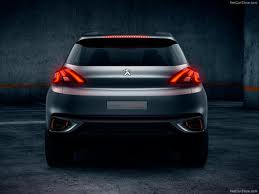
The Crossover Face-lift from Peugeot

Back in 2009 Peugeot unveiled the 3008 as a Crossover concept.
It is basically an SUV shaped as a minivan for better habitability. It's a Minivan-SUV cross-bread and that's why they call-it Crossover.
It is however a bad concept if you take stability and handling in mind. You see, a SUV will never be a good handler... the soft suspension coupled with the heavy body and a high standing position will always make it tip-over just too easy. It's pure physics! High center of gravity together with a soft and long suspension make anything (take the old Mercedes A-Class, the smart, the Kangoo... for example) unstable.
The minivan is not a particularly happy example. Sure it sits low like a car, but it's much heavier and the center of gravity is too high due to all that extra room for your kids to be able to play soccer in it. It's no wonder that the best handling minivan out-there is the Focus C-Max and if you look at it, it's low and it's also wider than it is high...and despite the brilliant chassis, do a left-then-right and you'll feel all that excess weight in motion.

The crossing between these 2 types of car is everything but a good idea. It reminds-me of an exert from "The Silence of the Lambs" where Dr. Hannibal Lecter  talks about FBI agent Clarice: "There are shallow rollers, and there are deep rollers. You can't breed two deep rollers... or their young, their offspring, will roll all the way down... hit and die. Agent Starling is a deep roller. Let us hope one of her parents was not."
It's about the same with car cross-breads...if you cross-bread a car that's prone to tip over with another prone to tip-over car, you'll have a really unstable car.

But that's not all the bad news. The really really bad news is the way it looks. It's just horrible.
Meet "Peugeous Horribilis":


I mean, there is not a single angle in which this design generates a different (or less violent) feeling this side of sickness and nausea.

So is this all? Unfortunately no! Today's mania of creating GLASS roof-topped cars allows for an option where you can have this horrible car and it's bad handling together with a roof that is about 10 times more heavy that the steel-roof in the absolute worse place...the very top end of the car.

The result? Well Peugeot tried really hard to control this design madness by stiffing it up (way beyond reason)...resulting in a comfortable car while stopped or in a good pavement, but totally uncomfortable in bad pavement or bumpy roads.
While driving it, you can feel all that excessive weight and how it tries to unsettle the chassis constantly...and how constantly the chassis tries to compensate. It's a full none-sense on wheels.
It's no coincidence that ESP is a standard "option" in this... and even with the ESP constantly watching over, do the Left-then-right and you'll be able to experience wheel lift even while under ESP control... that's a scary on-the-verge setup...and please mind that this is the normal steel-roof car. Add the Glass roof and you'll probably see it tip-over even on this slower test.


Now that the monstrous thing has been introduced, it's time to talk about it's new face-lift...and if they take this design forward, we're in for good news from this point onwards.


First impression: It's beautiful! That looks like a Peugeot...and unlike it's "3008 horribilis" predecessor, this HAS design.
Clearly there is some inspiration on the very successful KIA sportage front-end, and I do still read a lot of VW tiguan at the Back-end... but hey, it's beautiful.

The best part? Well, take a good look at the car and you'll always find it wider than it is tall. A very important thing because of all the right reasons that anyone with some physics knowledge would tell you - A lower center of gravity = better and safer handling.

Nice job so far Peugeot...now let's see this find its way into production AS IS, just like Mercedes pulled with the new A-class and you'll get back on my "car builder" list, as opposed to "construction builder" list.

Monday, April 9, 2012

Small comment on the new sports Hybrid trend.

I had to copy this text from a post I've just done on a Linkedin thead, discussing the new Ferrari Hybrid news:

I'm much pleased with this NEW hybrid trend. I mean I've always hated the stupid hybrid trend. The lack of engine in a Prius or IMA will make the petrol unit consume more just to drive around; then add 200kg of battery weight (and calculate the impact to mine and process all those heavy metals...and multiply by 2 cause they will have to be recycled some day)...let's face it. It's just a TAX scheme so politicians can charge more for ALL THE OTHER NORMAL CARS, and then use the money with their own V12 engines and private jets instead of applying the TAX in environmental equilibrium measures (like planting trees for instance).
But Lexus got this right the first time. If Hybrid is an environmental nonsense, let's use it for performance, with a small, light battery and an electric assist engine for launch-control torque...and best of all, most governments will charge HALF the tax they did cause it's hybrid.
Porsche did the same but took one step further and decided to mate it with a trajectory computer and make a torque vectoring system.
Audi followed and so did Honda.
Let's wait for the Italians and check it out.
But I must say...FINALLY someone uses the Hybrid for the only thing it's actually good : melting rubber!

Wednesday, April 4, 2012

BMW GINA - The best automotive Innovation effort since the year 2000

Hello again, I've dedicated some time trying to find exactly how is the car industry evolving, what are the best efforts being done and just how needed or logical they are.
To my deception, I've seen very few good products and a growing trend of spoiling what's good and create bad products following politicians unneeded laws that serve the sole purpose of non representative taxation.

Presenting GINA:
I've tried to go back 12 years. During that time I've seen some interesting Ideas and implementations, but none that could really make the wow factor...except this beauty:
Back in 2001, BMW, in a move I can only quality as ingenious, gave birth to the GINA concept Project. GINA (Geometry and Functions In “N” Adaptations) was a project of full creative nature intended to fuse disrupting technology and design with Form&Function Design bases.


They grabbed the Z8 full aluminium rolling chassis, with it's 400bhp 4.0 V8 and semi-automatic 6 speed gearbox driving the rear wheels, and started substituting the body panels with a wire-frame of aluminium structures. Some are fixed, but most are articulated and servo'ed.
To cover the skeleton, they created a "skin" made out of a translucent polyurethane reinforced silk fabric.
The result is brilliant. The looks organic...alive and the articulated structures move under the skin and change the car's shape according to need...
..whether it's a simple get in our out of the car...
... to carrying objects that are bigger than the trunk's original volume...
...or you are just a bigger, or smaller than your wife/husband his, because the obsession with Form-Function Adaptability goes all the way into the interior of the car.

If you haven't Seen the video:

As usual when it comes to prototypes (like the Asterio)... MY thoughts:
I'm an absolute fan of this car, and in particular, the concept it's self. I feel however that they were blinded by their own initial idea and left the improvements on the skin/skeleton side...and condemned it to the eternal prototype stage with lack of production engineering.
However since the time of it's début and consequent moving to BMW's museum, some advances have happened, making the engineering part of this marvel car a lot easy.
I'll break my analysis down into Problems and Solutions:
Problem 1:
Aero-Dynamics! Sure the car can change it's form as is and get slimmer and faster, but the car's skin is flexible and that will make it deform inwards when submitted to high pressures, and outwards when submitted to low pressures. 
Ever seen a convertible-soft-top passing you by at speed with it's fabric soft-top inflated like a balloon? Picture that the front of that same car was made from the same material and you would see-it deformed inwards.
Solution1:
New Electro-active Polymer Materials could compose an inner layer network of tissue, glued to the outer skin. This material will bend one way or another depending on voltage strength or polarity. Watch the video and you'll get how a soft skin would react to aero-dynamics deformation if reinforced with this fabric.
This would allow the car to strength the front with more voltage, the bonnet with moderate voltage, the soft top with huge inverted polarity voltage, and so on.

Problem 2:
Excessive Weight due to the articulated structures like the car's eye-like headlights.
Solution 2:
Once again Electro-active Polymers come to action with this video:

Problem 3:
Wheels! While focusing into creating a marvellous design evolution, BMW forgot to evolve the wheels into something lighter, with less unsprung weight, bigger braking power and killer looks.
Solution 3:
Osmos Hubless wheels.


Problem 4:
Excessive unsprung weight in the suspension. 
Solution 4:
F1 Style Push-rod Suspension.

Problem 5:
Doors. The doors should fold under the car instead of lifting like the Lamborghini's do. They should also reinforce the structure.
Solution 5:
Fuse the design of a NASCAR lateral protection Bar-frame with an umbrella like articulation of fixed mount joints. Then cover it with fabric and make the car side panel fold down to the car floor-line and back-up when you "close the door".

Problem 6:
The engine. Huge V engines age not the way to go.
Solution 6:
Either a 4, 5 or 6 cylinder in-line petrol engine, super-squared with reinforced valve-train and bottom-end to sustain over 11.000rpm. And a couple more engine options and mods I'm not writing about until I file my patents ;)

Still I absolutely adore this car and consider it the ONE thing representing quantifiable and award-able evolution since 2000.
Pity I don't work at BMW.