Saturday, February 27, 2021

Ayrton Senna da Silva - The death of best race car driver even seen

 Hi all

Another big post, as per request of my former colleague Christian Lisboa.

This is a Bitter sweet one:

Bitter because for me, F1 died with Senna. I stopped watching races as I was so disgusted with the way they allowed it to happen, the way the race continued as they clearly knew he was dead... the disrespectful manner they managed the "last squeeze" out of their "golden Chicken", was just too much to forgive. Bitter because he was an extraordinary human being and even better driver, and i respect him immensely. Sweet because during this post I not only talk about the accident, but also talk about who he was and how gigantic he was... both sport and personal wise.

This will be a long one, and I'll approach the explanation of how Senna died, but, more important, the physics behind his crash and the even more important guilt by some people that deserve no respect at all from the rest of human kind (although one of them "presented him self as a friend of Senna").

Before starting:

I'll just start by stating that Senna was the best I've seen... ever. There are authentic Gods of driving before and after Senna, some alive, others not... but Senna was an absolute prodigy that lived to race. His focus was absolute. 

A lot of people argue if Messi or Christiano Ronaldo or Figo or Maradona where the best football player... Messi is a natural born genius, Christiano has archived by means of unprecedented focus and dedication and very very hard work, Figo was intelligent and technical and Maradona was all passion and he gave it all to the game... heart and soul. 

If you where to Fuse all these together, you would come up with a football player that would still come short if compared to Senna as a Race car driver.

A lot of people misunderstand Senna and come shallow. But if you dig into the documentaries of his short life, and if you understand the culture he grew up in, you'll learn to respect him in ways that may surprise you. 

Senna as a race car driver

Senna started driving karts and winning at 8years of age. He was small, light and tried to understand how the mechanics of the kart worked. He used it all to be faster and more aggressive... this physical characteristic was maintained, by means of a tough physical preparation routine, through his life. As a kid, being trained and advised to "cool down his times" he would reply: no! with me it's either first place or no place. 

This attitude, however was not filled with presumptuousness like most. His friends described him as someone "big enough to be little". He wanted first place but he knew he had still limitations and he had to learn. So he followed an independent career being champion at all steps. Karting was the one championship that he didn't win, but all the formulas, he followed patiently the path and even declined a jump to 2 F1 teams in the process. He had to reach it and learn the way through... we would not take shortcuts.

He knew he had to build driving skill and also mechanical knowledge... or... engineering skill. And he pursued that with passion and dedication rivalled by no one else. The one other driver that came close was Michael Schumacker. 

He was also conscientious that he was small and light, so he build himself up to the task ahead. He started his physical tune-up in 1984 and he never stopped till the end of his life. He tuned himself to have better blood sugar and oxygen levels consistent under stress, and keep his BPMs as low as possible.

Much like a race car from those years (it was light as possible and made "fragile" to the point of minimal needed function) It will hold together and have the strength to suffer stress... until you crash... then you have no possible protection from the chassis as the logic is: this was made to race, not made to crash, so don't!

Senna was light and his physical preparation was always towards having enough strength to race the car without driver-aids assistance and during the race... and not more. 

Senna rigorously prepared himself physically for stamina and leanness. He tried a balance between having strong neck muscles, but the remaining muscle preparation was mostly cardio (with LOTS of running) in order to have lean muscles and not big muscles.

Senna has several videos after his races where you can see him suffering in pain and not being able to withstand hugs and shakes due to extreme muscle fatigue and a lot of pain. Those where frequent as he was... building him self to have ONLY the necessary muscle to drive the race... not more as it would be weight and size, no less as he wouldn't be able to finish or drive properly. This sort of "Fine engineering" of your body is some samurai stuff!

The first time Senna lost a race to rain, his frustration led him to get back to a kart, on slicks get to the track and drive in the rain... over and over and over... and then progress to bigger chassis and learn all over again. He would learn and study new chassis designs typically in the rain.

Senna practised what was scary to him until it was actually fun. You can see this attitude on Another genius called Keiichi Tsuchiya (the drift king).... they actually have a lot in common in terms of driving technique both steering and throttle management wise.

The result was a mastery of the car dynamics that no one else came close too master. In the rain Senna managed to find grip where no one else was able to. But this knowledge is also valid in the dry... resulting in the capability of driving CONSTANTLY on the car's/track/weather grip limits.

His win rate in the rain twice as good as Michael Schumacher was (66% vs 36.5%). This was clear at Donington race in 1993 as you can see for your self:

There is something you need to understand about Senna. He looks at all aspects of the race... and that includes the weather. You see, back then McLaren had chassis to race but the development of the engines (leaving the turbo engine and going back to natural aspirated) where still behind the competition's power delivery. So he had to use the conditions where all others couldn't use the power advantage... so he had to use that as an advantage.. and he did so with brilliance yet to be seen again.

He also studied the mechanics of the race cars he drove and while other race car drivers would pit-in, state the car was "loose on the rear-end" and drive of to the hotel, Senna would literally live in the Paddock, with the mechanical team and would tell you that the "rear toe in is to aggressive for the wing down force" for instance. His knowledge of the car systems and tune-ups was so great that he even adjusted brake bias to solve hydraulic issues during racing, or even finished races with a blocked gearbox in 6th gear.

The level of focus he had was tremendous. He was a very religious man (as most Portuguese and Brazilian are) and the fact that he talked about "feeling closer to God" and that " he believed that God would help him out of trouble", etc was miss interpreted by a lot of people... stating with his scared shitless colleague alain prost (small caps in disrespect... yes).

You see Senna did believe in God, but what you believe in is just a figure of speech. Buddhists monks meditate and reach a state they feel elevated, devoted Catholics feel that being indoors in a church makes them feel elevated... it's just a way to picture a strong will to believe in something that makes you re-wire your brain. 

There is a reason why training is often repetitive. If generates brain connections that will allow you to react without having to think about it. 

If you are able to believe in something that doesn't exist, but you still strongly believe, your brain will rewire and offset part of the "thinking process into a not needed" allowing for the purely physical movements to happen. 

You react using per-memorised action/reaction patterns and bypass the thinking process. This is what happened with Senna. By strongly believing in God he reduced the fear of death/injury, allowing him to enter a state of "meditation" if you please and focus his brain activity on the dynamics of the car and not the dynamics of a crash and pain and misery, etc etc etc.

He got so focused in this that during some of his races, Sid Watkins, watching the telemetries, said that he would stop breathing for up to a minute... this is tremendous, particularly in a f1 car form the 90's

Some pilots understood this,, like his team-mate at the time of death, Damon Hill. He would say that Senna would through himself into a corner faster than he ever did and believe that something inside him would pull him through..some people call it faith, some people call it belief, but if you study him,, you understand that he trained himself so he could have muscle memory solve part of the problem, and focus his brain on the physics to make it work, instead of multitasking himself into a crash due to delayed reaction.... brilliant!

Look at this lap on this RUTHLESS Monaco circuit.


Senna got so serious about driving that when he made mistakes, we would stress about them and punitively re-live the circumstances (cry in frustration) and then... learn as a traumatic experience. He must had been half Japanese with this Samurai/Ronin sort of ways.

Last but not least, Senna compartmentalized friendship and rivalry. The fact that you are friends with someone, doesn't mean you are going to giveaway an easy win. Rivals are rivals and the battle to win would happen independently of friendship. There was always respect for life and the individual and the sport was the main driver for this behavior. He would battle to win each corner, each breaking approach, each racing line... the sport. Not politics and deception.

This is why I lost all respect for alain prost. He mixed being competitive with being vengeful and that ultimately strongly contributed to the path that lead to Senna's death.

But Senna the man... has the ultimate workaholic.


The disgusting politics and french protectorate

Back in that day, the president for F1 was jean marie balestre (small caps in disrespect). An authoritative, arrogant and very nationalist Frenchmen. 

Evidently, being French and very political, alain prost had a excellent relationship with balestre and he was very protective of alain. 

prost was a very methodical driver and also very very egoist. Efficient, but far from genius like Ayrton, we clearly understood we would be eclipsed by the your team mate and as such they started a very nervous relationship. 

The problem here was that, as Senna was much better than prost as a driver prost was a good politician and Senna was everything but a politician. 

The competition between the 2 got to a point where, in Susuka 1989, prost, leading the championship and having the title IF Ayrton didn't score the race, crashed against Ayrton on purpose (trying to take him out of the race). But Sennas superior driving managed to escape wth a damaged car through the safety chicane and drive to the pit, have the car's nose fixed, back on the track and won the race. 

Being a politician, prost rushed to is "mummy" balestre and they both conspired to blame it all on Senna as being very aggressive.

Not happy with it, they also distorted the safety regulations and grabbed the rules book to invalidate Senna's victory. In the end the deliberation was that as Senna "followed through" the chicane, he did not complete that lap via the circuit path. As such the lap did not count.EVIDENTLY the chicane is there to permit the drivers to slow down, and the follow through is there to permit the ones that fail the breaking into the chicane APEX, have a secure alternative to avoid crashing. According the blestre's arguments, Senna should have reversed back into the chicane, going the wrong direction, and then resume the chicane. It's absurd, dangerous and plain stupid.

They managed to sanction Senna with 100.000 GBP fine and a 6 month ban. Ayrton was disqualified from the Japanese Grand Prix as a result, and prost won the championship that year. They also tried to launch a civil law suit against Senna.

As McLaren manager, Ron Denis, tried to save the day, jean marie balestre threatened to ban McLaren from racing.

As expected from a politician, prost pursued to badmouth Senna in public hearings claiming he was a danger to other drivers because he believed in God and drove like a mad man... how bizarre! Senna clearly speaks out claiming: "I'm a race car driver! I always try to win! I never settle! If i see an opening and do not try to take it, then I'm not a race car driver anymore" This is possibly the most professional claim I can think of, as a reply to such absurd claims from prost (and I'm an atheist).


McLaren released prost form contract and prost shifted to Ferrari, running away from Senna as a team mate.

Fate has it's ironic cycles and in 1990, on the same situation, same track, but with inverted roles, Senna did the same to prost ,and took the championship... it's one of those times where you can see Senna being vengeful and unhappy with that. He crashed both cars on the first corner in a very clear statement.

This same year, during driver briefing, the same rule that got Senna to lose the race the year before, was waved away (as it should) because of safety considerations. Senna backfired as you can see here:


Again alain was playing political games with balestre,and managed to steal the pole-position from Senna, after Senna qualified with the best lap time,(as usual)... well  our boy was not gonna eat another pile of crap so... here is the what goes around comes around moment:


If you want to see how balestre was, you have a good picture here:


The pressure

As time went on, McLaren/Honda was not being able to maintain technical superiority, partially because Honda was shifting it's "support" for f1 and not giving its best.

Back then, the arrogant alain badmouthed Ferrari's car and engine, and as such, was fired! You can badmouth ANYTHING but the car, if you work for Ferrari.

As he moved towards Williams, he insisted on a clause on his contract that stated that, while his contract was valid, Williams would not hire Senna.

There is a catch here. Williams had just debuted the FW15 chassis. It was nothing brilliant mechanically, BUT it had active suspension... and that made it a complete GOD on track. 

Senna's McLaren could not compete with a car that would setup for each curve automatically... and was loosing ground behind prost that had an easy win on the championship...and retired while he was still ahead.

Senna felt unsupported (mainly from Honda) and then from the technical disadvantage McLaren had against Williams.

More Political crap

As expected prost retired. Williams was then free to take on Senna and they did. 

But our friend balestre was not yet done. A ban on Active-Suspension meant that now, Ayrtons fresh new Williams would not behave as it did before. In fact the car's chassis without active-suspension (FW16) was inferior to what McLaren (the one Senna had previously) had and was very unstable. 

It wasn't all. Back then the cars had jumped from 660Bhp to over 800bhp between 1989 and 1991, and there was traction control and abs available to help the drivers. The gearbox had torque limiting functions to avoid low gear spin.

Guess what... those where banned too (or heavily tamed down).

The consequence was that Senna had a very difficult to drive and less then perfect chassis on his hands.

Frustration was setting in. 

The direct consequences of the ban on driver-aids where immediate:

Pedro Lammy broke both his legs and a front collision, after locking his front wheels while breaking for the Monaco chicane.

Ruben Barrichelo crashed badly that fatal weekend, Roland Razenberger lost control of his car and hit the protection wall at over 300km/h. He died instantly. 

Senna was then presiding the pilot syndicate and brought this extra pressure on to his shoulders. Something had to be done to restore some safety into the sport. But mean time, show had to go-on... and he would die on that same weekend. Senna had lost his battle against politics... professionalism and passion lost to deceiving and grease (the most disgusting thing in existence).

The crash

The day of the crash, Senna is very nervous. There is a comment that some interpret as a "peace message", I personally interpret as a very intelligent and loaded with cynicism critic to both alain and balestre. Before racing, Senna says "please come back alain, we miss you". 

No one will really know what he meant, but what I read is that he wants to say something like : you should return, with you here, balestre would never ban the active suspension so you could win, he would never ban other driving aids so you could win... in the end, we're dying here and having you around would be sufficient to ensure proper rules for you that we would benefit from (or at least not drop dead because of). Some people think that phrase means, I miss you, I miss the constant fight... but if you consider all the pain prost-balestre politics pulled him through, you would think twice. In the end, I believe Senna saw balestre as the chauvinistic beast he was and understood that the past, thought hard, was not as bad, because of the presence of a french champion on the sport... it's a very sad feeling and his face shows evidence of it! he was right.

The cabal moment:

The moment of the crash is a well known film, and it has spawned several theories.

I've heard about tire burst (no evidence of that, on the contrary)... steering column catastrophically failure (another joke... when you break the steering, your hands instantly snap free to rotate due to the breakage on the link between your hands, torsion and the wheels gyroscopic movement)...the list goes on, but I'm sure some ET has a part in the plot.


Conspiracy theory nr 1 - the steering column - 

The video shows an erratic movement of the steering column. It looks like as if the Weld-adjusted steering column broke at the welds and cause Senna to crash.

Take a good look at the conspiracy theory video:


There are several problems with this video:

1 - the steering column, at 3 g's will flex and allow movement... it's designed to do so.

2 - the steering column adjustment that increased the length, was done by adding pipe-IN-pipe and then welding them together. So the piece of pipe (that actually broke with the impact) was placed inside the original steering column pipe. This means that the only way the steering would break like that, would be by a fracture being able to crack TWICE the metal thickness (plus the stronger weld)... very very dubious.

3 - The telemetry! The little tell-all blackbox on board the car, measured everything from percentage of inputs to torsion forces, and in included the steering wheel. That actually shows that Senna was 101% throttle through the corner, the torque applied on the steering was quite on the linear side of things (a broken part would generate variations as the frustration of the pilot would ask more form the failing part), It then shows a decrease in torque and 1/10th of a second later, a counter steer (yes, he reacted to his last drift in 1/10th of a second.... wow)... then full brakes as the torque was still being applied by the driver.

4 - the footage - If you are forcing a pipe to turn left... and apply force... and it fails, your hands will cross to the right as you "win" against the pipe fail. Several pilots told that.

So what really happened?

Senna was driving the recently capped down chassis, and struggling to find balance. As a result of the chassis losing the active-suspension it had been designed for, the best way to fix it, was to just lower the car, much like you see today with "bad tuning". Lowering the car kept the center of gravity low and, crucially, would generate extreme wind velocity under the car, generating a lot of down-force that, in turn, generates grip. The problem is that there is a reason as to why cars have suspension. 

The reality is that, having the car that low, would depend heavily in other factors that had to be maintained:

 1 - tire stress and temperature

 2 - track pavement quality and smoothness

Some background: Daniel Bernoulli, back in the 1730's, mathematically describes the relationship between pressure, density and flow velocity, in fluids.

The physics is as follows: if you look at an airplane wing cross section, you will find that the air that goes under the wing has la shorter path to follow, while the the air going over the wing has a longer path to go... so it must flow faster. Faster fluid movement generates lower pressures and that will pull the airplane up. 

Now look ad the cross section of the airplane wing and turn it upside down, you will end up with the fundamental design of an F1 car. 

In the end, an F1 car is more of an inverted airplane than a car. 

At full speed, an F1 car generated 4x it's weight in down-force, without generating inertial weight. The problem is that if you remove the aero dynamics form the equation, its just as you have an invisible hand from a giant pressing you car down a curve, making it grip and hold-in the the road... and then. mid corner, the hand suddenly is removed... you car will be taking too much speed and too little force to sqeeze the tires to the ground and you'll crash! Any high performance racing car will have a minimum turning speed, meaning that if you turn into a corner bellow that speed, the aerodynamics will not be helping you have grip and you will crash.

Back then, Immola had been "almost" red-flagged due to poor track conditions. The track was not smooth enough. Obviously, some careful political negotiations avoided that... but then Ruben Barrichelo got hurt, Ratzenberger and Senna died... well, politics has a way of making carnage refined and inconsequential to the killers behind it.

As any major accident, it gets down to a series of "fails" that pile up and sequence to generate one cabal moment.

So what really happened based out of physics, telemetry data, footage from his car and the racers following him?

Senna's car was too low! It was such way so that, after the initial laps where the race starts picking up pace the car would be at a optimum distance from the ground, as the tires inflated with heat and the ride weight would stabilise into the optimum value to squeeze as much air as possible under the car's flat bottom and maximise grip on high speed corners.

Footage from Schumacher's car and Damon Hill show Senna's car belly hitting the ground constantly and sparking all over... there is a MASSIVE spark shower right at the point Senna lost grip as you can see here from Schumacher footage as he was pursuing Senna:  

The car was bottoming because instead of having 7 full laps of tire warming time, the race was interrupted and the pace-car was pulled into the track to reduce the speed while the a crashed car was removed from the track and the track cleaned-up. 

This made the tires less warm, and less inflated, reducing the ride weight that was just TOO TIGHT due to the chassis natural instability! As the car passed some bumps on the poorly maintained tarmac, with the tires still under-inflated, the car bottomed into the ground and blasted sparks all over the place as you can see by Schumacher's footage.

This interrupted the flow of High-speed air under the car and stopped "sucking" the car onto the ground, at that point, the rear wheels, under 101% throttle power and no downforce, started to spin as the tires gave away into the inertia of having to turn the heaviest part of the car without assistance.

In 1/10th of a second, Senna counter-steered to maintain the car stable, but the bump is now through and the car is starting to grip. As the grip on the front-end is regained the car violently pulls in the direction of the centrifugal force, throwing the car outwards in the track. Senna, again, blazing fast corrects the steering and applies 100% breaking... but the "tamburello turn" is very poorly designed and there is no space to recover.

The car skids all the way into the concrete wall and violently hits the wall.

The accident was not avoidable. 

NatGeo has a good documentary that covers almost all angles. I recommend you to watch it and learn a thing or 2 about how "on the limit" the physics of an F1 car is.:


The bad luck

If the angle that Senna's car hit the concrete wall was a bit less incisive, he would have exited the car maybe shaken but certainly alive.


However, as he right front tire hit the wall and broke, it got pinned between the car and the wall as it was dragged along with the movement. As the car rebound off the wall, the entire tire assembly with all the hub and suspension arms passed over the car towards Senna's head and hit him hard.

The crash point in Senna's helmet shows that the heavy, hard and full of inertia wheel hub, with the attached suspension arm, hit Senna's head just above the right eyebrow, fracturing the helmet and transmitting the force into his skull that fractured and ruptures the temporal artery. 

His fate was sealed... the hemorrhage and damage to the brain would leave him suffering and dyeing. Senna died at the track, but he was immediately reanimated several times all the way to the hospital for one simple reason: Had he died at the track, the track would have been closed and the race finished. Imagine how many million would not be won by F1 and the sponsors due to the interruption of that race... yeah the little piggies had to get their dime.

Here are some pictures from the "senna files" website (conspiracy theory website I may add):


Summing up?

1 - balestre... his pursuit to protect alain prost and then "ignore" safety while banning driver-aids like that, makes him my number one culprit. Has Senna had the active-suspension like prost had, the car would be riding at normal heights and not as unstable.

2 - SanMarino race track - if the road is bad... then it is not fit for racing. You need to loose money by not hosting the event and then lose more fixing it... but at least you don't kill people. Also, and that was pointed by Senna before, the concrete wall at the end of a very slim deceleration area, on such a fast corner, would never be a good idea now, would it?

The rest of it is consequences and bad luck,, added to a sport that was pure risk. 

But the disrespectful meaner that the organisers treated him the moment he became a threat to alain prost, all the way to his death is just too disgusting to ignore.

To me, it was not just the best driver of all time that died that day. It was also F1 as a sport... just sad.


The one remaining conspiracy theory that makes sense

There was previous to the accident, evidence that, in the pursue for lightness, williams FW16 chassis was very fragile and some catastrophic suspension collapses had happened before. 

The same theory could explain a sudden diving of the car front end and that would then be the cause for the disruption of air under the car. 

This however is not sustained with evidence and the footage from Schumachers car seem to show the bottoming happening at the heaviest part of the car (the engine/transmission package).

However the same evidence that can't prove that, can't eliminate that. 

The reaction from Williams is a factor that could be looked at, but the nervous reaction from the team could be as much fear from responsibility as true responsibility... so it's just speculative.

That however does not remove all the other factors and neither Lamy, not Barrichelo, not Ratzenberger where driving Williams FW16...


... I'll leave it up to you to make your own conclusions.

Thursday, February 25, 2021

Driting 101

After a long consideration period and some requests from my colleagues, I've decided to review a couple of old unpublished articles and compile them into this single small article about drifting.

I'll be using a lot of Keiichi Tsuchiya videos to explain the concepts. If you want to learn, learn with the best, and there is a reason they call him "drift king".

First Things First:

There are 2 types of drifting.. the show-off stuff and the go fast stuff.

I'm not really into the Show-off stuff except for training purposes... so you should try long drifts while learning so you can find the sweet-spot and keep it there easily.

My thing is the Go Fast drift.. this will land us into the good old discussion of grip-driving being better than drift-driving. 

Definition

If you consider drift driving as I do, You'll define it as: the control of the car motion during cornering or in-between cornering, beyond the grip limit, while trying to make the drift pull the motion of the car into the desired trajectory.

If you stop and think about this a bit, what you are saying here is: instead of having the car under grip and use the front wheels to steer it into the corner, you'll have it BEYOND the grip limit (so... going faster) and use the drift to control the inertia of the car movement, trying to turn it into the motion that resolves the curve (this is very important). 

Now I've claimed the "motion that resolves the curve" and that is the key. 

This is the beauty of the well known Mitsubishi/Volvo AYC (Active Yaw Control). If you have the car pointing towards what is the exit of the curve... but still drifting in an arch path thought the curve, you can floor the car most of the time and have a faster way thought than having the grip driving with the tires countering the car's tendency to slide.

In the end, there will always be opinions about grip vs drift but, if there is a grip limit that the speed vs weight (inertia) and tire vs turn radius (drag) will determine and you are OVER it, then, if the car is the same and so are the tires, and the bend on the road, the only chance for you to be over the grip limit is by carrying more speed...so speed is higher... the only remaining argument will be the ability to maintain this speed advantage throughout the entire corner and that is where anyone that has properly driven a proper 4wd or RWD machine will claim that drift driving is faster.

Take a look:


Back to the tech stuff

I divide Drift into 2 main categories : Inertia drift and Grip -Break drift.

They all have influences on each other, as they all are the balance into the lack of grip and the inertia of the movement... but I divide them like this as "ways to initiate the drift".

Grip -Break drift:

Starting with the Grip-breaking drift. There are 3 ways to do this and the  most well known is the Hand-break drift. It's then followed by the Power-Over drift and the least well knows one (unless you've driven a RWD PURE car in the rain on snow), Shift-Down drift. 

They all work by breaking the grip between the tire and the road. The physics are quite fascinating. As the rubber holds the road, there is an elastic deformation that "much like a gecko" makes the tires design deform to meet the road surface. That is why a pure slick has a much more linear response breaking out if grip then a snow tire: there is less elastic deformation to consider. After overwhelming the grip of the tires elastic deformation, the slide will drag the rubber over the pavement and the rubber will create "marbles" as small pieces of rubber break away and roll under the tire... the heat will in turn start to melt the tires, and ultimately it will start to bun the tire and produce that smoke we all know... the smoke is the liberation of gas from the burning tire compound and that reduces the grip further.This is why the loss of grip is progressive... and this is just assuming dry-grip loss... add water, snow or ice in the mix and this VERY SIMPLISTIC explanation gets a hole different level of complexity.

  • Back to the methods... you pull the hand break and the car will instantly squat and generate drag! Do that on a straight line and you'll be slowing the car down in the most stupid and inefficient way you can find... if however before you do that, you yank the steering to one side and de-compensate the chassis by shifting the cars center of mass, you'll be inducing a over-steer slide as the rear will follow movement inertia, but will no longer be gripping properly to turn in. 


  • Power-over... Power drift... cal it whatever you want. The grip loss principle is the same but instead of using the car's stopping power, you use the engine to overwhelm the grip. On some cars all you need to do it floor-it, other will not have power delivery with the sufficient brutality and will require a Clutch-Dump. This is when you clutch the car, rev the engine gaining rotational inertia and reaching a good power band, and then dump the clutch in a brute manner.
The wheels will start to spin and IF YOUR CAR IR AWD with a rear bias... or RWD, you'll induce a drift by over-steer. If you own a FWD... you'll just generate wheel spin and eventually (most likely) under-steer... it's still a slide... but it will be towards the tree on the side of the road and then the repair shop... eventually the hospital or morgue! Under-steer is BAD and except for helping to stabilize a 4wheel drift like the video above, you don't want under-steer near you. 

I often hear people talking about Powerslide, and that it is the same as power drift... well... yes and no! Yes it is the same "thing happening" to the wheels and basic car motion. But there is a fundamental difference as to purpose.

You Drift the car INTO the corner! that means you are using the power of the car and the motion of the car to slide the rear into the position the car will have THROUGH the corner. Power slide is when you allow the rear to slide after the corner has been "resolved". So if you are sliding BEFORE the APEX of the corner, you will be drifting the car, if it is after the APEX, you'll be power sliding the car, as exampled here:


  • Finally the shift-down of shift-lock drift. If you own a RWD car... and don't rev-mach your shift-down, you'll eventually find yourself sliding the rear under breaking and shift-down... either while driving through the rain, or on a HEAVY breaking and aggressive shift-down. It's the same effect as a handbrake, but the wheel s aren't really stopped,... they are just spinning too slow for the car's inertial movement and will generate a close to handbrake effect. So, if you own an S2000, for instance, LEARN TO heel-toe and then rev-match you downshifts. If not, then drive really slow in the rain... like an old lady.

In the snow or ice, it can be as simple as just, letting you foot off the throttle. Nasty stuff!

This is also why it is frequently confused with the lift-off over-steer! Lift-off over steer will be explained later because it is a different type of drift induction. However, as explained before, the inertia and grip go hand in hand...they all have a part to play, but we are dividing the categories per Induction of slide method). 


Inertia drift (A.K.A. weight-shifting drift):

Yes all drifts will, in the end depend on managing inertia and grip, but this sort of grip doesn't not involve using either brakes, clutch or engine to break grip... This one uses the car's chassis and the way it handles the movement of the center of weight (or mass) your car has, and the inertia the movement brings.

Does it take leverage out of managing the engine or breaks? YES! but then again, not the same way as a break drift does.

  • Braking drift is done by steeping heavy on the brakes and wanking the steering into the corner as the front end gets squeezed by the weight shift resulting from the braking. 
In the end, your suspension will be compressing on the front and decompressing on the rear... the weight of the car will be adding grip to the front tires and loosing the rear. As you yank the steering with a firm but progressive movement, you shift the front of the car's weight into the corner, but the rear will try to maintain it's inertia and slide the rear of the car out. 
 
You then need to have enough power form the engine and grip from the tires to pull through. This is not the drift that can be aborted easily, as you are carrying the car weight into the corner and countering it will mean you will have to counter the inertia you where provoking to happen in the first place. A full spin is sometimes the best way to recover... but not always.
 
The best cars for this are heavy and soft damped cars. I often use this technique on road cars due to the soft suspension setups, and you can even slide SUVs like this... I used to drift the Volvo XC90 this way... really easy to work the Volvo DSTC with this technique. In this care I just delay the breaking and then last minute, I step a but harder and yank the steering. 
 
This method needs a properly setup front end. If your car is too toe-out or the geometry is bad (wear bushings, damaged wishbones, etc) you can fail to induce the car s front into the corner with enough force to destabilize the rear and may end up under-steering. Careful!
 
This is an example of a Breaking drift. 


  • The Scandinavian-flick or feint-drift is done by proposely destabilizing the car and making it slide. It is the common cause of accidents on the road while diverting from a collision. In essence, If you want to steer right, as you approach the corner, you first steer left (compressing the right side suspension) and then flick the steering right (compressing the left side suspension while the right side springs back violently). This immediately induces the car into a spin and it does so in a very DECISIVE and NOT EASY TO COUNTER way. You better know what you're doing if you plan to do this at speed.

Take a look at it here:


  • Financially the lift off over-steer. Lift-off is really easy on a FWD car... and again, a common cause of accidents on the road as people get pulled into corners, they get scared, they lift-off, the car's engine starts decelerating the front, moving the mass and loosing the rear... as the rear looses grip, people get stared and break, making it worse and crashing. This is the reason some cars are "engineered" (if you can cal it that) to UNDER-STEER on limit, as the lift-off scared driver will gently pull it back into a possible apex line.

Take a look at an example here:


On a RWD it is a bit trickier as it requires a provoking of the car with acceleration and liftoff so that, much like the Scandinavian-flick (or feint) drift, the car compresses and decompresses the suspension. It is the same as a Scandinavian-flick, but instead of Side to Side, you compress rear and the front... So you accelerate hard, compressing the rear springs, then lift-off decompressing them and compressing the front and the weight shifts... you may need to do this in sequence at the rhythm of the car's suspension to gain enough inertia to make the chassis destabilization work properly.

This is an advanced for due to the difficulty of matching the cars suspension dynamics, the speed and the simple fact that if you get it wrong... you're gonna crash HARD... it's also the most efficient way to prove that drifting can be faster than grip driving.

 You can see itin detail in the Drift Bible video that I recommend at the end of the article.


There is A LOT MORE into drifting and learning how to do so. 

My recommendation is you buy DriftKing,s Drift Bible and take it easy and off public roads. 

This article has been rushed into editing (due to my lack of time) due to a special request form my colleagues at SwivelSecure team. If you like it, thank them:

  • Christian Lisboa
  • David Assuncao
  • Diogo Figueiredo
  • Joao Leal
  • Marco Rodrigues
  • Ricardo Wong
  • Tiago Silva


 Have fun and stay safe.


Tuesday, January 7, 2020

My good friend Mario asked me, if money was limitless, what would be my garage.
Well, I told him that if I had infinite amount of money then a would:

Buyand use it
Mazda RX7 FDohh yeah
Nissan Skyline R34 VSpecII ohh yeah
Nissan Skyline R34 Mines Tuneohh yeah
Honda NSX Type-R (gen1)ohh yeah
Toyota Supra BiTurbo 2JZ (gen2)ohh yeah
Lexus LFAohh yeah
Ford RS200ohh yeah
Ford Escord RS Cosworthohh yeah
Lancia Delta HF integraleNaaaa, would be stored in vacuum
Audi Quattroohh yeah
Lotus ExigeS PrototypeRacingohh yeah
Lotus ExigeSohh yeah
Lotus Esprit V8Turboohh yeah
Lotus Elan s2yeah, every now and then
Lotus 340Rohh yeah
Honda Integra type-rohh yeah
Ariel Atom K20ohh yeah
Ariel Atom V8ohh yeah
Radical XRohh yeah
Volvo C70 T5yeah
McLaren F1ohh yeah
Porsche Carrera GTohh yeah
Peugeot 205GTIyeah
Renault Clio Williamsohh yeah
Ford fiesta 1.25i technoyeah, every now and then
Ford Escord Xr3iyeah, every now and then
Volvo 850Rohh yeah
Volvo V70T5 (gen1)errr my daily driver... so yeah everyday
Lexus IS200 hell yeah
Honda S2000 (gen1 facelift)I already have it, so hell yeah
Honda Civic Type-R EP3ohh yeah
Mitsubishi Lancer Evolution MP400ohh yeah
Subaru Impreza GT STi (Gen1)ohh yeah
Mazda MX5 NBhell yeah
Peugeot 106 rallyeyeah
Peugeot 207 rallyeyeah
Peugeot 405 Mi16yeah, every now and then
Mercedes GullWing... the one and onlyToo scared to break it... would probably just look at it
Renault Megane RS TrophyNaaah... just to pull another friends chains
Noble M12GTyeah
Noble M400yeah
TVR Cerberayeah
TVR (brand new one by Gordon Murray)f$%k yeah
BMW M3 E46 CSLhell yeah
BMW M1just for the kicks
BMW 850 V12Just to fool with the Panameras
Porsche 911 Gt3yeah
Toyota AE86hell yeah
Nissan Primera Gt2.0yeah
Honda Accord Type-rhell yeah
Volvo S60 T5 (Gen2) POLESTARThell yeah
Volvo V40 T5 (Gen2)hell yeah
Suzuki Capuccinohell yeah
Mazda RX8sure... why not
......
I'll be adding to this list as I remember more... but you really don't see the typical ferrari and Lambo stuff in a list I make...any list I make. It's just not my thing.

Thursday, October 1, 2015

The "I told you so" post

http://www.theguardian.com/environment/2015/sep/22/the-rise-diesel-in-europe-impact-on-health-pollution

Following VW scandal, new tests uncover that Mercedes is even worse, BMW does the same...and peugeot, toyota...well ALL OF THEM.

Why? Well because like I've been saying for years, diesel is a lot worse than gasoline...is engines and obviously pollution.

Of course no one listened to me because the manufacturers say it is good...than I must be true.

Time now for the revenge post: I TOLD YOU! Years...decades ago.

The Diesel is now on count down...finally. Next step: false hybrids.

Wednesday, September 23, 2015

VW... you are stupid... ballsy but stupid... and also right.

http://www.bbc.com/news/business-34325005


Shocked by the VW scandal, I decided to post this article.

I can't believe how stupid they here, how ballsy they were and ultimately how right they are.

Politicians, in their infinite stupidity think that the world will be better if the clean cars (gasoline engined) are less, and dirty cars (diesel engined) are more and more controlled by regulations that ultimately will kill the engine power making you pull it harder or buy a bigger engine.... ending in more pollution anyway.

There is a why to this: tax! More tax means more money for them... of course the idea of taxing a car that pollutes like a gasoline engine car, is to plant more trees and green areas to compensate... but that money is deviated... lets just say else where.

There is the other matter... by taxing gasoline cars, people flee to diesel ones, and that constitutes a bigger problem as diesel emissions include a lot of carbon particles... this is worse then gas, so the politicians add regulations and taxes to try to baffle the resulting pollution... no trees from taxes still, just more money.

So the game is: Make it as bad as possible and then tax on it and make fortunes.

In order to do that, every car, upon certification to a specific market will have pass a set of tests including the emissions test.

So far so good. We knew that already. The problem is that VW also knows that and ultimately thinks "I don't really care for stupid policies, and if you are making money on us, than I'll fool you".

So now for the news:
Every car that is fitted with ESP will not allow you to properly test it on a rolling dyno. The 2 front wheels spinning while the 2 rear wheels are stopped will immediately trigger EPS into thinking you are trying to accelerate on a slippery surface and dose the engine and apply the brakes... So to solve this issue every manufacturer has input into it's car's software a "test mode" that disables ESP actions.
Now if you are a manufacturer and you want to fool the emissions test, this presents an opportunity, however, if you are going to do that you must really conceal the crafts, as you will be stealing money from governments (the biggest "mafiosos" of them all)  in every car you sell from that point on.

VW did just that! they concealed a way to make their cars pollute 40 to 50 time less if a certain type of parameter was met.

This is not the problem. The problem is that if you are going down this road than you have to make it "look like a bug" in the software.

VW on the other hand coded a set of checks that produce a result...and that can be tracked.

Not that if it was a bug you would be out of trouble... it just makes it easier to explain in court, and that means that, out of the total 18billion fine, you could negotiate your way down to say... half that value!?

In the other words: your VW diesel that claims to produce x co gr/km actually produces 40 or 50 times as much. No worries, it still has that big power from a very small package and that is what you pay for actually.

So this is a big scandal not because it pollutes more, not because they are stealing from the government (and in turn helping you do the same... so now you have that instant karma feeling) but because they where stupid enough to do that in the clumsiest possible way.

Practical results form this stunt?
1 - VW will be fined... hard
2 - VW is stealing from govenrments everytime they sell a diesel car
3 - if you own a VW you have been and are stealing form your government every year when you pay your tax.
4 - VW will have to call back the cars and remap... so be careful! I have no idea how they are going to meet CO emissions while retaining the same power and consumption.
5 - VW stock is history.... sell... yesterday.

HONDA: you killed the brilliant K20A from the type-r and screwed-it-up with a turbo... instead you should have gone for full BTCC race tune to 300bhp NA and fit a jumbo catalytic converter that could be removed and replaced with a test pipe the minute one exits the sales stand. That would be legal, that would be efficient, that would still pollute less than any VW... and we would have loved it.

Test Drive - 2004 Honda Civic 1.7cdti (EP4 chassis)

This a very (very) old post that has been cooking for over 2 years.

There is a reason for this. Firs I tested the car using the standard Michelin energy tires... having driven the Type-r version my immediate impression was: this thing is all over the place! that high roof must really pull the chassis beyond it's limits.
Then, my first recommendation was: change the tires. Go for some proper rubber engineered to grip instead of fuel saving, and then I recommended the Toyo T1-R's I also recommended to increase the 195,60,R15 to a much more sensible 205,55,R15 with reinforced sidewalls to prevent tire wall smash.

The transformation was obvious... having decent road holding from the tires, the chassis actually comes to live and presents all it's magnificent design. Sure it was a bit too high but the stiffness on the tires and the grip was enough to force the chassis into full dynamics (not sure however of it's behavior if you have a transition from good tarmac into a less holding surface).

This was good news but I was out of time and so I had to leave the test... unfinished.

This last 2 months however presented themselves with an opportunity to clock some 10.000Kms on the same car. It was time to to through every type of pavement, road, condition... and check the car properly.

What a surprise. Not a good or a bad surprise but rather a mix.
Chassis wise the car is brilliant... one of the best FWD chassis, period! Grippy and very composed, the lift-off over-steer is controlled with ease and allows for some spectacular drifts...not just for show! Once you've mastered the dynamics of the car, you can keep a very fast pace on any b road. Sure you will kill the front tires fast like any FWD car, but the experience will be involving and with slim to none under-steer.
Turn in is precise and very willingly (surprisingly instantaneous).

Torque-steer however is bad news. I can clearly understand why Honda, having opted for a lower quality, inferior and ultimately cheaper rear suspension design for the new versions of the civic, decided into an improved front suspension design as it was would render anything beyond 150bhp and 200nm/torque problematic. Especially with the worse rear design, the front end would really need to be a charm.

Allow the car to slide a bit further than 20 degrees and you'll feel that the torque for the front wheels will work against you while you steer back when the car starts recovering... unpleasant and eventually dangerous in extreme circumstances. How to sort this out in your own car? kill the rubber bushings and fit some good, hard, polyurethane ones...also buy a bump-steer kit from spoon...now that you are at it, fit a set of coilovers.
That is the single most weird thing about the car. And having a heavy (really heavy) diesel engine, this is more perceptible.

The Diesel engine... not bad for a 1.7 common rail with an old design. The Isuzu unit is robust and bullet proof, but is is very heavy and since it is a diesel, response is something unheard of. So that is the ONE THING that spoils the package. Had this been a RWD it would kill the chassis competence completely (much like the BMW 1 series).

Appart form that it will cruise at 120km/h at 5lts/km (no AC)... and will average 6.2lt/Km in the 10.000km I've tested with mixed city and highway , with AC (with some highway stretches going beyond the 200km/h apparent limit).

The weight of the engine is very perceptible on speed-bumps. The front of the car easily digs into the ground while coping to deal with the front end weight and still remain "decent" in comfort settings.

It is comfortable enough for long trips (over 700km in a row)...clearly not as comfortable as my V70 T5 volvo, but if you compare chassis efficiency and joy vs ride comfort, this will eclipse the volvo anyway... it will eclipse most cars actually.

So this is a good car. Pitty the engine is diesel, so a 1.8i would be better... a lot better... pitty it is so high, to the sports version is the one to go for... and of course, if you manage to source the type-r 2.0 than there is no looking back,

Comparing it with the recent chassis, the EP3/EP4 (EP3 is the Civic Type-R and Civic Si  or sport chassis and the EP4 is the regular car with an extra 20cm of headroom) is the last great Civic to have. So unless you are 70 years old and only drive on motorways, ignore ANY civic beyond the Type-R EP3... and that includes the new "shemale" turbo type-r.


Wednesday, September 16, 2015

Test Drive - Mini 1.6d

Engine.... engine... this chassis asks for engineeee

The mini is a brilliant little car. It always had been and when BMW took over the new version project it managed to input all the good "drivers car" knowledge they've always had.

It is FWD (not particularly good) but truth be spoken it is a brilliant FWD.
The chassis is very composed and the rear is as live on lift-off as the front is eager to bite into corners... and being so small this means one thing: agility.

This car allows you a very high pace thought a B-road jumping from bend to bend without any sort of inertia issues. It feels a lot lighter than it actually is, but that is good.

Just like it's RWD brother the 1series BMW, this car ask... begs... for a proper engine. And unfortunately just like the BMW's I've tested, it was Diesel.

Don't get me wrong, the car is very lively during acceleration and great for motorway cruising... but when you really need response and rev range, the diesel engine doesn't allow you to properly enjoy the chassis.

My opinion?
Buy the cooper works... the old one... with the compressor. I know the turbo performs better and is less of a pain to keep healthy... but if you want to enjoy the chassis, you need response and the turbos... well the turbos will always have response issues. :)

Did the treatment pills work? Is the Auto industry back on the sanity ground?

As you probably know, my view on today's automotive industry is pretty dark.

I'm a purist and as such, Honda going hybrid and 2wd turbo is wrong, toyota going hybrid is wrong... every manufacturer going 2wd turbo is wrong... everything is wrong out there expect maybe for some enlightened souls that mostly work for lotus... and a couple other manufacturers.

The problem? First came the politicians with their stupid taxes, forcing smaller and smaller engines to be produced... then came their policemen with orders to "invoice" and the speed limit made us run highways at parking lot speeds...then came Al-Gore and his army of zombie tree-hugers that killed some of the most brilliant engines ever made...and finally came the economists and mediocre managers that turned the engineering passion into a blind pursue of profit with total disregard for design quality.

These last years, we saw Toyota kill the Supra, Mazda kill the RX7, Honda kill the NSX...and the S2000... and the Civic Type-r...and the integra Type-r, BMW killed the glorious NA in-line six of the M3, Saab... well no more Saab and I could continue with the kill list on to the trash produced list starting with all and any hybrid with a battery bigger than a standard car battery.

In truth, we have gone back years in engineering terms. I find my self worried, because I'm now buying cars from no later than 2006... and eventually as the years go by and I need to replace them, I might find my self out of options.

Well It seems from this last week that there might be a salvation in the industry after all.
Behind all that madness and stupidity that produces hybrid crap and cars that are as dull as the advertising stating it pollutes less than your farts, some engineers might actually have survived.

So out of those manufacturers that where extremely hill, Honda make the top of the list. With extra needed care as the "return" they attempted was a copy of the recipe from Renault and VW... stating that such a level of desperation could mean "terminal case".... but I guess that some miracle drug treatment worked and a couple of engineers actually survived. They went to the surviving BIKE department, grabbed a proper NA stratospheric revving engine and put it into a car, then the materials and minimalist design, then the disk brakes and controls... and the result, is a brilliant drivers car.

The Honda 2&4 project is an extreme vision of the same genesis I had with my S2000rr concept...and I love it.


Finally, after years stating that Honda was dead to me, I can say that there is a sign of recovery. There might be resurrection after all.

The other manufacturer is a less complicated case. I mean they did got the Turbo on FWD disease (they got that big) but at least they know what is the proper usage for a cars battery.

FORD was BIG. They has the RS Cosworth... they had 2, the Sierra and the Escort... and for the enthusiast that doesn't want to go sideways, they had the FWD, non turbo XR3i... and they had the brilliant fiestas. Then some designer smoked really bad weed and they entered the "new edge design"! Horrible cars to say the least, but at least the chassis design team where working as good as ever and the ugly cars performed brilliantly... and enginewise... well they turned to Yamaha for those... I mean no argues there.

But then the Escort was gone and the Focus needed to show that it was a true successor (not an easy task).
We waited and Ford unveiled the Focus ST... is this the new Cosworth? let me see... no! it FWD YUCK!
Then came the news that the REAL beast was underway and that the RS would have the T5 volvo engine... this was promissing... and when it came out it was... FWD!?!?!? TURBO?!?!?! Why oh why would FORD put a beast of an 5 cylinder TURBO engine on a FWD car??? And as expected the differential Quaife put there and try to solve the impossible,  generated very violent torque steer. Not just bad... stupid!

And Fords performance car became the much better handling and less power through the front wheels Fiesta!

Then FORD knew about the rehabilitation clinic HONDA had just entered and tried some of the same medicine... and voila!
The all new Ford FOCUS RS 2016 is a 2.3 turbo, BUT it is, as every turbo should, AWD!
Not just that, they beefed it up with active diffs and the computer that controls them has a "drift" mode :) and just to put the cherry on top of the cake, do you know who they used to tune the "Drift mode"?
Ken Block! I mean the guy doesn't drive competitively in rally, but give him a junkyard, unlimited set of tires and replacement cars and time, and he will manage to drive sideways the entire time, even indoors... between pillars... and container towers.... and inside airplanes...under a jumping bike...while in the air...and talking to James May!

Ken Block may not be king of rally but he sure is king of gymkhana ... and having set the RS drift mode, fun is assured :)


Well done Ford... and welcome back...now please continue to take the medication before you create a 500bhp 2.0 triturbo FWD Ka, ok? ok.

Sunday, July 5, 2015

Test Drive - Audi A4 Avant 2.0TDI 170bhp B8 chassis


I'm just reviewing the engine on this unit as the remaining features are exactly like the 140bhp review.

The engine: Not so bad. Unlike the dull, lifeless 140 common rail, this feels a lot beefier.
It is still round enough and able to sustain power for a good usable 2500rpm.
It has a duality of character to it... don't push beyond 2500rpm and it will consume very little fuel to maintain speed... step on it, on the other hand and you will start wondering if this is diesel or gasoline... not because of the power but rather the consumption.
Not brilliant (it's a diesel... not much to expect from it) but it is very decent.

Conclusions: 
It is fair and for motorway cursing it is economic...if in doubt between the 140 or the 170... go for the 170... no question about it...or...buy the 2,0TSFI, revo-it and you are better off.. but if you really are looking for a chassis that corners with you, instead of against you...(and don't mind the ugly looks and bad plastics...did I say ugly?) buy the megane and save a tone of money.

Test Drive - Audi A4 Avant 2.0TDI 140bhp B8 chassis


With over 140.000 km on the clock, I must say that it's a brilliantly built machine. No noises, no major issues apart from the standard maintenance program... much like the gas version and this is no surprise because though it vibrates more than the gas unit, the engine is actually well balanced.

And so the test begins.

The engine: A bad surprise... this was the engine that replaced the PD130 and PD150... this is 16valves (don't really understand why 16v on an oil burner) against the 8v.. it is claimet to have 142 bhp... but it actually feels less!
I must say, in it's justice that if is as round as the PD150 was, and not a brute hulk like the PD130... but the common rail, 16valves crap really killed the engine.
It feel s as if the turbo is not working properly. Low down torque, however is very good... so, at traffic, all you need to do is lift off you clutch a bit and it will get you going.
One good surprise was fuel economy... if you don't push-it beyond 2500rpm it will run with excellent mileage.

The Gearbox: I must say this gearbox is very good.
Perfectly matched to the engine, perfect command weight, the engagement takes the propper force to happen and it feeds back exactly the info you need without letting you feel you are touching metal. Very refined touche but clearly the win is the engine match...
In this car it is a must as if you try to heel-toe, it will miss-understand you and emergency mode the engine... stupid i know.. but seem to plague the ESP units on all the VAGs.
So this gear box is a joy.

The Chassis:  This is almost copy paste on the A4 2.0 TSFI review....it's an Audi... it is very composed and with good grip levels (particularly after fitting bigger rims and tires). The grips is good enough to make you think it's lighter that it actually is, but it is not as involving as...say... the megane3 break chassis.
The one problem with this car... as any other AUDI is the let-go... UNDER-steer. It's like this by design as the every day banker that buys them really doesn't know how to drive and in an extreme situation, will get scared and break... so all AUDI's except the R8 are tuned to under-steer on the limit.
This however is the exact opposite behavior you really want on a curve as what you need is the chassis to help resolve the curve by biting in with the front axle and letting go the rear to roll the car into the corner.
Again, much like the twin 2.0TSFI test:
This could obviously be solved with a handbreak strike but no... noooo! the hand break on this is electrical.... how stupid of you audi.. this was the one thing that could solve the chassis stupid fine-tuning and you manage to eliminate it!.

Conclusions: 
It is fair and for motorway cursing it is economic...
Buy the 2,0TSFI, revo-it and you are better off.. but if you really are looking for a chassis that corners with you, instead of against you...(and don't mind the ugly looks and bad plastics) buy the megane and save a tone of money.


UPDATE:
This car was now fitted with a set of 18" rims running Bridgestone RE050a tires.
What a transformation. This simple setup made the car's turn into the corners a LOT sharper. The grip levels increased and the on-the limits under-steer that annoys me so is now let evident and more composed on the let-go and recovery from it.
A MUST. This chassis was clearly designed for big rims, low profile, wide tires and with high grip level.

Test Drive - Audi A4 Avant 2.0TSFI s-tronic B8 chassis (on a REVO Stage 1 remap)

I've now covered around 5000km on the A4 Avant 2.0TSFI s-tronic.
With over 130.000 km on the clock, I must say that it's a brilliantly built machine. No noises, no major issues apart from the standard maintenance program.

This unit is a very curious one... you see, the major problem with the world is the politicians... well if you think of it, it is actually people that elect them, but still, they create stupid laws to steal money from you. One of those laws exists in some countries where you pay a tax for the BHP you car has! Some other countries make you pay for the displacement your engine has... and some a bit more evolved make you pay for the impact on the environment... but then do not use the money from the tax to counter that impact... utterly ridiculous.
Spain in one on those countries that think that BHP is bad for the environment... so if you have an good old oil-burner 2.0 that paints your city black with smoke but only has 60bhp, you are a good civilized citizen!
Still the fact that politicians are stupid doesn't mean that the people at AUDI are...thank goodness.
So they build the 2.0TSFI engine for 210bhp...as they do for every other country... and then when legalizing in Spain, they just detune the ECU to 180BHP and happy day you can buy your car cheaper.

So why oh why was this soo cool? Well the owner of the car felt the drive-train was better than the engine, and as such he chose to buy a REVO stage1 remap.
Now this remap gives the standard 210bhp an healthy 40bhp plus... but since the REVO code doesn't recognize the Spanish law, it thinks the ECU is actually the standard 210Bhp ECU on a different version... and it is absolutely right...and so re writes everything, unlocking the 40Bhp promissed + the constrained 30Bhp... what a blast. A 2.0 4 pot that unleashes 70bhp from a stage one, off the shelve remap.

And so the test begins.

The engine: No surprises here... it is quick! it revs happy, the factory turbo is more that up to the job and the new found power makes the standard wheels and tires scream at every standing still pull... new rims and rubber underway, no worries.
It was a perfectly decent engine... sure not an efficiency benchmark but a very decent and  livable engine. Now it is much more responsive, the surge of power is more round and sustained showing the FWD limitations essentially on the standing still pulls... don't get me wrong.. .it is FWD and turbo, so if you floor-it mid corner you will have under-steer (or ESP kick-in)...but the new found linear response of the engine, allows you to pull gently out of the corner IF you dose the throttle.

The Gearbox: wow ... I hate automatic gearboxes... I find he torque-converter something as stupid as hybrid cars are... I mean it's an element that enables you to convert torque from the engine to the weeels by passing oil though a closed doughnut with some fan-blades.... clever as it is, the fact is that the fluid is not a solid mechanical link as as such drains torque.
The S-tronic on the other hand is the evolution of the well known DSG. If fact you have 2 different sets of gears, the pair ones and the impair ones... each set on it's own shaft. The S-tronic has them both in sync and ready to engage as you decide to shift and then operates 2 different sets of, multi-disk clutch... one engages the pair gears and one for the impair shaft.
The result? a truly quick, no fuss, mechanical link shift. There is more... the S-tronic has 7 forward gears for you to use.
The manual control (in sports mode) is quick and obviously computer monitored so you don't over-rev nor under-rev the engine. Coupled with this engine it makes the car seem a lot lighter that it actually is.
So I really don't like automatic transmissions, but I do consider this do be a piece of engineering.... especially after opening one and seeing how it is made.

The Chassis: It's an Audi... it is very composed and with good grip levels (particularly after fitting bigger rims and tires). The grips is good enough to make you think it's lighter that it actually is, but it is not as involving as...say... the megane3 break chassis.
The one problem with this car... as any other AUDI is the let-go... UNDER-steer. It's like this by design as the every day banker that buys them really doesn't know how to drive and in an extreme situation, will get scared and break... so all AUDI's except the R8 are tuned to under-steer on the limit.
This however is the exact opposite behavior you really want on a curve as what you need is the chassis to help resolve the curve by biting in with the front axle and letting go the rear to roll the car into the corner.
This could obviously be solved with a handbreak strike but no... noooo! the hand break on this is electrical.... how stupid of you audi.. this was the one thing that could solve the chassis stupid fine-tuning and you manage to eliminate it!.

Conclusions: 
It is good... it is built for the highway and if you revo-it it will be a lot nicer... but if you really are looking for a chassis that corners with you, instead of against you...(and don't mind the ugly looks and bad plastics) buy the megane and save a tone of money.... oh now wait.. no decent petrol meganes except for the RS. Better think about a Skoda RS then :)

TorqueVsFuelVsLPS

The relationship between torque and power is poorly understood by the majority of people.
I gather this as people usually say "I've got the 130bhp TDI" ... or the "I've got a 700nm turbo gasoline engine".

So lets start with the Fuel as this actually separates everything- Gas vs Diesel :
So; the way fuel burns is very important for you to understand the engine you have. 
Gas engines input air and gas (the so called mixture) into the cylinder, and then compress it all (normally at a 11 to 1 ratio) to a point when the mixture is ready to blow... a small spark triggers this.
The point here is that the mix is ready to blow while it is getting compression and this adds to the "explosive effect". The more RON (or octanes) the fuel has, the better it will resist compression and not detonate. When the fuel detonates prematurely you get the auto-detonation effect that can hurt the engine... it also produces a high pitch PING on the engine as ALL the mechanical parts involved into the compression are pressed against each other and actually squirt the oil between them dry.
So this mix is being compressed and ready to explode... and the higher it resists the more voilent the explosion when it happens... and that is why high compression and high octane fuels will produce more power, quicker and with much more heat.

HOWEVER... there is a limited amount of time an explosion can happen, this will vary with the violence but in the end, as the engine accelerates, the explosion will have less and less time to occur. 
So a Gas engine will have a variable "timing" advance on the spark... this basically means that, the faster the engine needs to spin, the faster the timing advance will be. 
The other part of this equation is the AFR... the Air-Fuel-Ratio will regulate the amount of air to the amount of Fuel in the mix.
So Mix 101 - a Perfect mix is called stoichiometric mix.  It is composed of 15 grams of air to 1 gram of fuel. This is called the perfect mix as it will take 4 to 5 milliseconds to burn. So a normal engine running at 6000 rpm, would have a full rotation in 10 milliseconds, meaning a full piston stroke at 5 milliseconds, in turn, meaning that the mix would explode fast enough. However due to the extreme heat generated by this type of burn and the simple fact that not every one runs pure race fuel, it is rarely used. 
Normal fuels produce a stoichiometric mix at 14.1:1 because of all the crap... sorry... "additives" in it... a pure octane fuel would run at 14.7:1 pushing it to the near ideal formula.
The mix in a normal gas engine ranges from 12-13.5:1 depending on the fuel and the ability of the ECU to decide. This is called a rich mixture and will generate MORE power... it will however take a bit more time to burn and do timing advance is needed.
The ECU will vary this, obviously, and the consequence is as much as 35degrees advance BTDC (before top dead center...or before the piston reaches the top of it's movement and stops before turning back).
There is also something in the timing equation called inertia... sometimes the engine doesn't advance as much as it would require because the excessive pressure while it compresses the exploding gas, could turn the engine to a backspin... The rotation of all the engine parts produce a positive spin inertia that helps countering this effect, but the less speed it has, the less inertia it has. That is why it is so dangerous to advance the ignition at low revs, especially and a high efficiency engine (or a cross plane crank one).

So... it should be clear by now that the explosion of the gas-air mix is violent and quick... but it happens once. That is one of the reasons for the gas engine to have low torque and high rpms.

Now the diesel engine ... or so called " the fuel of the devil" to a true motorhead:
The diesel engine works a lot like the gas engine... pistons, valves, motion... and that's about it! 
The Deisel engine does not input a MIX of air + diesel! It intakes JUST the air...no fuel. 
So as a consequence, the diesel engine can compress way beyond 11:1... it typically compresses around 18 to 20:1.... it's just air so it will not explode on it's own. 
The explosion comes from the injection of fuel direct into the piston head... creating a controlled, phased detonation that is kept while the fuel is being injected into the piston. 
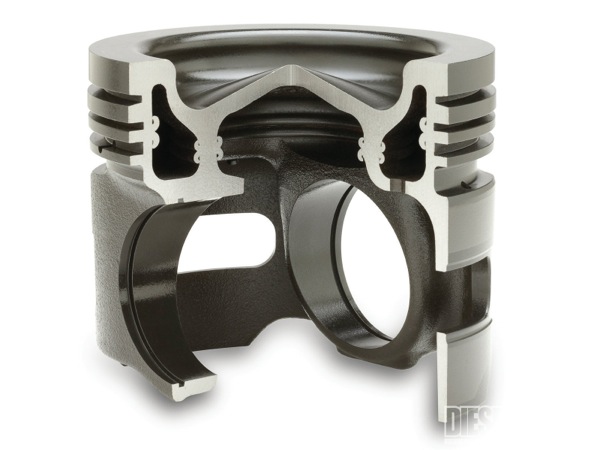
That is why the diesel pistons have that half-donut like groove, with the cone like "spreader"... so that the injected fuel explosion is redirected and spread across the entire chamber. 

This means that while on a Gas engine the explosion is one, once and violent... on a diesel, the explosion keeps happening ALL THE WAY down the piston course, and since the diesel is basically just oil, the explosion is much less violent...and in consequence slow as hell. 

Facts time about the fuel type on your engine:
The Gas engine has a single, violent and fast explosion... making the engine generate less torque, but also making the engine able to generate a lot more RPM.
The Diesel engine has several slow, lower energy explosions all the way down the piston course...generating loads of torque but not being able to do that quickly enough to generate high RPMs.

The first conclusions?
If you are buying a diesel car, that you really do not care about the bhp, but rather the torque curve on your engine.

If you are buying a gas engine car, that the torque you want is the torque to handle the loads you are going to press the car against... it's weight and losses due to transmission. Because what you really want it that torque to be able to be translated into BHP by means of rpms... so yeah you want some torque... but not too much, as that will generate wheel spin...but you really want high rpm with high bhp at high rpm. 

If you are pulling a caravan, do not use the gas engine...it just doesn't have the torque without having to become MASSIVE in size.
If you are racing a car, do not use the diesel engine...it was not built for generating power on high rpms... and you don't race at 2000rpms!


Now for the second part... engine design, torque and the so very important LPS... and a touch of valve fluctuation.
Lots of people do not understand the redline on their engine, why it exists and why does the 2.0 version of the car rev 1000rpm more than the 2.2 version of the same engine on the same car.

Engines basically turn linear motion into rotative motion. They do so by connecting a linear working part (the piston) to rotating part (the crank shaft), with a rod. 
Having this clear let's go back to the physics class most weren't paying attention to: moment=f x rod
IF you try to open a door, grabbing the door 2cm from it's pivot point, and then do the exact same thing but using the handle (a good 80cm from the pivot point), you will notice that you have to effort a LOT less by moving the force away from the pivot point. 

Now apply this principle to the rotation of the engine assembly you see above: IF the point of the connecting rod on the crankshaft, moves away from the pivot point (the center of the crankshaft and flywheel), then the effort needed to turn it is far less. 
Since the rod pulls and pushes the piston, the bigger the distance, the bigger the rod and as a consequence the longer the travel the piston will turn.

So by now it should be clear that a piston that travels a longer run, will be able to produce a better moment, or a better rotation force... and that is torque? yup... it's the rotation force.

Now enters another part of the physics on an engine and that is the effects of acceleration and deceleration on materials... the so very important INERTIA. 
Inertia is a lady you all should learn to respect as it ultimately can kill you in many more ways that it will give you pleasure.
Now inertia says that, putting something in motion requires more energy than just maintaining that motion.... just the same as countering that motion requires a lot more energy than maintaining that motion. And the heavier the thing is... the worse. 
So picture you have a bank safe on a skateboard. Making the safe move will consume a lot of energy, but once it is moving it is easier to pull... then something gets in your way and you need to stop the safe from moving... now that is something to experience as you will have to press really hard agains the movement of the safe to stop it. 
You see, a piston, ultimately is metal, that ultimately is a bunch of molecules of several metals and carbon mixed together. Making metal move, will generate stress on the molecules as they are "glued" together.... so if the piston has an anchorage point (where the connecting rod links to it), the remaining parts of it will only be linked to that point by the molecular bond on the metal. 
If the piston moves up and down very fast, every time it stops and turns back, the majority of it's metal will try to continue the movement it already has and this generates stress. 
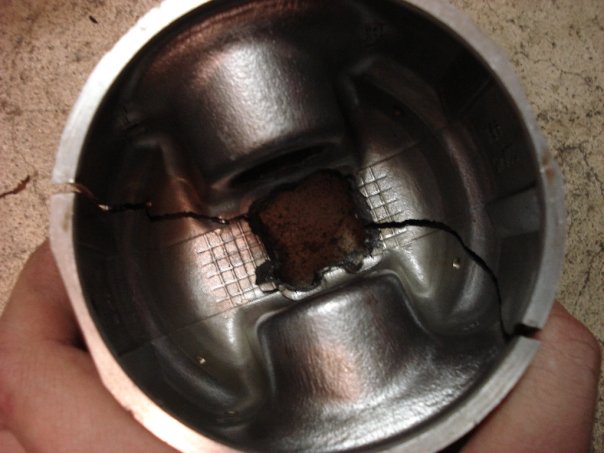
Generate too much stress and you will crack it... continue and you will disintegrate the piston:
So there is only so much a piston can handle in terms of pressure.

You also need to understand that the pressure of the piston against the cylinder walls, generate drag that will then generate heat! The faster the travel the more heat is generated... too much heat and:
... it melts!

So a pre-summary:
The more a piston travels, the more toque it generates.
The faster a piston travels, the more chance it has of melting.
The more it changes direction at speed, the more change it can crack.

The engine design part:
There are 3 types of design on the engine... 
The SQUARE engine -  when the diameter of the cylinder is equal to the length the piston runs inside the cylinder.
The OVER-SQUARE engine - when the diameter of the cylinder is bigger than the length the piston runs inside the cylinder.
The UNDER-SQUARE engine - when the diameter of the cylinder is smaller than the length the piston runs inside the cylinder.

Now comes in the LPS the Linear Piston Speed -> this is a means to measure the speed that the piston travels distance inside the cylinder. This keeps changing from 0 to well over 30meters/second back to 0 ans the piston accelerates and decelerates back. 
Since this varies too much, a MPS equation is set... MPS is the Mean Piston Speed. it is calculated as, MPS = 2 x stroke length(in meters) x rps(rotations per second.... or RPM/60).
An normal engine will run a maxmimum 22m/s MPS.
An high spec street engine will run 25m/s and be able to withstand 28m/s for seconds before starting to have structural damage at metal grain level.... A.K.A starting to micro-fissure.
An racing engine will run 28m/s to 29m/s and peak at over 32m/s (but will show fissures at the end of the race)
An very light racing engine will run 35m/s...but will have catastrophic failure within hours (if not minutes) 

Since an OverSquare engine makes it's volumetric capacity by having large bores on the cylinders, but very little distance to stroke, it's pistons run less distance per rpm... allowing you to pull the RPM limit further (assuming the fuel allows you to). 
On the other hand, an UnderSquare engine makes it's volumetric capacity by having a long stroke. This forces the piston to run longer distances in shorter time per rpm... so if you push-it... it will crack and/or melt the skirts.

So having ALL this into account, you have to choose one out of 2 things:
either you have a OverSquare engine that produces lots of RPMs while still within the safe 25m/s range...ooooor you have a UnderSquare engine that will produce better torque but will reach the 25m/s MPS limits at a lot lower rpms.

This is why the Honda F20C engine redlines at 9000rpm, and the Honda F22C engine (equal in everything except a longer stroke that gives him an extra 200 cc) will redline at 8000rpm.

Now is time for another pre-summary:
IF your engine redlines as 5000rpm, do not pull it beyond that mark for over 2 or 3 seconds... you will be generating micro-fissures in the pistons and over wear the pistons skirts... in time, those will become full blown cracks and will lead to catastrophic failure.

If you engine produces less torque and you want to increase it, the healthier way is by stroking the engine, BUT if you do so, then LOWER the RPM limit.

If you are boring the engine to have more displacement, then DO NOT increase the RPM limit... you can only do that if you reduce the stroke!

And the very important: if you lower the engine stroke to be able to have more RPM's, then you also need to reinforce the valve springs and eventually get lighter valves. The Valve fluctuation phenomenon will happen if they are forced to work at higher RPM's that they where engineered for... with will eventually lead to a piston touching the valve and kaboom... it can bend the valve or/and crask the piston. 

The HP vs TORQUE
A lot of people say that HP doesn't exist... but they are wrong. It does... what it is, is a byproduct of torque at engine speed. 

The formula is : HorsePower = (rpm x torque)/5252

So the HorsePower, being that the 5252 is constant can be said to be the torque at speed of the engine.
And this is where the idiots that like to say that "a torque wrench has more torque than a honda engine" will have to eat their lack of knowledge for lunch.
The way an engine produces torque is limited in the way it is designed and the fuel being used. 

A long stroke 1.9 diesel engine will produce torque as low as 1000rpm, peak at 1800rpm with 310nm not sustain it and slowly decrease and then die at 2500rpm..allowing to push to 3000rpm with some HP.  This means 2000 usable RPM. 
A long stroke 2.0 turbo gasoline engine may generate a decent toque figure at 2500rpm, peak at 3500 rpm sustain for 500rpm with 360nm, and decrease with decent figures till 5500rpm and then redline at 6000rpm. This means 3500 usable RPM
A shortstroke 2.0 non turbo engine will generate lower torque levels but a decent level at 3000rpm, then peak at 6000rpm with 202nm, sustain the torque till 8000rpm and decline to the 9000rpm redline. This means 6000RPM of usable engine.

There is also a catch here! The diesel engine produces 130 HP, the 2.0 turbo gas engine 265 hp and the 2.0 N.A. engine 240hp. 
However, the longer stroke on the turbo, gas engine, means that the MIX explosion time will not happen in a perfect manner... a lot of the explosion force gets pushed into the cylinder walls instead of directly into the piston, at the most "vulnerable" time in the gas expansion... and this gets worse as the piston goes down and the explosion is already past the peak. 
That long stroke does have a better effect on the sustained diesel engine explosion than it has on an one time explosion of the gas engine... and that is why the torque figures drop faster in a longer stroke engine than a short stroke one.

Is there a lesson to learn from? yup! torque should be matched to the weight the car needs to pull and the mechanical loss involved in pulling it (gearbox and traction system)... then the torque curve needs to be set in order to have the maximum possible engine for the longest possible time.. and since while racing, you lose time every time you shift, there is a considerable advantage to have more rpms...

And this is why the following video shows 2 cars of equal engine HP but different weight and torque figures... they both have 250BHP, the TURBO car has 9% plus weight to a 45% plus torque figure... but a very crucial 3000rpm LESS than the N.A.

So is the Honda better? Engine wise... yup!
chassis and usability is another thing... that brings even more variables into the mix. They are both front wheel drive cars, DURING a corner, the N.A. engine will generate less torque and this means that it will be able to step on the gas heavier and earlier without upsetting the traction as much as the excessively high torque figures the megane has would allow... this of course is without taking into consideration the torque biasing diff on the megane that would even this by cutting the engine power and actually sending more torque to the wheel with the better grip.
So purelly mechanically speaking the excessive torque would be a problem in the megane... out of the corner, the megane would pull with better acceleration on the same gear while the honda driver would have to be either pulling the same gear and using the 3000rpm on VTEC, or shifting down to keep it within VTEC range... so this would depend on the track... if the track would have climbs out of corners, thought, the megane would clearly be in it's kingdom (and this partially explains the ring time it has for marketing).

The Summary:
Torque is a way or expressing the engine capacity to pull weight. It can be generated in the form of sheer weight (like a truck that needs to have a diesel engine) or multiplication through gears, as the standard everyday diesel car has.
Given the right conditions, you want your engine to have more RPM and high power at high RPM than a high figure torque at low RPM... This becomes more evident at speed in a high gear, as an engine built for low end torque is out of it's element as the air being pushed in front of the car gets more difficult to cut through. That is when you need the torque that was really big in the beginning but is now long gone...and then you need to shift, because you are out of engine!

This is why the best tarmac motorsports cars use very high revving engines like F1 18000 rpm (some used to have 20000rpm, DTM 9000rpm (some with 12000rpm), BTCC 8500rpm and so on. the usability on those engines is much better that with more torque and less rpm.

Rally, with their heavy 4wd systems and very difficult terrains, on the other hand, are all limited to 6000rpm and a peak of 300bhp to 340bhp at 5000rpm. This is where you really need toque as the 4wd car passing a muddy up-hill will height twice as much... at least.


Saturday, January 4, 2014

The "Honda is back" title and the "She-male picture" effect.

Be careful... explicit language ahead!
When I was a teenager and the internet was sloooow as an 18-wheeler truck, being the brat I've always been, I experienced the wonderful world of internet porn in the soooo very sllllooooow picture loading anxiety way. One day, while waiting for a picture of  naked girl, I was taking my time to appreciate things (no other way as the link was sllloooooow), the girl (so I though) in the picture was covering her face with "her" hair, then the silicone breats came up.. and right when I was so very interested in the remaining part of the picture... well you know what happened just by the "she-male picture effect" in the article title. It was discussing (not because I have anything against she-males) because I was really expecting something else.

Why oh why would I share this traumatic teenager experience (particularly in a car blog)? Well it happened again.
I was browsing magazines today and this came to my hand:

I was immediately excited (just like a teenager waiting for a naked women porn picture). I'm an former Honda lover, but lately Honda managed to do nothing but crap. I mean there is not a single car out of Honda since they stopped the JDM Civic Type-R production.
Every other manufacturer is trying their absolute best to build better cars and Honda managed to go the opposite way.
This Magazine was GREAT NEWS! FINALLY, one of the best brands in the world decided to wake-up from the prolonged coma. NSX was back, rumor of the S2000 replacement and a new Civic Type-R. Groooovy.

Immediately I skipped all the junk pages into the article, searched for the specs and found a chart of the new vs the old Civic Type-r specs. That was wonderful... a chart.
First line: new type-r - 300bhp, old type-r 200bhp    (BRRRRIIILLLIANT!)
Second line : new type-r - 2000cc, old type-r 2000cc    (yeeeahhhhhhh finally some racing specs for the road.)
Third line: new type-r - i-Vtec , old type-r i-Vtec    (obviously... no need to mention this)
Than disaster on the Fourth line: new type-r - TURBO, old type-r N.A.   (WTF?!)
I immediately dropped the magazine to the floor and almost cried in pain... and there you go-> The She-male effect.

This is the second time Honda kills the Type-r!!!
Mk1 was brilliant.
Mk2 was the best ever.
Than, for some reason, while producing Mk3, they decided that the JDM version should be better and the European version should have a cheaper (and worse) suspension and more weight!!! Weird at least.
Now with the Mk4... it's turbo.. I mean -cheap engineering instead of refinement, N.A. response...purity.. naaa just another 2.0 turbo to go after the RCZ, Sirocco and MeganeRS cheap trend.

If at least they had made it 4WD I would understand it... but no! Still FF. I can even say with no reserves that this car has been made to shut Renault up with their "Megan RS Trophy is the fastest FF in The Ring". According to some people from the R&D at Honda, they've done-it... but just like I hated the Megane for not being a pure driving machine... I'll also hate this one. Yes it's a record breaker...yes it's a bullet in the ring (where it was destined to perform)...but forget the refinement and driving experience...no room for those here.
Type-r is now the meaning for: just another engineer's wet dream.

So... Apparently the Megane RS has it's kingdom threatened (no surprise as an engine that revs to 6000 and produces little over 260bhp from 2 liters and a turbo is not a marvel of engineering)... and of course, just like Renault has F1 heritage to help build brilliant chassis, so does Honda...and they also have Indy, and BTCC and so on ... a brilliant FF chassis would come up eventually.
So this new Honda revs 2k beyond the Renault's limits, with better linearity and power delivery... and produces more power... give it a good chassis and you have a winner just on the 2k extra revs in the corners and the almost 40bhp in the straights!

But do I like it? No. It's FF instead of FR, It's turbo without being 4WD... and it was conceived following the EasyWay instead of the Hard-Engineering-and-true-Efficiency-seeking way.
Deception... pure deception. Hope that they remember the original S2000 and NSX on their new versions... or things will really get weird from now on.

Friday, May 24, 2013

Buying a used S2000? Learn about the car first (Updated version)

This post comes as a repetitive request from some of my youtube followers.
A lot of people ask-me for advice while buying an S2000...and they should. You see, I've checked around 10 cars on sale before I brought mine. The reason is simple: A lot of them are involved into really big accidents. You see, the car is pure and almost perfect in it's behavior...it's very race oriented.

One of the reasons for that perfect behavior is 50/50 weight distribution...being front engined and rear drive, the engine is back in the engine bay (hence the front-mid-ship design), this will cause the front wheels to have little space in it's wheel bays, and as a result the car has a small steering angle.
Add a small steering angle, to a LSD (trosen type... means LSD only IF all the drive wheels are on the ground...and that is a VERY important feature/flaw) rear wheel drive that jumps from non Vtec to full Vtec at around 6000rpm (5900 precise), and handles like a race car.. and you have, either the recipe for disaster, or the car of your life.

The choice is made from the skill the driver has. I've never ever driven a car this honest and balanced this side of a lotus elise, I've also never de-recommended a car so much to inexperienced drivers...and by experienced I mean race-track experienced. That is why its so hard to find an S2000 that has never had a crash because not all S2000 owners are race-car driver material.

The checkup list is divided into exclusion points, so it helps you decide.

Having said that I'll start by the "DO NOT BUY" list:
Twisted Xframe:
The S2000, just like the Type-r Engines and the NSX car, was almost entirely hand built by the "takumi" at Honda. These where highly skilled builders with over 10 years experience on building fine-engineering parts or cars at Honda factories. They where the best of the best at Honda.
One of the most important parts of the S2000 is the X-frame chassis. It's built so that the car has the same rigidity topless as a normal car would have with top.
To put things into perspective, the S2000 is hand built by the "Takumi", except for the XFrame that was put together in a special HOT template machine by robots. It was done that way because it was extremely difficult to weld-it together without letting it warp and twist. When twisted it would be extremely difficult to put it up to spec again and even so, it would not have the same torsional resistance without heat-treatment...to conclude: it was done that way due to technical difficulty in doing it by hand and removing twists from the welding process. So you can imagine the huge problem it is, it the car you are buying had a major crash... yup if the Xframe twisted, the car is gone! you will never ever be able to traction it to place... the X Frame is either immaculate or need replacement. No possible fix here.
It's easy to know the most important parts when you look at a strip-down of the car... these ones are prepared to race, and had some weight reduction at the non VITAL parts:
Any big impact on any of the shown (white and gray) areas is a problem!

Some impacts are simple to solve and carry no MAJOR problem to the cars chassis:

On the other hand, simple looking accidents are a doom ticket for the car:

Wanna know why? ok... look at the cross section on this part of the chassis of the car (the blue car impact, managed to crumple vital external longitudinal sections, together with the transverse bulkhead section!... bad luck x2) :


And if the damage is to the FRONT... then look at this section:

So pulling ALL the panels to place is... near impossible (those are high tensile steel extrusions)... and separating them to re-weld... well think about the "takumis" and the robot on a HOT template to build this part of the car... that's right! Once twisted ot badly damaged, leave it be.

How to spot problematic cars?
Poorly repaired cars will show immediate signs of trouble on the panel gaps. Uneven panel gaps (5mm on the left and 2mm on the right). Bonnet and boot may be deceiving as they are adjustable, so please center your search on the front panels and doors. If a door, after closed is gaping out and the other one in, you probably are looking at a side impacted and laterally twisted chassis.
Shift knobs that don't show themselves centered in the console panel mean trouble on a side impact too.

You see, after the repair at the workshop, it may "look" ok... but than take it for a good ride where the chassis suffers punishment and it will be out of alignment in minutes (and feel odd).

Good repairs will only show trouble under a deep mechanic analysis. In this case, the best option is to check it against Honda manual and check the measurements on all checkpoints and underpinnings.
Disguised repairs often come with a perfectly aligned suspension setup, new tires and brake pads. If this is the case, then someone is disguising a twisted chassis by masking uneven tire-wear and brake-pad wear. The best solution (besides having it inspected by a mechanic against SPEC underpinnings and assuming the car really is well aligned), is to make a test drive. On a empty road with enough space to recover from any unexpected behavior, leave the car running at idle in 2 or 3rd gear and floor it, then after gaining speed and still accelerating (with the rear suspension compressed) step on the brakes. The car should not trend left on acceleration and right on braking, or right under acceleration then left under braking. If it does, it's twisted.

Soft-top test : Unlock the soft top. The release should move the top slightly but with the same length on both sides (that's the rubber seal forcing out). Re-lock and check the pressure against your efforts...they should be the same.

Another test: Open the soft top, then park the car with one of the front wheels on top of the sidewalk and the remaining 3 on the ground...then close the hardtop and notice the slack. There should be a even or very close to even slack. REPEAT this test with the other 4 wheels, one on the sidewalk, 3 on the ground.

Hardtop test: a standard factory hardtop MUST fit perfectly and even on all sides.

The last problem to look for is rust. It in not very common, but it will become one if existent on the chassis...the same problem you have with a twisted chassis is close to the one you'll have when having to cut and weld parts of the chassis... remember the "takumi" and the robot on the hot template.

Now on to the "buy only IF covered by sales warranty" list:
Engine makes flapping noise - Check if this is form the valve train. If so, try to manage a slack check and adjustment...every Honda has some valve train noise. Most of them are related to slack and can be fine-tuned... on this case however, excessive valve slack will manage to hit the piston and bend the valve. Most problems on F20C engines are valve train related as it is also the most fragile part of the engine.
Engine makes tacking noise after heat-up - IF the tacking noise comes from the left side of the engine, than that's a faulty timing chain tensioner. The part costs from 100 to 250€ (depending on the country) and can be installed at home. If this is not the case, you can have a ticking engine and that's 1500 to 6000€ for a used or new one... or even more for a full blueprint and spec-up.
The low-end part of the engine is really tough and handles WAY more power output than standard... if you are going to spoil the car by way of Force Induction, the internals are good to close to 350BHP... and if using HIGH rpm turbo-boost ONLY you can go safely to 400/450 bhp.
Bare in mind that beyond 400BHP and the amount of torque involved in that (by ways of Forced Induction), the rear diff will go... a common replacement is the Nissan 300ZX diff.

Leave the Engine warming up and let it idle (you should hear a whistle noise form the front of the car for the first 20 seconds... and then a pufff as it stops pumping... that is the air pump to kick the catalytic converter into temperature to reach the efficiency level ASAP)  - After it reached normal operating temperature (the gauge should be light to 40% its way) listen carefully and see if it misfires  If it does it could be spark plugs ...so to track it out, rev it to 3000, step-of the gas and back-on again. If the car misfires under 2000/2500 turn off the engine, and ask to remove the spark-pugs. If one of them comes moisten then either a valve guide is letting oil in ([possibly due to being already bent), or the piston rings are history. This normally happens in cylinder nr 3 (that's the third one counting from the front of the car).

Finally to the "buy and reduce the price as you will have to spend money on fixing this" list:
Rear wheel bearings - Up till 2004 the rear wheel nuts where under bolted from factory. Honda issued a tech recall to service and tight the nut. Failing to do so will increase the tilt on the rear wheel bearings (more noticeable if the wheel offset is increased). My bearings failed at around 80.000km. Read about it here and here.
Lowered car - Lowered cars should not go over 2 to 3cm of lowering without camber correction. So if the car you are buying is lowered beyond 3cms (too much for road use anyway) check for a camber correction kit installed, otherwise consider changing all wheel bearings, suspension bushings and eventually a couple of slightly bent suspension parts.
Aftermarket wheels - Check the aftermarket wheels offset. Excessive offset main mean early replace to wheel bearings.... BUT if the offset is on the rims and not on the "spacers" near the HUB... then that car will corner a lot better without suffering fro vibrations at speed (common to low spec spacers). I have my car setup like that and I know I'll have to change bearing earlier... but it goes around bends like nothing else... and I find it a fair price to pay.
Suspension bushings - Check for worn bushings...consider a polyurethane replacement kit... rubber will go eventually and you should not expect it to live beyond 120k km (under factory setups).
Vibration on acceleration that stops on lift off - CV joints are worn. You can shift them (change sides) but if you are buying new, ask for a replacement or price drop.
SoftTop tears - You may have no tears yet, however, they tend to tear. Check the inner side of the soft-top for abrasion marks.

That's about it. Always bare in mind that if the chassis is bent, don't even fall in love with the car... it's doomed. If the salesman tell you the engine is the heart of the car, remember that you CAN swap the engine and repair it too... you can't do that with the chassis. So the good chassis is the car to look for.. the rest is negotiation around the warranty and price tag.