Monday, May 30, 2022

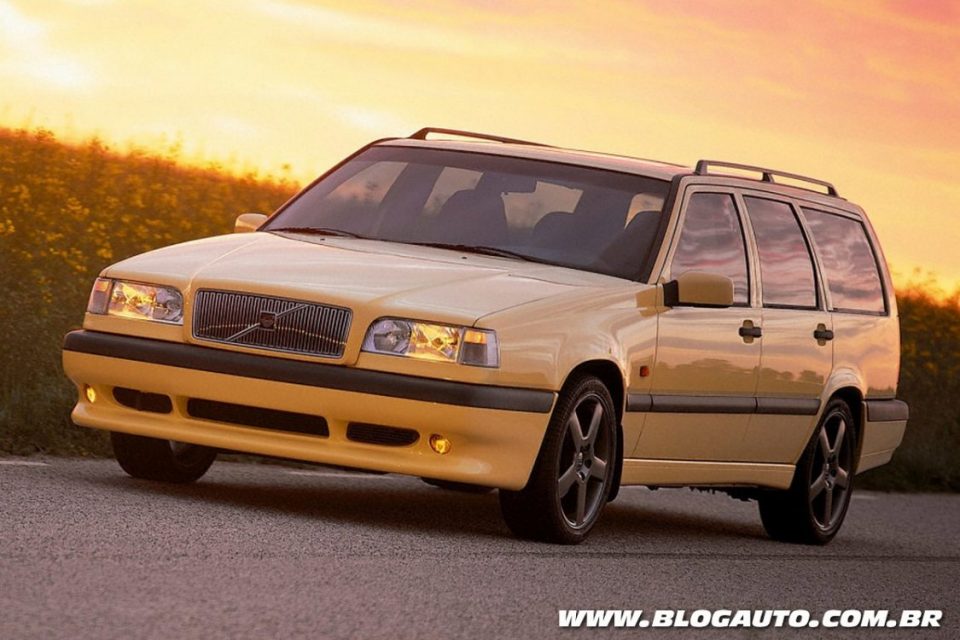
Volvo T5 ... T5R... R ... R-design? Volvo Polestar? Just Polestar? But aren't all Volvo's grandparent's cars?

No... ohhh no!

Volvo has a racing heritage. Particularly when they decided to market their mad T5 as R and partner with TWR to show-off all over the BTCC scene, but they've always had a touch of MAD in their saloon and vans, it's just that, people don't know that until they try it.

It all starter much earlier than that. Around mid 70's, Volvo debuted a new line of cars: the 240 and 260 series. 

There is a constant miss mach on Volvo mode ranges, but I'll try my best to explain this:

TypeBMW EquivalentFord EquivalentHonda EquivalentVAG Equivalent70's Volvo80's Volvo90's Volvo00's VolvoToday's Volvo
HatchBack1 seriesFocusCivicA3 / Golf / Leon-380-C30C30
Sports hatchback1m SeriesFocus RS / Focus STCivic TypeRS3 / Golf gti/ Sirrocco/LeonCupra-480 turbo-C30T5
C30 Polestar
-
Compact Family3 Series CompactFocus Sedan
Focus Van
Civic VanJetta / Bora140/240240/440
--V40Mk2
Family Coupe3 Series CoupeFocus Coupe-Passat CC--C70--
Family Convertible3 Series ConvertibleFocus
Convertible
-EOS--C70 CoupeC70-
Family Minivan2 seriesFocus CMax-Touran-----
Compact Family SUVX2Puma Mk2HRV-----XC40
Family3 Series--A4 / Passat-460S40Mk1
V40Mk1
S40mk2
V50mk1
S40mk3
V50mk2
Family Sports3M Series--S4---S40T5/AWD
V50T5/AWD
Polestar kit
-
-
Comfort Family5 SeriesMondeoAccordA6 / Octavia164/260260850/S70/V70mk1
S60mk1
V70mk2
S60mk3
V60
Comfort Family
Sports
5M Series-Accord TypeRS6 / Octavia RS--850T5
850T5R
850R
S60T5
V70T5
S60R
V70R
S60 / V60 Polestar
Comfort Family SUVX3KugaCRVQ5/Tiguan--XC70 mk1XC70 mk2XC60
Limo7 SeriesScorpioLegacyA8 / Arteon-740/760900S80
S80
V90
Limo Sports7M Series--S8-740Turbo
760Turbo
-S80T6-
SUVX5 Series--Q7/Touareg---XC90XC90

So, back to the 200's...the 200 series where Volvo's bet into the family car. 

But the chassis was a significant improvement form previous cars and the engines where over-engineered to stand abuse and engineering refinement over the years. So Volvo, aimed against the BMW and Mercedes market, and pumped up the power on the straight 6. They also added better brakes to 

And then, the hairdryer squad hit Volvo and they decided to Turbo-it:


... and later, Inter-cool-it:

And with that, people thought: This could be just good enough to race! Guess what...it was!


The 700 series:
It worked, so, Why not adding another "hairdryer" to the 700 series?
And them all the sudden, Volvo had gained the reputation to create cars that just looked normal, until you floor'em and they burn rubber and disappear like they urged an exorcism. So, cleverly, they started appealing to the "kid" inside every man that once was a petrol head, but then got a kids of his own.


And then the P80 chassis
At this point, things started to get VERY interesting. 
Volvo was working on a new line of chassis "p80" and a new line of engines "Volvo Modular engine", and since they where expecting some fast performer versions, and some competition usage, they really thought on chassis dynamics that where fun "within Volvo concepts" and not just safe and habitable.
The 850 was good from start and after some "test production years" mainly with 2.0 and 2.5 NA 5 cylinder engines, then started the T5, T5R, glt(t2) and then the R.

  
The rear Deltalink auto-steering suspension, meant that the car, though enormous, did had some agility... argumentatively a weird one: You need to go all out loading the rear suspension (typically with a lift-off, yang-in, full-throttle), to smash the rubber bushings and twist the geometry into the turn-in. If you get it right, it feels like there is a magical force holding the massive rear end and helping you corner, while the front wheels shred the tires through the bend... but it does help the massive thing turn. So not brilliant, definitely not refined as a BMW; expensive on tires; but efficient, sure.

So it comes with no surprise that this happened:

Volvo teamed up with TomWakinshawRacing team and then:

yes! that is a van... on the BTCC racing track... and it was tremendous.

The 850 in the BTCC where not even close to the production T5, T5R or R... but the driving experience was not that different (causing Lamers to leave the team, as he had a 850T5 and thought the driving too similar to consider the BTCC car pro enough). And they looked the same, and since the road going versions where crazy powerful, people loved them.


The BTCC was a masterpiece of clever engineering around the rules from the brilliant TWR team.
First of all the car was NA 2.0 and not Turbo 2.3, however, the 5 cylinder aspirated 2.0 rev'd to 8500 rpm and produced 325bhp (with 13.5:1 compression pistons), but it was always publicized as 280+ after catalytic converter silencer fitting, and delivered it to ground via a 6 speed gearbox.

Engine was mounted lower and further back into the car.
Driving position was also move towards the centre of the car, next to the B pillar, full racing car style.

But the best part, the cherry on top of the cake was the cylinder head. You see BTCC rules stated that the angle of the valves could not be changed from production cars... but there is 2 ways to look at this: 
1- angle towards the head
2- angle towards the block

The standard head could not be tuned enough make a competitive Turing car engine.
You see, the heads from the production 2.0 and 2.5 engines where built towards easiness in production and cost reduction, so the 58 degree intake-exhaust amplitude is less than optimal and high-range, leaves the engine struggling for air volume. The regulations allowed for bigger valves, but not the angle.
So a prototype was built to study the air-flow dynamics and have a goal. This design alone managed 260bhp. It was still a good 25bhp shy of the standard power output from... well everyone else.
So someone at TWR thought outside of the box and move the logic of looking at valve angles from a head geometry perspective into what I really what is valve-to-block angle. 
and regulation said nothing about shaving the head unilaterally and tilting-it. 
There was also nothing saying you couldn't cut the head top-off and fit a custom part to allow bigger valves and cams. 
The result was sort of a Frankenstein with a small part of the original head, sandwiched between custom parts and angled so the cylinder intake and air swirl optimization managed 235bhp. 

And the Deltalink was also 

... gone!
It got known for being a susprise, as no one expected a flying brick to have a decent score in BTCC, but it did... and also got known for this spectacular crash, at the hand of Kevin Burt:

With all this marketing, the 850 got a bunch of "variations" of it's powerful form, over the years.
They all differ slightly, but in the end, they revolve around the same basic concept:
Volvo 850 T5 -     2.3l, 225bhp 300nm
Volvo 850 T5-R - 2.3l, 240bhp 330nm
Volvo 850 R -       2.3l, 250bhp 350nm (bigger turbo)

Enter the V70mk1 / S60 mk1 / C70 mk1
Then, it got a revised front and dashboard, but it was still the 850


But the versioning got a lot more clear:
Volvo C70/V70/S60 T5 - 2.3l, 240bhp 330nm
Volvo V70/S60 R-            2.3l, 250bhp 350nm (bigger turbo)
For some reason I'm yet to compute, the C70 got a convertible... good, but not the R! You can have a Family Van R, but oh no not the coupe :s maybe I'm the crazy one.
 
S40Mk1 V40Mk1
Around the same time, Volvo and Mitsubishi started spawning the results of their affair. The mk1 S40, with a chassis equal to the Mitsubishi charisma was released.


And of course, with a lighter and more nimble chassis, it got straight into TWR hands and this happened:
It got the same engine as it's big brothers, but now on a much more nimble chassis, results where easy to obtain. 
For the street? well they used the "modular" word on the Volvo Modular Engine Design, So they lost a full cylinder off the 2.3 T5, and a 1.95ltr 200bhp T4 was added to the range.
It was fast, it was nimbler than the 850 or S70, but the entire car was built with comfort in mind and the steering response on the road car was just too light and filtered for my liking. The one I loved best to drive had just had a failure on the steering assistance :S a car that, broken, is more interesting to drive.

But the best from this Mitsubishi/Volvo romance is still on the forge, and will come to play at a latter time, under the most unexpected recipe.

MK2 V70/MK2 S60
Volvo had just been brought by Ford. So, new chassis where being produced and new cars had to fit them.
The P2 project spawned a lot of new Volvo models, amongst them the mk2 versions of the V70 and S60.
By then, Volvo had ditched TWR and brought a company called "Flash Engineering". It renamed it as Polestar Engineering and tasked PROdrive to help them get going.
But it was not until the MK3 version of the S60 and V70 that Polestar was really "open for business". 
And this is going to get a Twist for the smaller cars... later, however having them already planning at this point was very important.
The MK2 V70 and S60 had a clear definition too:
Volvo mk2 V70/S60 T5 - 2.4l, 260bhp 350nm (BorgWarner  turbo) 
Volvo mk2 V70/S60 R-    2.5l, 300bhp 400nm (BorgWarner  turbo) AWD
Hold the press. Everyone goes after the R, but the T5, on had the Unicorn engine from Volvo. The Glorious B5244T5. Internals good for 600BHP, standard with a BorgWarner K24... And the basis that Polestar used to tune for high power applications. 
Most people drool about a Toyota 2JZ, or a Nissan RB26DETT, but every one of those engines will require forjed internals beyond 600BHP, much like the Volvo 4T5. So this engine is within that class of engineering, and with one less piston.

Enter the C30 / MK2 S40 / MK2 V50 and MK2 C70
One other Volvo-Ford product was the P1 chassis. The FordFocus CMAX chassis, on a volvo security reinforced frame and crazy Volvo turbo engines.
I don't know if you ever driven a ford since 1996, but they ALL have spectacular chassis (except the KA mk2, based on the garbage fiat 500). 
The Focus is and excellent driver's car and the chassis it just perfect. So The brand new C30, The Mk2 S40, the V50 and mk2 C70, all based out of these chassis are brilliant cars to drive... they are fun, engaging and very sporty. 


And they all where very easy to  understand:
Volvo C30/mk2 S40/ Mk2 c70, V50 T5 - 2.5l, 220bhp 320nm (k04 low pressure turbo) optional AWD

What wait!? The BEST CHASSIS so far, No R, No T5R, No 4T5 and BorgWarner K24, no Prodrive, no Polestar? Has the world gone crazy!? No racing team!? what?

Yeah.. R was transformed into R-Design... a body kit and interior trim option... Pfff

The ONLY real good thing that made the P1 chassis to squeeze it to the limits, was... DSTC. 
Sure you don't really understand this, allow-me to explain:
    TC - Traction Control (combats wheel spin on acceleration by applying brakes and dosing the engine)
    STC - Stability and Traction Control ( it's the Volvo equivalent to ESP from VW, DSC from BWM) Corrects the car trajectory control by applying brakes individually and dosing the engine, depending on circumstances.
    DSTC - Dynamic Stability And Traction Control - It's the STC with added Active Yaw Control - This establishes thresholds on the STC so that it only interveins on the the verge of full loss of control. 
What does it mean? You arrive into a round about, full on brakes, flick the car with some opposite turn to unsettle the chassis, then turn into the drift and full power on the car... and the car allows you to get away with it! If you steer out of the movement or hit the brakes, the car understands you're in trouble and unleashes the fun-cutter STC to get you back on track and regain your dignity before crashing.
And this we have to thank for... Volvo and Mitsubishi sexual affair! 
See what makes the Mitsubishi Lancer Evolution perform those perfectly controlled 4WD drifts that seem to last forever? yup Active Yaw Control.
   
You can have it on your Rally based Mitsubishi... or your wife's Volvo to take the kids to school... and I'm the crazy one. But I'm not complaining! Far from it. I can always add the engine and the R you neglects to the car... not the chassis electronics, so I take that option over the R, sure.
Important Note - DSTC can be present in any P1 or P2 based Volvo... yes the gigantic XC90 has DSTC as an option, and yes I've drifted the monster... it's weird. 

So, what happened? Only the Volvo management team can say but rumours are: They invested into the S60Mk3 Polestar for racing and for public "power saloon", based out of the glorious 4T5 unit... but then I've not seen a single 4T5 based polestar.
And that Ford was not happy with the C30 cannibalising part of the Ford Focus sales.
However, at the dealership, you could order a Polestar Optimisation pack for your T5. Composed by some literature, bigger wheels, firmer springs, engine and gearbox optimisation.

Again, easy to understand:
Volvo C30/mk2 S40/ Mk2 c70, V50 T5 Polestar optimized - 2.5l, 250bhp 380nm optional AWD

MK3 S60/ V60 (and Polestar finally out of the box)
So S60 got it's Mk3 revision. A much more dynamic chassis, so nice to drive that even the diesel 1.6 option is nice to throw into a corner.
At this point in time, Polestar was full on racing and the S60 Polestar for the road was based not on the 4T5 but on the T6. So it was a 3.0,  cylinder 351bhp 500nm beast.
 
and the road version:


MK2 C30 Polestar (just a concept)
Just before Polestar lost it's mind for good and turned electrrrrrr (sorry can't pronounce that without vomiting all over), they where actually heading in the right direction. 
They used the learned success on the P1 chassis and where working on the C30 Polestar to annihilate all the other RS and GTi's and AMG's and M's the market had on the segment.
 
Based out of the same chassis as the Focus RS, after the focus RS ended production without a worthy replacement (another stupidity I'm yet to compute), also packing AWD and even more power, this was a brutal little car. .. that never got into production and probably never will as polestar collapsed into building toy cars with batteries and stuff.
How pleasant would this baby be?
2.5 T5 engine producing 451bhp and 510nm with a BorgWarner K26... i mean.... just perfect.
But a Limited 250unit production, fixed this into : another car you'll never have! Why?

Check TopGear opinion on it and you'll get the point. 


So now that you understand what is what, lets have a table with Volvo Only and the influence on the sports side of things.
Car70's Sports70's Production80's Sports80's Production90's Sports90's Production00's Sports00's Production2010's sports2010's Production
240 / 260-VolvoEggenberger Motorsport
/
Magnum Racing
Volvo------
480 Turbo-Volvo/Renault-Volvo------
740 Turbo---Volvo------
850T5
850T5R
850R
C70T5 Mk1
--
VolvoTWRVolvo/Porsche----
C30T5
S40T5
V50T5
C70T5 mk2
----TWR (s40 mk1)Volvo/PorschePolestar (C30)Volvo
(Polestar Engineering Kit)
--
S60T5
S60R
V70T5
V70R
------Prodrive/PolestarVolvoPolestar-
S60
Polestar
--------PolestarVolvo/Polestar
C30 Polestar
limited
---------Volvo/Polestar

So with this graph, you should now know that, at a point in time, Volvo went PRO racing with the 850 under TWR engineering, and used Porsche engineering to soup up the street versions. Then it got brought by Ford Motor Company and severed ties with TWR and started Polestar engineering (brought as "flash Engineering" and now called "cyan" as Polestar was spined-off to build... electric crap), a more "close to the chest" thing. Much like M division for BMW, AMG for Mercedes, etc., But before all that, they got an extra marital thing with Mitsubishi, and AYC came out of it, cloaked as DSTC.

By now, You now know that:

Volvo is terrible maintaining sports teams, Volvo builds some crazy cars every now and then, and that between the jump from TWR to Prodrive & Polestar to Polestar, the C30,S40,V50 and mk2 c70 where forgotten in terms of R options, while the S60 and V70 where blessed with the R option and also a pearl of an engine on the t5 260bhp versions.

Recently, Volvo went all crazy and created a brand new Engine with 4 cylinders, 2.0 and both turbo and compressor in line, copying VW. I got nothing against this engine that can , depending on the version and couplings (electric hybrid BS), produce all sorts of BHP . But I can't forgive Volvo for killing the glorious T4, T5 and T6, and transforming the T3, T4, T5, T6, T8 into marketing labels for the same 4 pot engine and a different config. It's just not decent, and Polestar got it very right by using the true T6 for the S60Polestar and the true T5 for the C30Polestar.

One thing is clear:
If you see a 90's, 00's or 10's Volvo ahead of you, and there is anything resembling  a T4, T5, T6, R or a blue label with a white small star in it, don't assume he is getting away from your path and allow you to blast by. It may just, floor-it and leave you in the dust, just because... and still look like Soccer mum's car.

Friday, March 12, 2021

Tire Review - Goodride SA05


Cars tested with these tires:
- Volvo V70 T5 (with higher compression, and dump valve)

Tests performed:
- Front wheels, with a lot of mountain and highway kms between Lisbon and Madrid (700km trips)..

Dry grip:
- I must say I wasn't expecting much from a Chinese tire. It was inexpensive, however not as inexpensive as some other tires. I honestly was surprised with the tires. Grip is good, but once they break grip (under turbo spool-up) they tend do struggle to regain. This is most likely to do with the design. It has a lot of large surfaces, so I would imagine they will have some difficulty "cleaning up" the patch before re-gripping. Not brilliant but soft enough to deliver good road holding while hot.

- Lateral grip is good, but it could do better. I think the structure is not up to the task that the design and compound promise.

Wet grip:
- Decent. It is not brilliant. Feels a lot like older compound tires (less silica). This could also be caused by the large surfaces on the tire design, allowing for less flexibility. 

- It doesn't make you feel like a Gecko as some others do. That's for sure. But not entirely bad... I'd call it honest. It will "warn you" that it slips... and it will then precede to do so.


Aquaplaning resistance:
- Surprisingly good. The Large surfaces that would mean trouble are well channeled and that does show. If the wheel spins loose, the drainage will pump water out and, assuming you are not driving too fast of on a river, drain enough to re-gain ground. The problem then becomes the lack of silica on the compound.

- However, and being quite fair, this HPT (not really but better then average sport tyre) is rated summer. We should expect good wet grip. I think that It would fit an open diff car with a delayed response traction control system quite nicely.  The free spin wheel from the open diff would pull water, and then the delayed response form the traction control would help the tire re-gain the grip.

- Good for older generation cars. Just not too heavy

Progressiveness:
- Decent... not brilliant. You know it's about to slip, the problem becomes the regain of grip. A few groves on the large surfaces, and a bit more silica on the compound could solve this.

Integrity maintenance:
- This is the caveat on this tire. There is some sidewall, but it feels weak. The Volvo t5 was a bit too heavy for them. If cornering at over 180km/h you could feel the tire warping from IN on the the pressure area, and then out on the top area of the tire. This was later confirmed with a very high sidewall temperature. This tire could perform better with a lighter car. However the lack of high silica on the compound mean it needs pressure to work. It's a nonsense and ultimately why, in my opinion, it fails the HPT classification. 

- Either add silica and rate it for lighter cars, or reinforce the sidewall and add some of cuts in the larger surfaces , then rate it for heavier cars. This seams a compromise that fails at both, rather than win.

Compound:
- It's a soft rubber compound with little wear resistance and designed for hot operation. Could do a bit more silica and get some better wet grip.

Longevity:
- Not brilliant. The T5 cleaned them slick in the normal time it does to any other soft tire. They where however surprising consistent to any other sports tire... to the "Chinese stuff doesn't last" doesn't apply here.

Coherence:
- Lack structure and that makes it weird to use, however the compound was consistent all the way to the metal wires. Pirelli and some Falkens could take a lesson from these.

Balance:
-  Well... weird. They are normally balanced tires (not HPT rating for sure), BUT the warping under extreme loads seam to hurt them someway. Then they get out of balance!!! So, do not use these on heavy cars... or if you are going to, then drive like an old lady on her way to the grocery shop.

Load Behaviour:
- If I had to fit these again on the T5, they would probably find their way in the back ad the car normally runs back-empty. 

- This seams like a good tire for an old hothatch car that doesn't weight too much. A ford escort, an opel astra, Peugeot 306 that sort of stuff.

Saturday, February 27, 2021

Ayrton Senna da Silva - The death of best race car driver even seen

 Hi all

Another big post, as per request of my former colleague Christian Lisboa.

This is a Bitter sweet one:

Bitter because for me, F1 died with Senna. I stopped watching races as I was so disgusted with the way they allowed it to happen, the way the race continued as they clearly knew he was dead... the disrespectful manner they managed the "last squeeze" out of their "golden Chicken", was just too much to forgive. Bitter because he was an extraordinary human being and even better driver, and i respect him immensely. Sweet because during this post I not only talk about the accident, but also talk about who he was and how gigantic he was... both sport and personal wise.

This will be a long one, and I'll approach the explanation of how Senna died, but, more important, the physics behind his crash and the even more important guilt by some people that deserve no respect at all from the rest of human kind (although one of them "presented him self as a friend of Senna").

Before starting:

I'll just start by stating that Senna was the best I've seen... ever. There are authentic Gods of driving before and after Senna, some alive, others not... but Senna was an absolute prodigy that lived to race. His focus was absolute. 

A lot of people argue if Messi or Christiano Ronaldo or Figo or Maradona where the best football player... Messi is a natural born genius, Christiano has archived by means of unprecedented focus and dedication and very very hard work, Figo was intelligent and technical and Maradona was all passion and he gave it all to the game... heart and soul. 

If you where to Fuse all these together, you would come up with a football player that would still come short if compared to Senna as a Race car driver.

A lot of people misunderstand Senna and come shallow. But if you dig into the documentaries of his short life, and if you understand the culture he grew up in, you'll learn to respect him in ways that may surprise you. 

Senna as a race car driver

Senna started driving karts and winning at 8years of age. He was small, light and tried to understand how the mechanics of the kart worked. He used it all to be faster and more aggressive... this physical characteristic was maintained, by means of a tough physical preparation routine, through his life. As a kid, being trained and advised to "cool down his times" he would reply: no! with me it's either first place or no place. 

This attitude, however was not filled with presumptuousness like most. His friends described him as someone "big enough to be little". He wanted first place but he knew he had still limitations and he had to learn. So he followed an independent career being champion at all steps. Karting was the one championship that he didn't win, but all the formulas, he followed patiently the path and even declined a jump to 2 F1 teams in the process. He had to reach it and learn the way through... we would not take shortcuts.

He knew he had to build driving skill and also mechanical knowledge... or... engineering skill. And he pursued that with passion and dedication rivalled by no one else. The one other driver that came close was Michael Schumacker. 

He was also conscientious that he was small and light, so he build himself up to the task ahead. He started his physical tune-up in 1984 and he never stopped till the end of his life. He tuned himself to have better blood sugar and oxygen levels consistent under stress, and keep his BPMs as low as possible.

Much like a race car from those years (it was light as possible and made "fragile" to the point of minimal needed function) It will hold together and have the strength to suffer stress... until you crash... then you have no possible protection from the chassis as the logic is: this was made to race, not made to crash, so don't!

Senna was light and his physical preparation was always towards having enough strength to race the car without driver-aids assistance and during the race... and not more. 

Senna rigorously prepared himself physically for stamina and leanness. He tried a balance between having strong neck muscles, but the remaining muscle preparation was mostly cardio (with LOTS of running) in order to have lean muscles and not big muscles.

Senna has several videos after his races where you can see him suffering in pain and not being able to withstand hugs and shakes due to extreme muscle fatigue and a lot of pain. Those where frequent as he was... building him self to have ONLY the necessary muscle to drive the race... not more as it would be weight and size, no less as he wouldn't be able to finish or drive properly. This sort of "Fine engineering" of your body is some samurai stuff!

The first time Senna lost a race to rain, his frustration led him to get back to a kart, on slicks get to the track and drive in the rain... over and over and over... and then progress to bigger chassis and learn all over again. He would learn and study new chassis designs typically in the rain.

Senna practised what was scary to him until it was actually fun. You can see this attitude on Another genius called Keiichi Tsuchiya (the drift king).... they actually have a lot in common in terms of driving technique both steering and throttle management wise.

The result was a mastery of the car dynamics that no one else came close too master. In the rain Senna managed to find grip where no one else was able to. But this knowledge is also valid in the dry... resulting in the capability of driving CONSTANTLY on the car's/track/weather grip limits.

His win rate in the rain twice as good as Michael Schumacher was (66% vs 36.5%). This was clear at Donington race in 1993 as you can see for your self:

There is something you need to understand about Senna. He looks at all aspects of the race... and that includes the weather. You see, back then McLaren had chassis to race but the development of the engines (leaving the turbo engine and going back to natural aspirated) where still behind the competition's power delivery. So he had to use the conditions where all others couldn't use the power advantage... so he had to use that as an advantage.. and he did so with brilliance yet to be seen again.

He also studied the mechanics of the race cars he drove and while other race car drivers would pit-in, state the car was "loose on the rear-end" and drive of to the hotel, Senna would literally live in the Paddock, with the mechanical team and would tell you that the "rear toe in is to aggressive for the wing down force" for instance. His knowledge of the car systems and tune-ups was so great that he even adjusted brake bias to solve hydraulic issues during racing, or even finished races with a blocked gearbox in 6th gear.

The level of focus he had was tremendous. He was a very religious man (as most Portuguese and Brazilian are) and the fact that he talked about "feeling closer to God" and that " he believed that God would help him out of trouble", etc was miss interpreted by a lot of people... stating with his scared shitless colleague alain prost (small caps in disrespect... yes).

You see Senna did believe in God, but what you believe in is just a figure of speech. Buddhists monks meditate and reach a state they feel elevated, devoted Catholics feel that being indoors in a church makes them feel elevated... it's just a way to picture a strong will to believe in something that makes you re-wire your brain. 

There is a reason why training is often repetitive. If generates brain connections that will allow you to react without having to think about it. 

If you are able to believe in something that doesn't exist, but you still strongly believe, your brain will rewire and offset part of the "thinking process into a not needed" allowing for the purely physical movements to happen. 

You react using per-memorised action/reaction patterns and bypass the thinking process. This is what happened with Senna. By strongly believing in God he reduced the fear of death/injury, allowing him to enter a state of "meditation" if you please and focus his brain activity on the dynamics of the car and not the dynamics of a crash and pain and misery, etc etc etc.

He got so focused in this that during some of his races, Sid Watkins, watching the telemetries, said that he would stop breathing for up to a minute... this is tremendous, particularly in a f1 car form the 90's

Some pilots understood this,, like his team-mate at the time of death, Damon Hill. He would say that Senna would through himself into a corner faster than he ever did and believe that something inside him would pull him through..some people call it faith, some people call it belief, but if you study him,, you understand that he trained himself so he could have muscle memory solve part of the problem, and focus his brain on the physics to make it work, instead of multitasking himself into a crash due to delayed reaction.... brilliant!

Look at this lap on this RUTHLESS Monaco circuit.


Senna got so serious about driving that when he made mistakes, we would stress about them and punitively re-live the circumstances (cry in frustration) and then... learn as a traumatic experience. He must had been half Japanese with this Samurai/Ronin sort of ways.

Last but not least, Senna compartmentalized friendship and rivalry. The fact that you are friends with someone, doesn't mean you are going to giveaway an easy win. Rivals are rivals and the battle to win would happen independently of friendship. There was always respect for life and the individual and the sport was the main driver for this behavior. He would battle to win each corner, each breaking approach, each racing line... the sport. Not politics and deception.

This is why I lost all respect for alain prost. He mixed being competitive with being vengeful and that ultimately strongly contributed to the path that lead to Senna's death.

But Senna the man... has the ultimate workaholic.


The disgusting politics and french protectorate

Back in that day, the president for F1 was jean marie balestre (small caps in disrespect). An authoritative, arrogant and very nationalist Frenchmen. 

Evidently, being French and very political, alain prost had a excellent relationship with balestre and he was very protective of alain. 

prost was a very methodical driver and also very very egoist. Efficient, but far from genius like Ayrton, we clearly understood we would be eclipsed by the your team mate and as such they started a very nervous relationship. 

The problem here was that, as Senna was much better than prost as a driver prost was a good politician and Senna was everything but a politician. 

The competition between the 2 got to a point where, in Susuka 1989, prost, leading the championship and having the title IF Ayrton didn't score the race, crashed against Ayrton on purpose (trying to take him out of the race). But Sennas superior driving managed to escape wth a damaged car through the safety chicane and drive to the pit, have the car's nose fixed, back on the track and won the race. 

Being a politician, prost rushed to is "mummy" balestre and they both conspired to blame it all on Senna as being very aggressive.

Not happy with it, they also distorted the safety regulations and grabbed the rules book to invalidate Senna's victory. In the end the deliberation was that as Senna "followed through" the chicane, he did not complete that lap via the circuit path. As such the lap did not count.EVIDENTLY the chicane is there to permit the drivers to slow down, and the follow through is there to permit the ones that fail the breaking into the chicane APEX, have a secure alternative to avoid crashing. According the blestre's arguments, Senna should have reversed back into the chicane, going the wrong direction, and then resume the chicane. It's absurd, dangerous and plain stupid.

They managed to sanction Senna with 100.000 GBP fine and a 6 month ban. Ayrton was disqualified from the Japanese Grand Prix as a result, and prost won the championship that year. They also tried to launch a civil law suit against Senna.

As McLaren manager, Ron Denis, tried to save the day, jean marie balestre threatened to ban McLaren from racing.

As expected from a politician, prost pursued to badmouth Senna in public hearings claiming he was a danger to other drivers because he believed in God and drove like a mad man... how bizarre! Senna clearly speaks out claiming: "I'm a race car driver! I always try to win! I never settle! If i see an opening and do not try to take it, then I'm not a race car driver anymore" This is possibly the most professional claim I can think of, as a reply to such absurd claims from prost (and I'm an atheist).


McLaren released prost form contract and prost shifted to Ferrari, running away from Senna as a team mate.

Fate has it's ironic cycles and in 1990, on the same situation, same track, but with inverted roles, Senna did the same to prost ,and took the championship... it's one of those times where you can see Senna being vengeful and unhappy with that. He crashed both cars on the first corner in a very clear statement.

This same year, during driver briefing, the same rule that got Senna to lose the race the year before, was waved away (as it should) because of safety considerations. Senna backfired as you can see here:


Again alain was playing political games with balestre,and managed to steal the pole-position from Senna, after Senna qualified with the best lap time,(as usual)... well  our boy was not gonna eat another pile of crap so... here is the what goes around comes around moment:


If you want to see how balestre was, you have a good picture here:


The pressure

As time went on, McLaren/Honda was not being able to maintain technical superiority, partially because Honda was shifting it's "support" for f1 and not giving its best.

Back then, the arrogant alain badmouthed Ferrari's car and engine, and as such, was fired! You can badmouth ANYTHING but the car, if you work for Ferrari.

As he moved towards Williams, he insisted on a clause on his contract that stated that, while his contract was valid, Williams would not hire Senna.

There is a catch here. Williams had just debuted the FW15 chassis. It was nothing brilliant mechanically, BUT it had active suspension... and that made it a complete GOD on track. 

Senna's McLaren could not compete with a car that would setup for each curve automatically... and was loosing ground behind prost that had an easy win on the championship...and retired while he was still ahead.

Senna felt unsupported (mainly from Honda) and then from the technical disadvantage McLaren had against Williams.

More Political crap

As expected prost retired. Williams was then free to take on Senna and they did. 

But our friend balestre was not yet done. A ban on Active-Suspension meant that now, Ayrtons fresh new Williams would not behave as it did before. In fact the car's chassis without active-suspension (FW16) was inferior to what McLaren (the one Senna had previously) had and was very unstable. 

It wasn't all. Back then the cars had jumped from 660Bhp to over 800bhp between 1989 and 1991, and there was traction control and abs available to help the drivers. The gearbox had torque limiting functions to avoid low gear spin.

Guess what... those where banned too (or heavily tamed down).

The consequence was that Senna had a very difficult to drive and less then perfect chassis on his hands.

Frustration was setting in. 

The direct consequences of the ban on driver-aids where immediate:

Pedro Lammy broke both his legs and a front collision, after locking his front wheels while breaking for the Monaco chicane.

Ruben Barrichelo crashed badly that fatal weekend, Roland Razenberger lost control of his car and hit the protection wall at over 300km/h. He died instantly. 

Senna was then presiding the pilot syndicate and brought this extra pressure on to his shoulders. Something had to be done to restore some safety into the sport. But mean time, show had to go-on... and he would die on that same weekend. Senna had lost his battle against politics... professionalism and passion lost to deceiving and grease (the most disgusting thing in existence).

The crash

The day of the crash, Senna is very nervous. There is a comment that some interpret as a "peace message", I personally interpret as a very intelligent and loaded with cynicism critic to both alain and balestre. Before racing, Senna says "please come back alain, we miss you". 

No one will really know what he meant, but what I read is that he wants to say something like : you should return, with you here, balestre would never ban the active suspension so you could win, he would never ban other driving aids so you could win... in the end, we're dying here and having you around would be sufficient to ensure proper rules for you that we would benefit from (or at least not drop dead because of). Some people think that phrase means, I miss you, I miss the constant fight... but if you consider all the pain prost-balestre politics pulled him through, you would think twice. In the end, I believe Senna saw balestre as the chauvinistic beast he was and understood that the past, thought hard, was not as bad, because of the presence of a french champion on the sport... it's a very sad feeling and his face shows evidence of it! he was right.

The cabal moment:

The moment of the crash is a well known film, and it has spawned several theories.

I've heard about tire burst (no evidence of that, on the contrary)... steering column catastrophically failure (another joke... when you break the steering, your hands instantly snap free to rotate due to the breakage on the link between your hands, torsion and the wheels gyroscopic movement)...the list goes on, but I'm sure some ET has a part in the plot.


Conspiracy theory nr 1 - the steering column - 

The video shows an erratic movement of the steering column. It looks like as if the Weld-adjusted steering column broke at the welds and cause Senna to crash.

Take a good look at the conspiracy theory video:


There are several problems with this video:

1 - the steering column, at 3 g's will flex and allow movement... it's designed to do so.

2 - the steering column adjustment that increased the length, was done by adding pipe-IN-pipe and then welding them together. So the piece of pipe (that actually broke with the impact) was placed inside the original steering column pipe. This means that the only way the steering would break like that, would be by a fracture being able to crack TWICE the metal thickness (plus the stronger weld)... very very dubious.

3 - The telemetry! The little tell-all blackbox on board the car, measured everything from percentage of inputs to torsion forces, and in included the steering wheel. That actually shows that Senna was 101% throttle through the corner, the torque applied on the steering was quite on the linear side of things (a broken part would generate variations as the frustration of the pilot would ask more form the failing part), It then shows a decrease in torque and 1/10th of a second later, a counter steer (yes, he reacted to his last drift in 1/10th of a second.... wow)... then full brakes as the torque was still being applied by the driver.

4 - the footage - If you are forcing a pipe to turn left... and apply force... and it fails, your hands will cross to the right as you "win" against the pipe fail. Several pilots told that.

So what really happened?

Senna was driving the recently capped down chassis, and struggling to find balance. As a result of the chassis losing the active-suspension it had been designed for, the best way to fix it, was to just lower the car, much like you see today with "bad tuning". Lowering the car kept the center of gravity low and, crucially, would generate extreme wind velocity under the car, generating a lot of down-force that, in turn, generates grip. The problem is that there is a reason as to why cars have suspension. 

The reality is that, having the car that low, would depend heavily in other factors that had to be maintained:

 1 - tire stress and temperature

 2 - track pavement quality and smoothness

Some background: Daniel Bernoulli, back in the 1730's, mathematically describes the relationship between pressure, density and flow velocity, in fluids.

The physics is as follows: if you look at an airplane wing cross section, you will find that the air that goes under the wing has la shorter path to follow, while the the air going over the wing has a longer path to go... so it must flow faster. Faster fluid movement generates lower pressures and that will pull the airplane up. 

Now look ad the cross section of the airplane wing and turn it upside down, you will end up with the fundamental design of an F1 car. 

In the end, an F1 car is more of an inverted airplane than a car. 

At full speed, an F1 car generated 4x it's weight in down-force, without generating inertial weight. The problem is that if you remove the aero dynamics form the equation, its just as you have an invisible hand from a giant pressing you car down a curve, making it grip and hold-in the the road... and then. mid corner, the hand suddenly is removed... you car will be taking too much speed and too little force to sqeeze the tires to the ground and you'll crash! Any high performance racing car will have a minimum turning speed, meaning that if you turn into a corner bellow that speed, the aerodynamics will not be helping you have grip and you will crash.

Back then, Immola had been "almost" red-flagged due to poor track conditions. The track was not smooth enough. Obviously, some careful political negotiations avoided that... but then Ruben Barrichelo got hurt, Ratzenberger and Senna died... well, politics has a way of making carnage refined and inconsequential to the killers behind it.

As any major accident, it gets down to a series of "fails" that pile up and sequence to generate one cabal moment.

So what really happened based out of physics, telemetry data, footage from his car and the racers following him?

Senna's car was too low! It was such way so that, after the initial laps where the race starts picking up pace the car would be at a optimum distance from the ground, as the tires inflated with heat and the ride weight would stabilise into the optimum value to squeeze as much air as possible under the car's flat bottom and maximise grip on high speed corners.

Footage from Schumacher's car and Damon Hill show Senna's car belly hitting the ground constantly and sparking all over... there is a MASSIVE spark shower right at the point Senna lost grip as you can see here from Schumacher footage as he was pursuing Senna:  

The car was bottoming because instead of having 7 full laps of tire warming time, the race was interrupted and the pace-car was pulled into the track to reduce the speed while the a crashed car was removed from the track and the track cleaned-up. 

This made the tires less warm, and less inflated, reducing the ride weight that was just TOO TIGHT due to the chassis natural instability! As the car passed some bumps on the poorly maintained tarmac, with the tires still under-inflated, the car bottomed into the ground and blasted sparks all over the place as you can see by Schumacher's footage.

This interrupted the flow of High-speed air under the car and stopped "sucking" the car onto the ground, at that point, the rear wheels, under 101% throttle power and no downforce, started to spin as the tires gave away into the inertia of having to turn the heaviest part of the car without assistance.

In 1/10th of a second, Senna counter-steered to maintain the car stable, but the bump is now through and the car is starting to grip. As the grip on the front-end is regained the car violently pulls in the direction of the centrifugal force, throwing the car outwards in the track. Senna, again, blazing fast corrects the steering and applies 100% breaking... but the "tamburello turn" is very poorly designed and there is no space to recover.

The car skids all the way into the concrete wall and violently hits the wall.

The accident was not avoidable. 

NatGeo has a good documentary that covers almost all angles. I recommend you to watch it and learn a thing or 2 about how "on the limit" the physics of an F1 car is.:


The bad luck

If the angle that Senna's car hit the concrete wall was a bit less incisive, he would have exited the car maybe shaken but certainly alive.


However, as he right front tire hit the wall and broke, it got pinned between the car and the wall as it was dragged along with the movement. As the car rebound off the wall, the entire tire assembly with all the hub and suspension arms passed over the car towards Senna's head and hit him hard.

The crash point in Senna's helmet shows that the heavy, hard and full of inertia wheel hub, with the attached suspension arm, hit Senna's head just above the right eyebrow, fracturing the helmet and transmitting the force into his skull that fractured and ruptures the temporal artery. 

His fate was sealed... the hemorrhage and damage to the brain would leave him suffering and dyeing. Senna died at the track, but he was immediately reanimated several times all the way to the hospital for one simple reason: Had he died at the track, the track would have been closed and the race finished. Imagine how many million would not be won by F1 and the sponsors due to the interruption of that race... yeah the little piggies had to get their dime.

Here are some pictures from the "senna files" website (conspiracy theory website I may add):


Summing up?

1 - balestre... his pursuit to protect alain prost and then "ignore" safety while banning driver-aids like that, makes him my number one culprit. Has Senna had the active-suspension like prost had, the car would be riding at normal heights and not as unstable.

2 - SanMarino race track - if the road is bad... then it is not fit for racing. You need to loose money by not hosting the event and then lose more fixing it... but at least you don't kill people. Also, and that was pointed by Senna before, the concrete wall at the end of a very slim deceleration area, on such a fast corner, would never be a good idea now, would it?

The rest of it is consequences and bad luck,, added to a sport that was pure risk. 

But the disrespectful meaner that the organisers treated him the moment he became a threat to alain prost, all the way to his death is just too disgusting to ignore.

To me, it was not just the best driver of all time that died that day. It was also F1 as a sport... just sad.


The one remaining conspiracy theory that makes sense

There was previous to the accident, evidence that, in the pursue for lightness, williams FW16 chassis was very fragile and some catastrophic suspension collapses had happened before. 

The same theory could explain a sudden diving of the car front end and that would then be the cause for the disruption of air under the car. 

This however is not sustained with evidence and the footage from Schumachers car seem to show the bottoming happening at the heaviest part of the car (the engine/transmission package).

However the same evidence that can't prove that, can't eliminate that. 

The reaction from Williams is a factor that could be looked at, but the nervous reaction from the team could be as much fear from responsibility as true responsibility... so it's just speculative.

That however does not remove all the other factors and neither Lamy, not Barrichelo, not Ratzenberger where driving Williams FW16...


... I'll leave it up to you to make your own conclusions.

Thursday, February 25, 2021

Driting 101

After a long consideration period and some requests from my colleagues, I've decided to review a couple of old unpublished articles and compile them into this single small article about drifting.

I'll be using a lot of Keiichi Tsuchiya videos to explain the concepts. If you want to learn, learn with the best, and there is a reason they call him "drift king".

First Things First:

There are 2 types of drifting.. the show-off stuff and the go fast stuff.

I'm not really into the Show-off stuff except for training purposes... so you should try long drifts while learning so you can find the sweet-spot and keep it there easily.

My thing is the Go Fast drift.. this will land us into the good old discussion of grip-driving being better than drift-driving. 

Definition

If you consider drift driving as I do, You'll define it as: the control of the car motion during cornering or in-between cornering, beyond the grip limit, while trying to make the drift pull the motion of the car into the desired trajectory.

If you stop and think about this a bit, what you are saying here is: instead of having the car under grip and use the front wheels to steer it into the corner, you'll have it BEYOND the grip limit (so... going faster) and use the drift to control the inertia of the car movement, trying to turn it into the motion that resolves the curve (this is very important). 

Now I've claimed the "motion that resolves the curve" and that is the key. 

This is the beauty of the well known Mitsubishi/Volvo AYC (Active Yaw Control). If you have the car pointing towards what is the exit of the curve... but still drifting in an arch path thought the curve, you can floor the car most of the time and have a faster way thought than having the grip driving with the tires countering the car's tendency to slide.

In the end, there will always be opinions about grip vs drift but, if there is a grip limit that the speed vs weight (inertia) and tire vs turn radius (drag) will determine and you are OVER it, then, if the car is the same and so are the tires, and the bend on the road, the only chance for you to be over the grip limit is by carrying more speed...so speed is higher... the only remaining argument will be the ability to maintain this speed advantage throughout the entire corner and that is where anyone that has properly driven a proper 4wd or RWD machine will claim that drift driving is faster.

Take a look:


Back to the tech stuff

I divide Drift into 2 main categories : Inertia drift and Grip -Break drift.

They all have influences on each other, as they all are the balance into the lack of grip and the inertia of the movement... but I divide them like this as "ways to initiate the drift".

Grip -Break drift:

Starting with the Grip-breaking drift. There are 3 ways to do this and the  most well known is the Hand-break drift. It's then followed by the Power-Over drift and the least well knows one (unless you've driven a RWD PURE car in the rain on snow), Shift-Down drift. 

They all work by breaking the grip between the tire and the road. The physics are quite fascinating. As the rubber holds the road, there is an elastic deformation that "much like a gecko" makes the tires design deform to meet the road surface. That is why a pure slick has a much more linear response breaking out if grip then a snow tire: there is less elastic deformation to consider. After overwhelming the grip of the tires elastic deformation, the slide will drag the rubber over the pavement and the rubber will create "marbles" as small pieces of rubber break away and roll under the tire... the heat will in turn start to melt the tires, and ultimately it will start to bun the tire and produce that smoke we all know... the smoke is the liberation of gas from the burning tire compound and that reduces the grip further.This is why the loss of grip is progressive... and this is just assuming dry-grip loss... add water, snow or ice in the mix and this VERY SIMPLISTIC explanation gets a hole different level of complexity.

  • Back to the methods... you pull the hand break and the car will instantly squat and generate drag! Do that on a straight line and you'll be slowing the car down in the most stupid and inefficient way you can find... if however before you do that, you yank the steering to one side and de-compensate the chassis by shifting the cars center of mass, you'll be inducing a over-steer slide as the rear will follow movement inertia, but will no longer be gripping properly to turn in. 


  • Power-over... Power drift... cal it whatever you want. The grip loss principle is the same but instead of using the car's stopping power, you use the engine to overwhelm the grip. On some cars all you need to do it floor-it, other will not have power delivery with the sufficient brutality and will require a Clutch-Dump. This is when you clutch the car, rev the engine gaining rotational inertia and reaching a good power band, and then dump the clutch in a brute manner.
The wheels will start to spin and IF YOUR CAR IR AWD with a rear bias... or RWD, you'll induce a drift by over-steer. If you own a FWD... you'll just generate wheel spin and eventually (most likely) under-steer... it's still a slide... but it will be towards the tree on the side of the road and then the repair shop... eventually the hospital or morgue! Under-steer is BAD and except for helping to stabilize a 4wheel drift like the video above, you don't want under-steer near you. 

I often hear people talking about Powerslide, and that it is the same as power drift... well... yes and no! Yes it is the same "thing happening" to the wheels and basic car motion. But there is a fundamental difference as to purpose.

You Drift the car INTO the corner! that means you are using the power of the car and the motion of the car to slide the rear into the position the car will have THROUGH the corner. Power slide is when you allow the rear to slide after the corner has been "resolved". So if you are sliding BEFORE the APEX of the corner, you will be drifting the car, if it is after the APEX, you'll be power sliding the car, as exampled here:


  • Finally the shift-down of shift-lock drift. If you own a RWD car... and don't rev-mach your shift-down, you'll eventually find yourself sliding the rear under breaking and shift-down... either while driving through the rain, or on a HEAVY breaking and aggressive shift-down. It's the same effect as a handbrake, but the wheel s aren't really stopped,... they are just spinning too slow for the car's inertial movement and will generate a close to handbrake effect. So, if you own an S2000, for instance, LEARN TO heel-toe and then rev-match you downshifts. If not, then drive really slow in the rain... like an old lady.

In the snow or ice, it can be as simple as just, letting you foot off the throttle. Nasty stuff!

This is also why it is frequently confused with the lift-off over-steer! Lift-off over steer will be explained later because it is a different type of drift induction. However, as explained before, the inertia and grip go hand in hand...they all have a part to play, but we are dividing the categories per Induction of slide method). 


Inertia drift (A.K.A. weight-shifting drift):

Yes all drifts will, in the end depend on managing inertia and grip, but this sort of grip doesn't not involve using either brakes, clutch or engine to break grip... This one uses the car's chassis and the way it handles the movement of the center of weight (or mass) your car has, and the inertia the movement brings.

Does it take leverage out of managing the engine or breaks? YES! but then again, not the same way as a break drift does.

  • Braking drift is done by steeping heavy on the brakes and wanking the steering into the corner as the front end gets squeezed by the weight shift resulting from the braking. 
In the end, your suspension will be compressing on the front and decompressing on the rear... the weight of the car will be adding grip to the front tires and loosing the rear. As you yank the steering with a firm but progressive movement, you shift the front of the car's weight into the corner, but the rear will try to maintain it's inertia and slide the rear of the car out. 
 
You then need to have enough power form the engine and grip from the tires to pull through. This is not the drift that can be aborted easily, as you are carrying the car weight into the corner and countering it will mean you will have to counter the inertia you where provoking to happen in the first place. A full spin is sometimes the best way to recover... but not always.
 
The best cars for this are heavy and soft damped cars. I often use this technique on road cars due to the soft suspension setups, and you can even slide SUVs like this... I used to drift the Volvo XC90 this way... really easy to work the Volvo DSTC with this technique. In this care I just delay the breaking and then last minute, I step a but harder and yank the steering. 
 
This method needs a properly setup front end. If your car is too toe-out or the geometry is bad (wear bushings, damaged wishbones, etc) you can fail to induce the car s front into the corner with enough force to destabilize the rear and may end up under-steering. Careful!
 
This is an example of a Breaking drift. 


  • The Scandinavian-flick or feint-drift is done by proposely destabilizing the car and making it slide. It is the common cause of accidents on the road while diverting from a collision. In essence, If you want to steer right, as you approach the corner, you first steer left (compressing the right side suspension) and then flick the steering right (compressing the left side suspension while the right side springs back violently). This immediately induces the car into a spin and it does so in a very DECISIVE and NOT EASY TO COUNTER way. You better know what you're doing if you plan to do this at speed.

Take a look at it here:


  • Financially the lift off over-steer. Lift-off is really easy on a FWD car... and again, a common cause of accidents on the road as people get pulled into corners, they get scared, they lift-off, the car's engine starts decelerating the front, moving the mass and loosing the rear... as the rear looses grip, people get stared and break, making it worse and crashing. This is the reason some cars are "engineered" (if you can cal it that) to UNDER-STEER on limit, as the lift-off scared driver will gently pull it back into a possible apex line.

Take a look at an example here:


On a RWD it is a bit trickier as it requires a provoking of the car with acceleration and liftoff so that, much like the Scandinavian-flick (or feint) drift, the car compresses and decompresses the suspension. It is the same as a Scandinavian-flick, but instead of Side to Side, you compress rear and the front... So you accelerate hard, compressing the rear springs, then lift-off decompressing them and compressing the front and the weight shifts... you may need to do this in sequence at the rhythm of the car's suspension to gain enough inertia to make the chassis destabilization work properly.

This is an advanced for due to the difficulty of matching the cars suspension dynamics, the speed and the simple fact that if you get it wrong... you're gonna crash HARD... it's also the most efficient way to prove that drifting can be faster than grip driving.

 You can see itin detail in the Drift Bible video that I recommend at the end of the article.


There is A LOT MORE into drifting and learning how to do so. 

My recommendation is you buy DriftKing,s Drift Bible and take it easy and off public roads. 

This article has been rushed into editing (due to my lack of time) due to a special request form my colleagues at SwivelSecure team. If you like it, thank them:

  • Christian Lisboa
  • David Assuncao
  • Diogo Figueiredo
  • Joao Leal
  • Marco Rodrigues
  • Ricardo Wong
  • Tiago Silva


 Have fun and stay safe.


Tuesday, January 7, 2020

My good friend Mario asked me, if money was limitless, what would be my garage.
Well, I told him that if I had infinite amount of money then a would:

Buyand use it
Mazda RX7 FDohh yeah
Nissan Skyline R34 VSpecII ohh yeah
Nissan Skyline R34 Mines Tuneohh yeah
Honda NSX Type-R (gen1)ohh yeah
Toyota Supra BiTurbo 2JZ (gen2)ohh yeah
Lexus LFAohh yeah
Ford RS200ohh yeah
Ford Escord RS Cosworthohh yeah
Lancia Delta HF integraleNaaaa, would be stored in vacuum
Audi Quattroohh yeah
Lotus ExigeS PrototypeRacingohh yeah
Lotus ExigeSohh yeah
Lotus Esprit V8Turboohh yeah
Lotus Elan s2yeah, every now and then
Lotus 340Rohh yeah
Honda Integra type-rohh yeah
Ariel Atom K20ohh yeah
Ariel Atom V8ohh yeah
Radical XRohh yeah
Volvo C70 T5yeah
McLaren F1ohh yeah
Porsche Carrera GTohh yeah
Peugeot 205GTIyeah
Renault Clio Williamsohh yeah
Ford fiesta 1.25i technoyeah, every now and then
Ford Escord Xr3iyeah, every now and then
Volvo 850Rohh yeah
Volvo V70T5 (gen1)errr my daily driver... so yeah everyday
Lexus IS200 hell yeah
Honda S2000 (gen1 facelift)I already have it, so hell yeah
Honda Civic Type-R EP3ohh yeah
Mitsubishi Lancer Evolution MP400ohh yeah
Subaru Impreza GT STi (Gen1)ohh yeah
Mazda MX5 NBhell yeah
Peugeot 106 rallyeyeah
Peugeot 207 rallyeyeah
Peugeot 405 Mi16yeah, every now and then
Mercedes GullWing... the one and onlyToo scared to break it... would probably just look at it
Renault Megane RS TrophyNaaah... just to pull another friends chains
Noble M12GTyeah
Noble M400yeah
TVR Cerberayeah
TVR (brand new one by Gordon Murray)f$%k yeah
BMW M3 E46 CSLhell yeah
BMW M1just for the kicks
BMW 850 V12Just to fool with the Panameras
Porsche 911 Gt3yeah
Toyota AE86hell yeah
Nissan Primera Gt2.0yeah
Honda Accord Type-rhell yeah
Volvo S60 T5 (Gen2) POLESTARThell yeah
Volvo V40 T5 (Gen2)hell yeah
Suzuki Capuccinohell yeah
Mazda RX8sure... why not
......
I'll be adding to this list as I remember more... but you really don't see the typical ferrari and Lambo stuff in a list I make...any list I make. It's just not my thing.