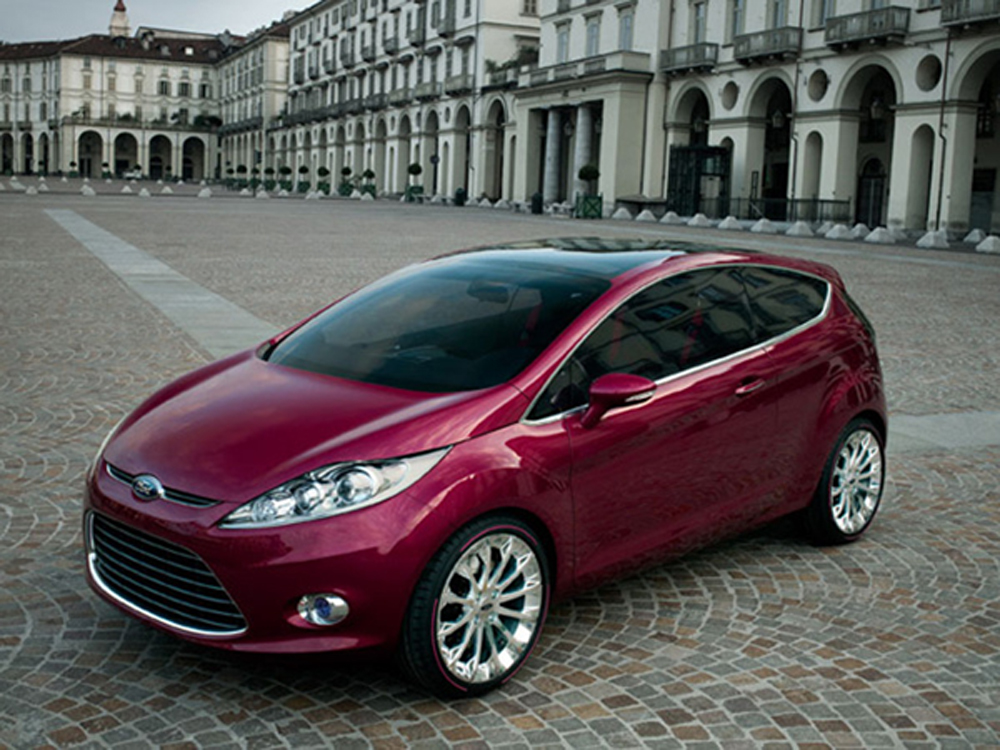
This a very (very) old post that has been cooking for over 2 years.
There is a reason for this. Firs I tested the car using the standard Michelin energy tires... having driven the Type-r version my immediate impression was: this thing is all over the place! that high roof must really pull the chassis beyond it's limits.
Then, my first recommendation was: change the tires. Go for some proper rubber engineered to grip instead of fuel saving, and then I recommended the Toyo T1-R's I also recommended to increase the 195,60,R15 to a much more sensible 205,55,R15 with reinforced sidewalls to prevent tire wall smash.
The transformation was obvious... having decent road holding from the tires, the chassis actually comes to live and presents all it's magnificent design. Sure it was a bit too high but the stiffness on the tires and the grip was enough to force the chassis into full dynamics (not sure however of it's behavior if you have a transition from good tarmac into a less holding surface).
This was good news but I was out of time and so I had to leave the test... unfinished.
This last 2 months however presented themselves with an opportunity to clock some 10.000Kms on the same car. It was time to to through every type of pavement, road, condition... and check the car properly.
What a surprise. Not a good or a bad surprise but rather a mix.
Chassis wise the car is brilliant... one of the best FWD chassis, period! Grippy and very composed, the lift-off over-steer is controlled with ease and allows for some spectacular drifts...not just for show! Once you've mastered the dynamics of the car, you can keep a very fast pace on any b road. Sure you will kill the front tires fast like any FWD car, but the experience will be involving and with slim to none under-steer.
Turn in is precise and very willingly (surprisingly instantaneous).
Torque-steer however is bad news. I can clearly understand why Honda, having opted for a lower quality, inferior and ultimately cheaper rear suspension design for the new versions of the civic, decided into an improved front suspension design as it was would render anything beyond 150bhp and 200nm/torque problematic. Especially with the worse rear design, the front end would really need to be a charm.
Allow the car to slide a bit further than 20 degrees and you'll feel that the torque for the front wheels will work against you while you steer back when the car starts recovering... unpleasant and eventually dangerous in extreme circumstances. How to sort this out in your own car? kill the rubber bushings and fit some good, hard, polyurethane ones...also buy a bump-steer kit from spoon...now that you are at it, fit a set of coilovers.
That is the single most weird thing about the car. And having a heavy (really heavy) diesel engine, this is more perceptible.
The Diesel engine... not bad for a 1.7 common rail with an old design. The Isuzu unit is robust and bullet proof, but is is very heavy and since it is a diesel, response is something unheard of. So that is the ONE THING that spoils the package. Had this been a RWD it would kill the chassis competence completely (much like the BMW 1 series).
Appart form that it will cruise at 120km/h at 5lts/km (no AC)... and will average 6.2lt/Km in the 10.000km I've tested with mixed city and highway , with AC (with some highway stretches going beyond the 200km/h apparent limit).
The weight of the engine is very perceptible on speed-bumps. The front of the car easily digs into the ground while coping to deal with the front end weight and still remain "decent" in comfort settings.
It is comfortable enough for long trips (over 700km in a row)...clearly not as comfortable as my V70 T5 volvo, but if you compare chassis efficiency and joy vs ride comfort, this will eclipse the volvo anyway... it will eclipse most cars actually.
So this is a good car. Pitty the engine is diesel, so a 1.8i would be better... a lot better... pitty it is so high, to the sports version is the one to go for... and of course, if you manage to source the type-r 2.0 than there is no looking back,
Comparing it with the recent chassis, the EP3/EP4 (EP3 is the Civic Type-R and Civic Si or sport chassis and the EP4 is the regular car with an extra 20cm of headroom) is the last great Civic to have. So unless you are 70 years old and only drive on motorways, ignore ANY civic beyond the Type-R EP3... and that includes the new "shemale" turbo type-r.
Why this BLOG? Well, I'm so tired of so many wrong decisions in today's car industry, mostly because people don't really stop-to-think. So I decided to post my thoughts. Why beyond 6000? An engine will be more efficient working faster. Most however don't go beyond 6000rpm, hence the BEYOND...6000.
Showing posts with label Car Review. Show all posts
Wednesday, September 23, 2015
Test Drive - 2004 Honda Civic 1.7cdti (EP4 chassis)
Wednesday, September 16, 2015
Test Drive - Mini 1.6d
Engine.... engine... this chassis asks for engineeee
The mini is a brilliant little car. It always had been and when BMW took over the new version project it managed to input all the good "drivers car" knowledge they've always had.
It is FWD (not particularly good) but truth be spoken it is a brilliant FWD.
The chassis is very composed and the rear is as live on lift-off as the front is eager to bite into corners... and being so small this means one thing: agility.
This car allows you a very high pace thought a B-road jumping from bend to bend without any sort of inertia issues. It feels a lot lighter than it actually is, but that is good.
Just like it's RWD brother the 1series BMW, this car ask... begs... for a proper engine. And unfortunately just like the BMW's I've tested, it was Diesel.
Don't get me wrong, the car is very lively during acceleration and great for motorway cruising... but when you really need response and rev range, the diesel engine doesn't allow you to properly enjoy the chassis.
My opinion?
Buy the cooper works... the old one... with the compressor. I know the turbo performs better and is less of a pain to keep healthy... but if you want to enjoy the chassis, you need response and the turbos... well the turbos will always have response issues. :)
The mini is a brilliant little car. It always had been and when BMW took over the new version project it managed to input all the good "drivers car" knowledge they've always had.
It is FWD (not particularly good) but truth be spoken it is a brilliant FWD.
The chassis is very composed and the rear is as live on lift-off as the front is eager to bite into corners... and being so small this means one thing: agility.
This car allows you a very high pace thought a B-road jumping from bend to bend without any sort of inertia issues. It feels a lot lighter than it actually is, but that is good.
Just like it's RWD brother the 1series BMW, this car ask... begs... for a proper engine. And unfortunately just like the BMW's I've tested, it was Diesel.
Don't get me wrong, the car is very lively during acceleration and great for motorway cruising... but when you really need response and rev range, the diesel engine doesn't allow you to properly enjoy the chassis.
My opinion?
Buy the cooper works... the old one... with the compressor. I know the turbo performs better and is less of a pain to keep healthy... but if you want to enjoy the chassis, you need response and the turbos... well the turbos will always have response issues. :)
Sunday, July 5, 2015
Test Drive - Audi A4 Avant 2.0TDI 170bhp B8 chassis
I'm just reviewing the engine on this unit as the remaining features are exactly like the 140bhp review.
The engine: Not so bad. Unlike the dull, lifeless 140 common rail, this feels a lot beefier.
It is still round enough and able to sustain power for a good usable 2500rpm.
It has a duality of character to it... don't push beyond 2500rpm and it will consume very little fuel to maintain speed... step on it, on the other hand and you will start wondering if this is diesel or gasoline... not because of the power but rather the consumption.
Not brilliant (it's a diesel... not much to expect from it) but it is very decent.
Conclusions:
It is fair and for motorway cursing it is economic...if in doubt between the 140 or the 170... go for the 170... no question about it...or...buy the 2,0TSFI, revo-it and you are better off.. but if you really are looking for a chassis that corners with you, instead of against you...(and don't mind the ugly looks and bad plastics...did I say ugly?) buy the megane and save a tone of money.
Test Drive - Audi A4 Avant 2.0TDI 140bhp B8 chassis
With over 140.000 km on the clock, I must say that it's a brilliantly built machine. No noises, no major issues apart from the standard maintenance program... much like the gas version and this is no surprise because though it vibrates more than the gas unit, the engine is actually well balanced.
And so the test begins.
The engine: A bad surprise... this was the engine that replaced the PD130 and PD150... this is 16valves (don't really understand why 16v on an oil burner) against the 8v.. it is claimet to have 142 bhp... but it actually feels less!
I must say, in it's justice that if is as round as the PD150 was, and not a brute hulk like the PD130... but the common rail, 16valves crap really killed the engine.
It feel s as if the turbo is not working properly. Low down torque, however is very good... so, at traffic, all you need to do is lift off you clutch a bit and it will get you going.
One good surprise was fuel economy... if you don't push-it beyond 2500rpm it will run with excellent mileage.
The Gearbox: I must say this gearbox is very good.
Perfectly matched to the engine, perfect command weight, the engagement takes the propper force to happen and it feeds back exactly the info you need without letting you feel you are touching metal. Very refined touche but clearly the win is the engine match...
In this car it is a must as if you try to heel-toe, it will miss-understand you and emergency mode the engine... stupid i know.. but seem to plague the ESP units on all the VAGs.
So this gear box is a joy.
The Chassis: This is almost copy paste on the A4 2.0 TSFI review....it's an Audi... it is very composed and with good grip levels (particularly after fitting bigger rims and tires). The grips is good enough to make you think it's lighter that it actually is, but it is not as involving as...say... the megane3 break chassis.
The one problem with this car... as any other AUDI is the let-go... UNDER-steer. It's like this by design as the every day banker that buys them really doesn't know how to drive and in an extreme situation, will get scared and break... so all AUDI's except the R8 are tuned to under-steer on the limit.
This however is the exact opposite behavior you really want on a curve as what you need is the chassis to help resolve the curve by biting in with the front axle and letting go the rear to roll the car into the corner.
Again, much like the twin 2.0TSFI test:
This could obviously be solved with a handbreak strike but no... noooo! the hand break on this is electrical.... how stupid of you audi.. this was the one thing that could solve the chassis stupid fine-tuning and you manage to eliminate it!.
Conclusions:
It is fair and for motorway cursing it is economic...
Buy the 2,0TSFI, revo-it and you are better off.. but if you really are looking for a chassis that corners with you, instead of against you...(and don't mind the ugly looks and bad plastics) buy the megane and save a tone of money.
UPDATE:
This car was now fitted with a set of 18" rims running Bridgestone RE050a tires.
What a transformation. This simple setup made the car's turn into the corners a LOT sharper. The grip levels increased and the on-the limits under-steer that annoys me so is now let evident and more composed on the let-go and recovery from it.
A MUST. This chassis was clearly designed for big rims, low profile, wide tires and with high grip level.
Test Drive - Audi A4 Avant 2.0TSFI s-tronic B8 chassis (on a REVO Stage 1 remap)
I've now covered around 5000km on the A4 Avant 2.0TSFI s-tronic.
With over 130.000 km on the clock, I must say that it's a brilliantly built machine. No noises, no major issues apart from the standard maintenance program.
This unit is a very curious one... you see, the major problem with the world is the politicians... well if you think of it, it is actually people that elect them, but still, they create stupid laws to steal money from you. One of those laws exists in some countries where you pay a tax for the BHP you car has! Some other countries make you pay for the displacement your engine has... and some a bit more evolved make you pay for the impact on the environment... but then do not use the money from the tax to counter that impact... utterly ridiculous.
Spain in one on those countries that think that BHP is bad for the environment... so if you have an good old oil-burner 2.0 that paints your city black with smoke but only has 60bhp, you are a good civilized citizen!
Still the fact that politicians are stupid doesn't mean that the people at AUDI are...thank goodness.
So they build the 2.0TSFI engine for 210bhp...as they do for every other country... and then when legalizing in Spain, they just detune the ECU to 180BHP and happy day you can buy your car cheaper.
So why oh why was this soo cool? Well the owner of the car felt the drive-train was better than the engine, and as such he chose to buy a REVO stage1 remap.
Now this remap gives the standard 210bhp an healthy 40bhp plus... but since the REVO code doesn't recognize the Spanish law, it thinks the ECU is actually the standard 210Bhp ECU on a different version... and it is absolutely right...and so re writes everything, unlocking the 40Bhp promissed + the constrained 30Bhp... what a blast. A 2.0 4 pot that unleashes 70bhp from a stage one, off the shelve remap.
And so the test begins.
The engine: No surprises here... it is quick! it revs happy, the factory turbo is more that up to the job and the new found power makes the standard wheels and tires scream at every standing still pull... new rims and rubber underway, no worries.
It was a perfectly decent engine... sure not an efficiency benchmark but a very decent and livable engine. Now it is much more responsive, the surge of power is more round and sustained showing the FWD limitations essentially on the standing still pulls... don't get me wrong.. .it is FWD and turbo, so if you floor-it mid corner you will have under-steer (or ESP kick-in)...but the new found linear response of the engine, allows you to pull gently out of the corner IF you dose the throttle.
The Gearbox: wow ... I hate automatic gearboxes... I find he torque-converter something as stupid as hybrid cars are... I mean it's an element that enables you to convert torque from the engine to the weeels by passing oil though a closed doughnut with some fan-blades.... clever as it is, the fact is that the fluid is not a solid mechanical link as as such drains torque.
The S-tronic on the other hand is the evolution of the well known DSG. If fact you have 2 different sets of gears, the pair ones and the impair ones... each set on it's own shaft. The S-tronic has them both in sync and ready to engage as you decide to shift and then operates 2 different sets of, multi-disk clutch... one engages the pair gears and one for the impair shaft.
The result? a truly quick, no fuss, mechanical link shift. There is more... the S-tronic has 7 forward gears for you to use.
The manual control (in sports mode) is quick and obviously computer monitored so you don't over-rev nor under-rev the engine. Coupled with this engine it makes the car seem a lot lighter that it actually is.
So I really don't like automatic transmissions, but I do consider this do be a piece of engineering.... especially after opening one and seeing how it is made.
The Chassis: It's an Audi... it is very composed and with good grip levels (particularly after fitting bigger rims and tires). The grips is good enough to make you think it's lighter that it actually is, but it is not as involving as...say... the megane3 break chassis.
The one problem with this car... as any other AUDI is the let-go... UNDER-steer. It's like this by design as the every day banker that buys them really doesn't know how to drive and in an extreme situation, will get scared and break... so all AUDI's except the R8 are tuned to under-steer on the limit.
This however is the exact opposite behavior you really want on a curve as what you need is the chassis to help resolve the curve by biting in with the front axle and letting go the rear to roll the car into the corner.
This could obviously be solved with a handbreak strike but no... noooo! the hand break on this is electrical.... how stupid of you audi.. this was the one thing that could solve the chassis stupid fine-tuning and you manage to eliminate it!.
Conclusions:
It is good... it is built for the highway and if you revo-it it will be a lot nicer... but if you really are looking for a chassis that corners with you, instead of against you...(and don't mind the ugly looks and bad plastics) buy the megane and save a tone of money.... oh now wait.. no decent petrol meganes except for the RS. Better think about a Skoda RS then :)
With over 130.000 km on the clock, I must say that it's a brilliantly built machine. No noises, no major issues apart from the standard maintenance program.
This unit is a very curious one... you see, the major problem with the world is the politicians... well if you think of it, it is actually people that elect them, but still, they create stupid laws to steal money from you. One of those laws exists in some countries where you pay a tax for the BHP you car has! Some other countries make you pay for the displacement your engine has... and some a bit more evolved make you pay for the impact on the environment... but then do not use the money from the tax to counter that impact... utterly ridiculous.
Spain in one on those countries that think that BHP is bad for the environment... so if you have an good old oil-burner 2.0 that paints your city black with smoke but only has 60bhp, you are a good civilized citizen!
Still the fact that politicians are stupid doesn't mean that the people at AUDI are...thank goodness.
So they build the 2.0TSFI engine for 210bhp...as they do for every other country... and then when legalizing in Spain, they just detune the ECU to 180BHP and happy day you can buy your car cheaper.
So why oh why was this soo cool? Well the owner of the car felt the drive-train was better than the engine, and as such he chose to buy a REVO stage1 remap.
Now this remap gives the standard 210bhp an healthy 40bhp plus... but since the REVO code doesn't recognize the Spanish law, it thinks the ECU is actually the standard 210Bhp ECU on a different version... and it is absolutely right...and so re writes everything, unlocking the 40Bhp promissed + the constrained 30Bhp... what a blast. A 2.0 4 pot that unleashes 70bhp from a stage one, off the shelve remap.
And so the test begins.
The engine: No surprises here... it is quick! it revs happy, the factory turbo is more that up to the job and the new found power makes the standard wheels and tires scream at every standing still pull... new rims and rubber underway, no worries.
It was a perfectly decent engine... sure not an efficiency benchmark but a very decent and livable engine. Now it is much more responsive, the surge of power is more round and sustained showing the FWD limitations essentially on the standing still pulls... don't get me wrong.. .it is FWD and turbo, so if you floor-it mid corner you will have under-steer (or ESP kick-in)...but the new found linear response of the engine, allows you to pull gently out of the corner IF you dose the throttle.
The Gearbox: wow ... I hate automatic gearboxes... I find he torque-converter something as stupid as hybrid cars are... I mean it's an element that enables you to convert torque from the engine to the weeels by passing oil though a closed doughnut with some fan-blades.... clever as it is, the fact is that the fluid is not a solid mechanical link as as such drains torque.
The S-tronic on the other hand is the evolution of the well known DSG. If fact you have 2 different sets of gears, the pair ones and the impair ones... each set on it's own shaft. The S-tronic has them both in sync and ready to engage as you decide to shift and then operates 2 different sets of, multi-disk clutch... one engages the pair gears and one for the impair shaft.
The result? a truly quick, no fuss, mechanical link shift. There is more... the S-tronic has 7 forward gears for you to use.
The manual control (in sports mode) is quick and obviously computer monitored so you don't over-rev nor under-rev the engine. Coupled with this engine it makes the car seem a lot lighter that it actually is.
So I really don't like automatic transmissions, but I do consider this do be a piece of engineering.... especially after opening one and seeing how it is made.
The Chassis: It's an Audi... it is very composed and with good grip levels (particularly after fitting bigger rims and tires). The grips is good enough to make you think it's lighter that it actually is, but it is not as involving as...say... the megane3 break chassis.
The one problem with this car... as any other AUDI is the let-go... UNDER-steer. It's like this by design as the every day banker that buys them really doesn't know how to drive and in an extreme situation, will get scared and break... so all AUDI's except the R8 are tuned to under-steer on the limit.
This however is the exact opposite behavior you really want on a curve as what you need is the chassis to help resolve the curve by biting in with the front axle and letting go the rear to roll the car into the corner.
This could obviously be solved with a handbreak strike but no... noooo! the hand break on this is electrical.... how stupid of you audi.. this was the one thing that could solve the chassis stupid fine-tuning and you manage to eliminate it!.
Conclusions:
It is good... it is built for the highway and if you revo-it it will be a lot nicer... but if you really are looking for a chassis that corners with you, instead of against you...(and don't mind the ugly looks and bad plastics) buy the megane and save a tone of money.... oh now wait.. no decent petrol meganes except for the RS. Better think about a Skoda RS then :)
Sunday, March 3, 2013
The new Ford KA... Boy I miss the URGLY brilliant old Ka
As with most cars on sale today, the new ford Ka is a beautiful looking thing.
However unlike most cars today, this evolution means a leap back in quality.
When I drove the car, I was immediately disappointed with it. At the time I really didn't understood why, but it just fell un-involving, disconnected....plain cheap.
You see, I've driven the old Ka a couple of times, but more important, I drove it's big brother the Fiesta MK4 for years...and they were practically the same.
Let's make a big X ray. of the projects supporting the Ka, first:
Back in 1989, Ford unveiled the BE-13 chassis on the 3rd generation ford fiesta.
So that was the great big disappointment on the first meters I drove the MK2 Ka... I felt No BE91... or none of it's evolutions... I felt lack of what has been branding Ford since 1995.
You see, The Mk4 fiesta was Ugly. The Mk1 Ka was even worse... I mean if the fiesta looked like a soap, the Ka would only make sense in Tokyo, and even there, it would not live to be cool for more than a week.
I was very critic about the Ka design... and the new one is just as beautiful as a Fiesta, with in turn is just as beautiful as a Focus.
The minute I knew this, it all made sense. I know why I would never ever buy a Mk2 ford Ka...its because of the lack of Ford in it!
However unlike most cars today, this evolution means a leap back in quality.
When I drove the car, I was immediately disappointed with it. At the time I really didn't understood why, but it just fell un-involving, disconnected....plain cheap.
You see, I've driven the old Ka a couple of times, but more important, I drove it's big brother the Fiesta MK4 for years...and they were practically the same.
Let's make a big X ray. of the projects supporting the Ka, first:
Back in 1989, Ford unveiled the BE-13 chassis on the 3rd generation ford fiesta.
The BE-13 was an important step in terms of chassis engineering. Most people forget the simple fact that during MK2 fiesta was comparable to a facelift of the MK1 Fiesta. In both Mk1/2, Ford had to undergo some heavy reinforcement engineering when they decided to launch the XR versions for the boy-racers. That was taken into consideration while developing the Mk3 chassis.
Not perfect, the BE-13 was competent and involving.
1995 came and the BE91 chassis with it. This is an important mark in Fords history. The BE91 was used first in the Mk4 fiesta and was essentially the Mk3 (BE-13 chassis) with revised suspension. It quickly became the best in its class, but more important, it just added to the Ford brand a distinctive signature of driving pleasure that just wasn't there as an experience to the entire brand (it used to be just a couple of model property). It just felt like Ford had unleashed their engineering team from the rally world and allowed them input into every other project...it was just wonderful.
The most important thing about this chassis, was the fact that, due to its brilliance, it was widely used. The BE91 was the basis of:
The MK4 Fiesta and The MK5 Fiesta
The Mk1 Ka
The Mk1 Ford Fusion
The Mk1 Ford Puma
The Mk1 and Mk2 Ford Courier
and the Mazda 121!!!
This spawning of projects bases on this chassis is not only a proof of versatility. The Puma was a small-sports concept, the Fiesta Techno has a sporty appeal to it, the Mk5 Fiesta had spiced-up ST versions and they all fell involving and responsive.
I drove the Mk4 Fiesta from 1997 to 2004. The car was probably the best driving experience for money I've had so far. I even took it to the track and establish a point of matter against 2 tuned Mk4 Golf TDi, a tuned Peugeot 307 Gti and an alfa that was trying very hard not to self disassemble while not rusting from bend to bend...and of course that left no room to maintain braking ability. All the cars (tuned or non tuned) gave up and parked after 2 laps (most after some scary handling issues) mostly without brakes. This is arguably due to being badly equipped, or simply badly balanced chassis, forcing them to use the brakes more often...the mk4 Fiesta equipped with nothing more that tarox front discs and kevlar front brake pads, recorded over 12 laps and 3 of them were even video-taped and are available on youtube.
So regarding the BE91 chassis, I can say that I know it like the back of my hands.So that was the great big disappointment on the first meters I drove the MK2 Ka... I felt No BE91... or none of it's evolutions... I felt lack of what has been branding Ford since 1995.
You see, The Mk4 fiesta was Ugly. The Mk1 Ka was even worse... I mean if the fiesta looked like a soap, the Ka would only make sense in Tokyo, and even there, it would not live to be cool for more than a week.
I was very critic about the Ka design... and the new one is just as beautiful as a Fiesta, with in turn is just as beautiful as a Focus.
These are the Mk6...
...and Mk7 Fiestas
And the Mk2 Ka:
Is just beautiful.
There is no other way to say this... the old is UGLY and the new one is BEAUTIFUL.
The problem is that the looks, are nice when you show off, or when you approach the car. But when you drive it, they have no part in the rewarding experience...and regarding the rewarding experience the Mk2 is just BAD! Cheap! Plastic! Un-involving! It's one of the worse ford's I've driven and that included old transits!
The one to blame? Meet the Barbie Car:
Yup.. That's it! A brand known for creating robust and involving cars, took one of the best chassis it has ever created and replaced with the barbie car, from the brand known for creating...cheap un-involving, everything but robust cars.The minute I knew this, it all made sense. I know why I would never ever buy a Mk2 ford Ka...its because of the lack of Ford in it!
Labels:
Car Review,
Chassis,
European Car Industry,
International
Wednesday, June 6, 2012
The Crossover Face-lift from Peugeot
Back in 2009 Peugeot unveiled the 3008 as a Crossover concept.
It is basically an SUV shaped as a minivan for better habitability. It's a Minivan-SUV cross-bread and that's why they call-it Crossover.
It is however a bad concept if you take stability and handling in mind. You see, a SUV will never be a good handler... the soft suspension coupled with the heavy body and a high standing position will always make it tip-over just too easy. It's pure physics! High center of gravity together with a soft and long suspension make anything (take the old Mercedes A-Class, the smart, the Kangoo... for example) unstable.
The minivan is not a particularly happy example. Sure it sits low like a car, but it's much heavier and the center of gravity is too high due to all that extra room for your kids to be able to play soccer in it. It's no wonder that the best handling minivan out-there is the Focus C-Max and if you look at it, it's low and it's also wider than it is high...and despite the brilliant chassis, do a left-then-right and you'll feel all that excess weight in motion.
The crossing between these 2 types of car is everything but a good idea. It reminds-me of an exert from "The Silence of the Lambs" where Dr. Hannibal Lecter talks about FBI agent Clarice: "There are shallow rollers, and there are deep rollers. You can't breed two deep rollers... or their young, their offspring, will roll all the way down... hit and die. Agent Starling is a deep roller. Let us hope one of her parents was not."
It's about the same with car cross-breads...if you cross-bread a car that's prone to tip over with another prone to tip-over car, you'll have a really unstable car.
But that's not all the bad news. The really really bad news is the way it looks. It's just horrible.
Meet "Peugeous Horribilis":
I mean, there is not a single angle in which this design generates a different (or less violent) feeling this side of sickness and nausea.
So is this all? Unfortunately no! Today's mania of creating GLASS roof-topped cars allows for an option where you can have this horrible car and it's bad handling together with a roof that is about 10 times more heavy that the steel-roof in the absolute worse place...the very top end of the car.
The result? Well Peugeot tried really hard to control this design madness by stiffing it up (way beyond reason)...resulting in a comfortable car while stopped or in a good pavement, but totally uncomfortable in bad pavement or bumpy roads.
While driving it, you can feel all that excessive weight and how it tries to unsettle the chassis constantly...and how constantly the chassis tries to compensate. It's a full none-sense on wheels.
It's no coincidence that ESP is a standard "option" in this... and even with the ESP constantly watching over, do the Left-then-right and you'll be able to experience wheel lift even while under ESP control... that's a scary on-the-verge setup...and please mind that this is the normal steel-roof car. Add the Glass roof and you'll probably see it tip-over even on this slower test.
Now that the monstrous thing has been introduced, it's time to talk about it's new face-lift...and if they take this design forward, we're in for good news from this point onwards.
First impression: It's beautiful! That looks like a Peugeot...and unlike it's "3008 horribilis" predecessor, this HAS design.
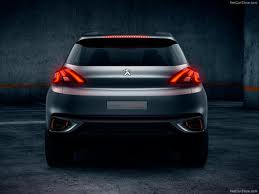
Clearly there is some inspiration on the very successful KIA sportage front-end, and I do still read a lot of VW tiguan at the Back-end... but hey, it's beautiful.
The best part? Well, take a good look at the car and you'll always find it wider than it is tall. A very important thing because of all the right reasons that anyone with some physics knowledge would tell you - A lower center of gravity = better and safer handling.
Nice job so far Peugeot...now let's see this find its way into production AS IS, just like Mercedes pulled with the new A-class and you'll get back on my "car builder" list, as opposed to "construction builder" list.
It is basically an SUV shaped as a minivan for better habitability. It's a Minivan-SUV cross-bread and that's why they call-it Crossover.
It is however a bad concept if you take stability and handling in mind. You see, a SUV will never be a good handler... the soft suspension coupled with the heavy body and a high standing position will always make it tip-over just too easy. It's pure physics! High center of gravity together with a soft and long suspension make anything (take the old Mercedes A-Class, the smart, the Kangoo... for example) unstable.
The minivan is not a particularly happy example. Sure it sits low like a car, but it's much heavier and the center of gravity is too high due to all that extra room for your kids to be able to play soccer in it. It's no wonder that the best handling minivan out-there is the Focus C-Max and if you look at it, it's low and it's also wider than it is high...and despite the brilliant chassis, do a left-then-right and you'll feel all that excess weight in motion.
The crossing between these 2 types of car is everything but a good idea. It reminds-me of an exert from "The Silence of the Lambs" where Dr. Hannibal Lecter talks about FBI agent Clarice: "There are shallow rollers, and there are deep rollers. You can't breed two deep rollers... or their young, their offspring, will roll all the way down... hit and die. Agent Starling is a deep roller. Let us hope one of her parents was not."
It's about the same with car cross-breads...if you cross-bread a car that's prone to tip over with another prone to tip-over car, you'll have a really unstable car.
But that's not all the bad news. The really really bad news is the way it looks. It's just horrible.
Meet "Peugeous Horribilis":
I mean, there is not a single angle in which this design generates a different (or less violent) feeling this side of sickness and nausea.
So is this all? Unfortunately no! Today's mania of creating GLASS roof-topped cars allows for an option where you can have this horrible car and it's bad handling together with a roof that is about 10 times more heavy that the steel-roof in the absolute worse place...the very top end of the car.
The result? Well Peugeot tried really hard to control this design madness by stiffing it up (way beyond reason)...resulting in a comfortable car while stopped or in a good pavement, but totally uncomfortable in bad pavement or bumpy roads.
While driving it, you can feel all that excessive weight and how it tries to unsettle the chassis constantly...and how constantly the chassis tries to compensate. It's a full none-sense on wheels.
Now that the monstrous thing has been introduced, it's time to talk about it's new face-lift...and if they take this design forward, we're in for good news from this point onwards.
Clearly there is some inspiration on the very successful KIA sportage front-end, and I do still read a lot of VW tiguan at the Back-end... but hey, it's beautiful.
The best part? Well, take a good look at the car and you'll always find it wider than it is tall. A very important thing because of all the right reasons that anyone with some physics knowledge would tell you - A lower center of gravity = better and safer handling.
Nice job so far Peugeot...now let's see this find its way into production AS IS, just like Mercedes pulled with the new A-class and you'll get back on my "car builder" list, as opposed to "construction builder" list.
Labels:
Car Review,
Chassis,
European Car Industry,
International
Saturday, March 24, 2012
Toyo R888 + 5zigen Gn+ Proracer + S2000 = FUN
I've been waiting for some time now to write this article.
I've been driving the S2000 for quite some time now (err make that - it's my daily driver since 2007).
As a car lover and 100% petrohead I am, I usually wakeup 2 hours earlier than to avoid traffic and only return home after the gym training session, avoiding traffic once again.
This is not JUST to avoid the stress, but mainly to have the road clear enough for some daily fun.
Now I've always defended that the S2000 OEM suspension was good and that I really didn't get why most owners switch to tuner suspension.
Well, this time, when I needed to change my tires I decided to go crazy and fit my racing 5zigen GN+ with some Racing Toyo R888 rubber.
I've had a set of these before but never tried them on a every-day basis.
So after a month on these beauties what can I say?
I love the lack of NVH technology... the tires roar constantly while contacting with the ground and it's just so hardcore that it's good.
The car used to get sideways with ease, well...not any more. You have to really push things to get a tail out, and when you do, the slightest correction is immediately carried out. No delay, no fuss... just ask what you what and keep accelerating enough to allow the brilliance of the chassis and the super perfect tires to make your wishes out in perfectly executed commands.
The grip level is so high that it became evident in the first 10 minutes I drove it on the road WHY there are after market suspension kits to the Rev 2 S2000 for street use.
Using the stock suspension on the Rev2 chassis, this setup will enhance the settings and make them excessive.
The rev2 S2000 is more controlled and poised on the limit. This is because of some understeer-under-acceleration setup, making the let-go more progressive since the front end bites-in less aggressively.
If you add huge gripping tires to this setup and leave-it as it is, the car will get a bit on the "all-or-nothing" side. Step-on the gas in a bend and the rear grip will up the car's nose and you'll feel understeer...Step-off and the front-end dives-in and grips like hell creating oversteer.
It's easy to get used not to step in or off to much and the car will grip brilliantly, but this suspension travel will immediately get you on the phone with your car parts supplier.
A lot of people ask-me about these tires behaviour in the rain.
About the rain: If by rain you mean pouring rain, then I have to say that this is not the rain tire. It's got some groves to channel out water, but it's only to make it minimally drivable...it's far from safe to normal driving speeds.
However if by rain you mean wet tarmac, then get your facts right. The compound if so soft that it will grip even cold. This car can turn so fast in the wet tarmac running R888's as it would turn on the dry tarmac using normal tires.
Reviews?
I've already reviewed these tires before here, so I'll just add that my new favourite sport is outside overtaking on hard corners. It's wonderful to overtake others on the outside while they desperately try to brake their cars into the corners with their tires screaming all over the place.
The only bad thing is when you overtake-them they immediately brake and leave you some distance because the tires pick-up just about every little bit of dirt you have on the road and projects-it out the back of the car into the front end on the one chasing you.
Brilliant tires... and kind-of addictive ;)... they definitely can make you a "show-off'r"
I've been driving the S2000 for quite some time now (err make that - it's my daily driver since 2007).
As a car lover and 100% petrohead I am, I usually wakeup 2 hours earlier than to avoid traffic and only return home after the gym training session, avoiding traffic once again.
This is not JUST to avoid the stress, but mainly to have the road clear enough for some daily fun.
Now I've always defended that the S2000 OEM suspension was good and that I really didn't get why most owners switch to tuner suspension.
Well, this time, when I needed to change my tires I decided to go crazy and fit my racing 5zigen GN+ with some Racing Toyo R888 rubber.
So after a month on these beauties what can I say?
I love the lack of NVH technology... the tires roar constantly while contacting with the ground and it's just so hardcore that it's good.
The car used to get sideways with ease, well...not any more. You have to really push things to get a tail out, and when you do, the slightest correction is immediately carried out. No delay, no fuss... just ask what you what and keep accelerating enough to allow the brilliance of the chassis and the super perfect tires to make your wishes out in perfectly executed commands.
The grip level is so high that it became evident in the first 10 minutes I drove it on the road WHY there are after market suspension kits to the Rev 2 S2000 for street use.
Using the stock suspension on the Rev2 chassis, this setup will enhance the settings and make them excessive.
The rev2 S2000 is more controlled and poised on the limit. This is because of some understeer-under-acceleration setup, making the let-go more progressive since the front end bites-in less aggressively.
If you add huge gripping tires to this setup and leave-it as it is, the car will get a bit on the "all-or-nothing" side. Step-on the gas in a bend and the rear grip will up the car's nose and you'll feel understeer...Step-off and the front-end dives-in and grips like hell creating oversteer.
It's easy to get used not to step in or off to much and the car will grip brilliantly, but this suspension travel will immediately get you on the phone with your car parts supplier.
A lot of people ask-me about these tires behaviour in the rain.
About the rain: If by rain you mean pouring rain, then I have to say that this is not the rain tire. It's got some groves to channel out water, but it's only to make it minimally drivable...it's far from safe to normal driving speeds.
However if by rain you mean wet tarmac, then get your facts right. The compound if so soft that it will grip even cold. This car can turn so fast in the wet tarmac running R888's as it would turn on the dry tarmac using normal tires.
Reviews?
I've already reviewed these tires before here, so I'll just add that my new favourite sport is outside overtaking on hard corners. It's wonderful to overtake others on the outside while they desperately try to brake their cars into the corners with their tires screaming all over the place.
The only bad thing is when you overtake-them they immediately brake and leave you some distance because the tires pick-up just about every little bit of dirt you have on the road and projects-it out the back of the car into the front end on the one chasing you.
Brilliant tires... and kind-of addictive ;)... they definitely can make you a "show-off'r"
Labels:
Car Review,
Chassis,
International,
Tire Choice,
Tire Review
The CRZ that kills birds...
...but makes the guy paying for it feel alive and happy.
It's no news, the CR-Z ir FAR from being the acclaimed CRX replacement.
I tend to think that If they called it Honda Green, or Honda TweetyBird...or even Honda CRU, I wouldn't hate it as much.
But Honda called the CRZ the "Next Step from the CRX", hence the "Z". That was just offensive. It seems like the company that created the CRX forgot their own product, or the new guys working there never ever understood the "old"guys project at all.
The CRX was about Lightness and Nimbleness coupled with a state of the art engine that pulled out 100bhp/tonne in it's best evolution.
Years latter, Honda managed to:
- kill lightness with a huge battery pack!?!?
- kill nimbleness with a high-stance car instead of a LOW-to-the-GROUND sports one.
- killed the engine power using a IMA unit that pumps out less than 80Bhp/litter and a joking 114bhp top + 14bhp with electric assistance.
So, is Honda selling worse a product marketed as a better one?
NO, and YES.
No, the CRZ is not worse than the CRX if you are a bird and feel that the CO emissions is disturbing your libido function.
No, the CRZ is not worse than the CRX if you have an accident and absolutely need to walk out of it with nothing but an headache.
No, the CRZ is not worse than the CRX if you think that a sports car should have the same economy as a diesel vw lupo.
No, the CRZ is not worse than the CRZ if you like that odd rear-end
but...
Yes the CRZ is far worse than the CRX if you like cars
Yes the CRZ is far worse than the CRX if you think a sports car needs an engine
Yes the CRZ is far worse than the CRX if you like a nimble and light chassis
Yes the CRZ is far worse than the CRX if you like to lightly tune up your car to your personal preference.
Yes the CRZ rear end is ugly and difficult to live-with compared to the CRX.
To make a long story short (quoting my self talking to a friend that brought the CRZ), Honda makes you pay for the car, but built it having the bird and pigeons in mind, NOT YOU!
He replied: But I've already brought the thing...
...Is there a solution for this mess?
Sure!
No need to panic.
When Honda released the Eighth generation Civic, the European version on the coupé was a disgrace. The car has lost it's independent rear suspension that made the EP3 (7th gen) chassis so good.
However, the 8th gen sedan had the same EP3 independent rear suspension...but was an IMA hybrid!
Weird! Honda puts the brilliant K20A engine in the Coupe type-r with a bad suspension...and the poor stupid IMA hybrid in the sedan, but with the best rear suspension the civic has ever had.
So how would one save this car? Well Honda may be selling crappy products, but they tend to do so on the European market only, cause the Japanese Domestic Market version of the 8th gen Type-r has the brilliant K20 Engine (pumping over 220bhp from it's Natural Aspirated 2 litre engine) coupled with the sedan chassis that suffers an extreme diet.
The very same approach could be used on the CRZ.
Dump the batteries, dump the IMA engine (maybe it will be useful to build an epi-lady or something like that) and fit the K20A with the 6speed Gearbox into it, then lower and stiffen the car.
Now I've been saying this since I've seen the first car specs with a claimed 200bhp from an extreme IMA unit... but Honda failed to deliver.
Meet the K24 CRZ from Eibach
It's pointless to tune a chassis without removing unnecessary weight. And a Car with 200kg of batteries that return less that 20bhp...needs a diet.
Together with the batteries, an engine that produces no power at all is also no good, so out with the IMA and in with...
... the K24. It's the same K20 from the Type-R Civic and JDM Fourth Generation Integra but since it's being used in the Accord, an extra 400cc has been added to cope with the extra weight.
The result? Well the result is FINALLY a CRZ. A decent successor for the CRX.
This car is created for the ones Paying for it... it's a driver's car, not the TweetyBird's car, and since the driver is the one paying for it, it feels just right.
The K24 is producing around 280bhp and that's more than double the original 1.5 unit's 112bhp...that's 116Bhp/litre and its close enough to the european version S2000 120Bhp/litre to be called an evolution worthy of this day and age.
If you like you can watch the video of the test drive from Banzai magazine HERE.
I tend to think that If they called it Honda Green, or Honda TweetyBird...or even Honda CRU, I wouldn't hate it as much.
But Honda called the CRZ the "Next Step from the CRX", hence the "Z". That was just offensive. It seems like the company that created the CRX forgot their own product, or the new guys working there never ever understood the "old"guys project at all.
The CRX was about Lightness and Nimbleness coupled with a state of the art engine that pulled out 100bhp/tonne in it's best evolution.
Years latter, Honda managed to:
- kill lightness with a huge battery pack!?!?
- kill nimbleness with a high-stance car instead of a LOW-to-the-GROUND sports one.
- killed the engine power using a IMA unit that pumps out less than 80Bhp/litter and a joking 114bhp top + 14bhp with electric assistance.
So, is Honda selling worse a product marketed as a better one?
NO, and YES.
No, the CRZ is not worse than the CRX if you are a bird and feel that the CO emissions is disturbing your libido function.
No, the CRZ is not worse than the CRX if you have an accident and absolutely need to walk out of it with nothing but an headache.
No, the CRZ is not worse than the CRX if you think that a sports car should have the same economy as a diesel vw lupo.
No, the CRZ is not worse than the CRZ if you like that odd rear-end
but...
Yes the CRZ is far worse than the CRX if you like cars
Yes the CRZ is far worse than the CRX if you think a sports car needs an engine
Yes the CRZ is far worse than the CRX if you like a nimble and light chassis
Yes the CRZ is far worse than the CRX if you like to lightly tune up your car to your personal preference.
Yes the CRZ rear end is ugly and difficult to live-with compared to the CRX.
To make a long story short (quoting my self talking to a friend that brought the CRZ), Honda makes you pay for the car, but built it having the bird and pigeons in mind, NOT YOU!
He replied: But I've already brought the thing...
...Is there a solution for this mess?
Sure!
No need to panic.
When Honda released the Eighth generation Civic, the European version on the coupé was a disgrace. The car has lost it's independent rear suspension that made the EP3 (7th gen) chassis so good.
However, the 8th gen sedan had the same EP3 independent rear suspension...but was an IMA hybrid!
Weird! Honda puts the brilliant K20A engine in the Coupe type-r with a bad suspension...and the poor stupid IMA hybrid in the sedan, but with the best rear suspension the civic has ever had.
So how would one save this car? Well Honda may be selling crappy products, but they tend to do so on the European market only, cause the Japanese Domestic Market version of the 8th gen Type-r has the brilliant K20 Engine (pumping over 220bhp from it's Natural Aspirated 2 litre engine) coupled with the sedan chassis that suffers an extreme diet.
The very same approach could be used on the CRZ.
Dump the batteries, dump the IMA engine (maybe it will be useful to build an epi-lady or something like that) and fit the K20A with the 6speed Gearbox into it, then lower and stiffen the car.
Now I've been saying this since I've seen the first car specs with a claimed 200bhp from an extreme IMA unit... but Honda failed to deliver.
Meet the K24 CRZ from Eibach
It's pointless to tune a chassis without removing unnecessary weight. And a Car with 200kg of batteries that return less that 20bhp...needs a diet.
Together with the batteries, an engine that produces no power at all is also no good, so out with the IMA and in with...
The result? Well the result is FINALLY a CRZ. A decent successor for the CRX.
This car is created for the ones Paying for it... it's a driver's car, not the TweetyBird's car, and since the driver is the one paying for it, it feels just right.
The K24 is producing around 280bhp and that's more than double the original 1.5 unit's 112bhp...that's 116Bhp/litre and its close enough to the european version S2000 120Bhp/litre to be called an evolution worthy of this day and age.
If you like you can watch the video of the test drive from Banzai magazine HERE.
Monday, January 16, 2012
The Last Great Honda
Hi all,
As a guest blogger to SoloMotorsports, I've been asked to write an article about the S2000.
I've done so and it's posted HERE as a recommended reading (together with the rest of the website).
Hope you like it.
As a guest blogger to SoloMotorsports, I've been asked to write an article about the S2000.
I've done so and it's posted HERE as a recommended reading (together with the rest of the website).
Hope you like it.
Tuesday, December 6, 2011
Test Drive - Ford Focus CMax 2011 1.6TDCi 115 Review
This time it's the 2011 C-Max from ford. I really loved this test as I had a pretty good opinion about the Picasso and this would be the only one on the market targeted precisely against the C4 Picasso Aquiles Heel.
Since the MK4 fiesta that each and every Ford has a brilliant chassis as it's base. Hell the Focus C-Max Mk1 chassis is so good that it became the basis for the MK2 Volvo S40, the Mazda3 and the Mk2 Focus. So this test, to me is like a probation to the Picasso. You see the Picasso is brilliant at being what it should be - a school bus that mum and dad like to drive, and it has little defects in conception that are directly related to the comfort it has. This, being a Ford, will probably be much more interesting and involving to drive...but can it perform in the areas the Picasso excels?!
The Looks
Unlike the Picasso, this has a console design that involves both driver ans passenger from all sides. You feel part of the car, and the driver is in control of driving, while climate and radio is accessible to both the typical cockpit style layout. The Picasso has a different approach, everything is centred and away from both passenger and driver, enough for on to be able to switch from passenger side to driver side without getting out of the car. I call this the living room style, opposed to the cockpit style.
As a side effect (benefit to some like me that prefer the cockpit design) this one has NO fridge...guess you'll be drinking cold beer where you should be drinking in the first place...home or pub ;)

The rear seats are good. They clearly have no chance against the Picasso's. They don't adjust the back's angle, nor they independently move front and backwards independently, however they are independent and this one pulls a different trick: you can remove the central seat and diagonally slide the side ones back and centre, improving leg room in a good 15cm and making the ride more comfortable for the rear passengers in terms of sitting position. However this will make the relative position toward the front-seat back-mounted folding tables awkward.
Talking about folding tables, the ones in the Picasso fold down and give you individual reading lights. The C-Max ones fold up without locking mechanism (meaning that a heavy book or laptop will automatically close-it). It also lacks individual lights, meaning that you can only use the standard illuminations ones in the roof.Air-Condition is also "standard" central console extension diffuser like any normal car. The Picasso also excels here giving you B-Pillar mounted individual A.C. control.
The seat fabric is less spartan that the Picasso, and the seat density is also "cheap" compared to the Picasso "living room stile sofa"; however the ones in the C-Max are decent and will get the job done...just not in the same style.
So till here, no news. The Picasso is the clear winner in comfort terms, this however is not bad at all. Far better than the Nissan Qashqai, and in direct level of comfort with the Peugeot 3008...On to the long waited DRIVE.
The drive of this one is different from any other in the mini-van, suv or cross-over class. Different as in it will out-maneuver most sedans out there. It's so good that it competes out of it's league and wins most of times.
Weird as it might seem, this big thing handles much like the normal focus sedan or station-wagon...brilliant.
It's not a direct car to take to the limits, however it's very honest and has plenty feedback. In a hard bend, the C-Max feels like it's going to start to roll (you can feel it's massive weight) but than it feels like it's starting to lower and lower and lower like it's transforming into a normal car...but it doesn't and you can still seat high, however instead of feeling you shoulders tilt, you feel it in your bottom. It's weird cause your brain tells you that all the steel around you should rotate higher than it actually is, but fact is that it does pull this out beautifully and you keep on pushing. You can't even get close to this with a Picasso. So here the Ford does much beyond a pure excel... the ford eclipses everything else out there and some from the sedan league.
What does this do to the ride comfort... not that much. Sure it's not as soft as the Picasso, but it's far better than the Nissan Qashqai and the 3008. You see, if you accelerate and then lift off, you feel the suspension extend and duck, so it's not been stiffened beyond reasonable (for the school bus evidently). I would bet into some net design for the Stabilizer bars and mounts, and a damn big thickness on those too.
The pedals are soft...a bad thing but since these cars are made to be driven by mums that after letting the kids off at school, also go to work on high-heels; I'm betting into a By-design more than anything else.
There is something that I absolutely hated about this car, just as much as I hated in the 207 or the Picasso...The A-Pilar's position relative to the driver's position creates huge blind spots. It's a design problem! See today cars are a lot EGG shaped. That means that the roof line curves through the mid section all the way into the A-pilars, and these then extend all the way to the front of the car. This places the windshield close to the engine and it's A-pilar go with it. It makes sense as much as impact collision protection is improved with the car looks; but it will create a big blind-spot right were you need to be looking through at an intersection, or approaching a cross-walk.
On this matter I just love an Idea form Volvo (it had to be) when they presented the C30 prototype. It's A-Pilars were a triangulated structure filled with transparent plastic resin... it's more and more important to have it if cars keep being shaped like this.
The Let-go and sliding of this car is also very composed, however you feel it's not to be abused. The Stability control allows some tail slide before cutting in, and this is good cause you don't want all that steel to grip, grip ,grip than let go into a madness of rubber scream. I was expecting that all that grip would make a violent let go, but it doesn't. It's composed and progressive, however it doesn't bend the laws of physics and it is and feels heavy. I've found my self correcting if latter than I should and getting a tap of the stability control system (I clearly am too used to sport cars). Don't get me wrong, It handles beautifully, but the feel it feeds back to the driver will "look like" it's a car, but the displacement mass is a lot heavier than a car.
Have you ever tried to slide a station-wagon into a roundabout doing a Scandinavian flick? Imagine you do that once with the boot empty, and then a second time with the boot filled with lead! The car feels like a car but the second inertial slide will be more difficult to counter-steer and you'll have to do-it earlier that the previous time...That's how this feels on the limit - like a great car with a boot filled with leader.
Now if you read the Picasso Article, you could argue that I tested a 2.0Hdi automatic and this is a 1.6Hdi manual... Well The 2.0 option in the picasso is robotized 6speed manual ONLY and if you read the article...it's BAD.
The 2.0 picasso will pull to 200km/h with struggle... this little 1.6 is less powerful and you feel like you need to push it harder if you want a fast start, but it will pull all the way to 195km/h and it will struggle just the same as the Picasso to get there. The thing is that the picasso will be floating around lanes at speeds over 150-160km/h, while this baby will feel much like a car and handle highway bends at that speed without a fuss.
The consumption of this PSA HDi sourced 1.6TDCi Duratorq Diesel unit, remapped to 115bhp and 240Nm is quite good. In town it will average to 6.9 to 7 liters/100km, but take it to the road and see this lower to 6,2...and if you don't reset the computer, a 300km city drive together with a 1000km 50% mountain road - 50% highway, you'll end up with 6.7 combined. That's a 1.6 pulling all that steel and it still manages sub 7 combined. Very good.
The Body options.
It's simple: need 7 seats? buy an S-Max or a C8.
The features
This car came with Driver packII and parking sensors. Meaning?
Well instead of 4 rear parking sensors every car has today, or 4 rear + 4 front some cars have today, this has 10! 4 rear, 4 frontal and 2 front side sensors. Now this could mean it's very large and it could be difficult to park in small places. And it would be quite an assumption...it's as large as a Volvo XC90.
But it's purpose is beyond that. You see this car is capable of assisting you in parallel parking.
Once you find a zone you want to park to, you press the "park assist" button and the car will instruct you to drive forward "slowly" with your park signal on. The car will be sensing the front side sensor of the side you selected to park with your turning light until it finds a space that will fit. Then it will command you to stop, let-go off the steering wheel and reverse slowly...and it will steer the car into the slot. If it's very tight, then it will ask you to stop, slot in first gear and slowly move forward while it steers again. Nice feature if you can't parallel park, but you can't rush it or it will miss calculate things.
Another thing is the integrated car stereo, air con and Bluetooth system. You see on the right side of your steering wheel, there is a voice activated button you press to command the system. Speaking in your home language through the integrated hands-free phone microphone, you can tune radio, skip cd tracks, choose the air con temperature and ask the Bluetooth module to connect to up to 6 of your phones, and call someone on the list.
Overall
A serious competitor to the Picasso. The sales around these 2 will come down to the driver.
The sports car driver that see's it self forced to buy a family car will go for the C-Max, while the older guy with lots of back-pain and constantly under painkillers will opt for the Picasso.
Me? I'd have none, but in need for the seats and space, the C-Max would be the choice.
Labels:
Car Review,
Chassis,
Engines,
European Car Industry
Subscribe to:
Posts (Atom)


.jpg)


.jpg)
.jpg)
.jpg)
.jpg)

_int.jpg)
_int2.jpg)
.jpg)
.jpg)
.jpg)
.jpg)